
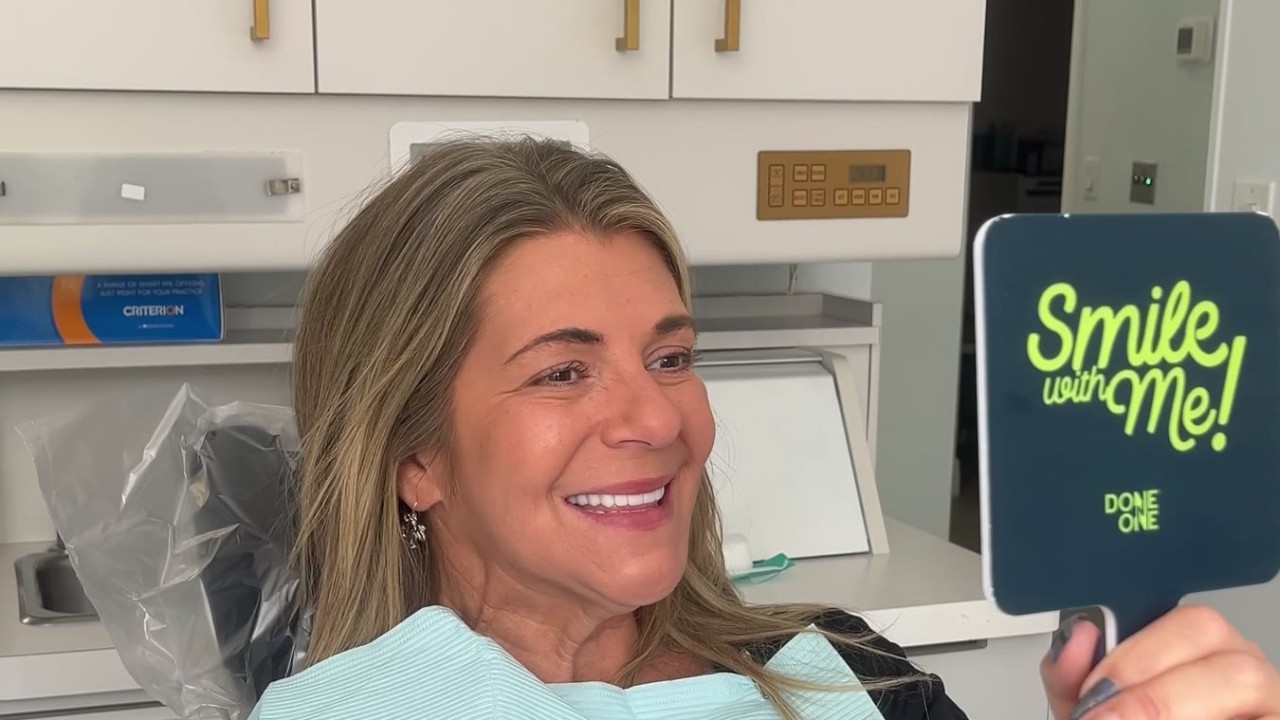
Patient story · Years later
'I was being chastised. Okay — but what can we do about it?'
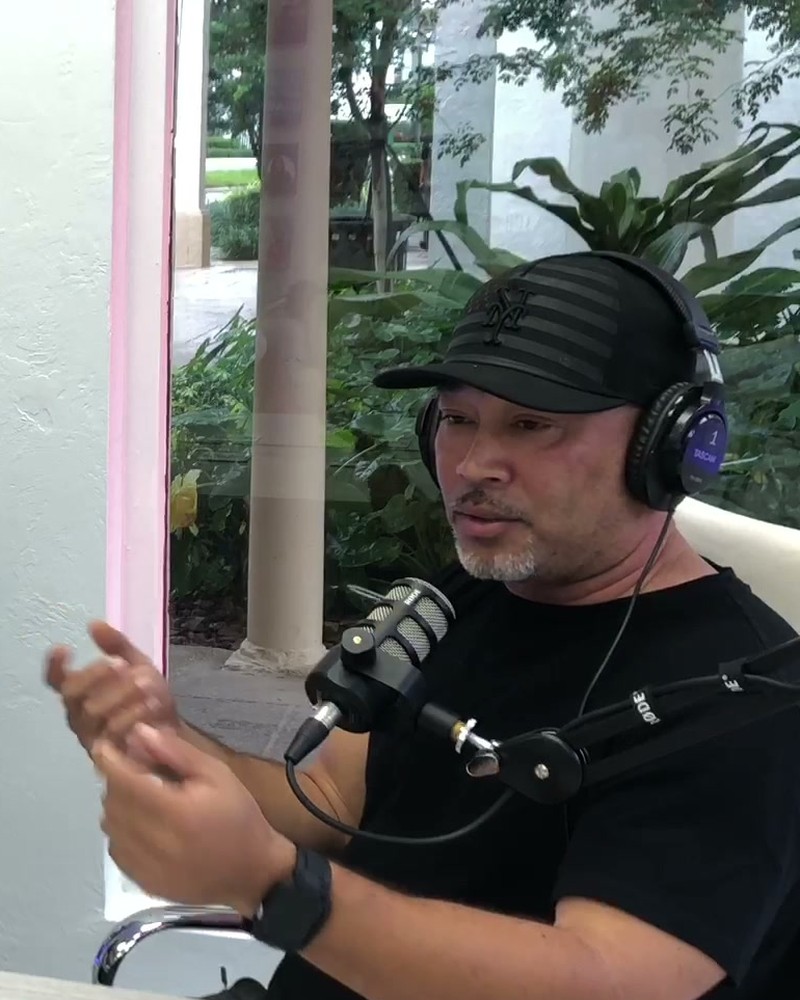
Hear it on the podcast
Kerry, who flew down from Queens.
Before
Kerry never had cavities. His teeth just started breaking.
"Around thirty years old, thirty-five years old — I started having my teeth just break. I could be eating chicken wings, just random food. And my molars started breaking off in half."
He stopped going.
"Who cares anymore? My teeth are broken. What does it matter?"
He's honest about why.
"It got overwhelming. And I was like, oh wow, I got to fix this. I got to fix that. And it's probably going to cost a ton of money. So I probably just let it go."
The thing that forced the decision was a front tooth working loose.
"I could hide broken molars in the back. But I don't want to go around losing my front teeth."
The consultation that pushed him away
He went to a well-regarded practice near his home.
"The dentist was basically like, yeah, you're done. But in a way it was kind of like I was being chastised."
He owns his part in it.
"Okay, yeah, I get it. I messed up. But — okay, what can we do about it?"
She recommended the procedure he had already read about, and quoted somewhere near seventy thousand dollars for both arches. Then came the follow-up.
"As I'm leaving the dental office, it became like I'm trying to run out of a timeshare meeting. Like, please. Come on. It's not like I could just whip out seventy grand."
He left and did not go back.
How he found us
He found us through a stranger on YouTube, someone who had been through it and was describing what happened.
"He seemed like a legitimate guy. He really didn't advertise you. He was just saying: this is what I got done."
Two things convinced him after that.
"The first thing that got me was there was no hidden — the cost was up front. These other websites, it's always, oh, well, we got to examine you, we don't know, everybody's different."
The second was the patient community, which we don't moderate.
"I went back years of posts. You can't fake that."
He considered going overseas and decided against it.
"What happens if something goes wrong? I got to go to Turkey?"
He flew down for an in-person consultation and booked within two weeks.
The week
He brought his girlfriend and stayed near the beach in January.
He was specific about the pain.
"It was like a three, four that first day. Actually, like the most pain was leaving the office and getting into the car. That initial. And I was like, what's going on here? Right after surgery. But a couple hours later, once I took some of the pain killers, the pain relievers, then it wasn't too bad. Then the next day wasn't that bad."
Then came something that surprises almost everyone.
"The pain actually subsided a great deal when I got the first try-ins. It felt like a compression sock on your sprained ankle."
The first set of teeth acts as a dressing over the area where you had surgery.
The ninety days
He was more cautious than he needed to be.
"They said soft food diet, but I'm going like super soft. I'm eating mashed potatoes the whole time."
He lived on his mother's meatloaf, oatmeal by the box, and corned beef hash with scrambled eggs, which he says is fine at any hour.
Afterward came the foods he had been working around for years.
"Common one, chicken wings, like Buffalo wings, because at the time when my front tooth started getting, you know, usually need your front teeth to bite it. At least that initial part, I used to have to like peel them off, you know, instead of like biting into the flats and drums, like everybody else. And here I am all dainty, like just peeling."
And a proper Italian sub, bitten through rather than dismantled.
Learning to feel again
The strangest part for him was the feeling in his teeth.
"I could taste it, but I couldn’t actually feel it — it’s basically when your hand goes numb and you try to grab a pen, you know, it’s there, but it’s the feeling."
A year on:
"I'd say it's like ninety per cent back. I can't remember how my real teeth felt when I bit into something. My brain has totally accepted them."
That timeline varies a lot between people, from weeks for some to a couple of years for others. Most report it within about a year.
Then something went wrong
His first yearly visit turned up two things.
He had felt a clicking in his lower arch and texted the office. His teeth had fractured, as we suspected before he arrived. That was why he came in early.
Nobody expected the second.
"Another problem arose that I had no clue about. One of my implants in my upper right in the middle just happened to fail. I had no pain. No bleeding. My upper arch was rock solid. No movement."
We found it during his routine cleaning, which is exactly why we do them.
"Now I had a failed implant and Dr. Dan comes in, I'm sitting in the chair. I'm like, oh man, I'm gonna have to maybe come back tomorrow. He goes, give me five minutes. I'll put a new one in, numb me up, put a new one in."
Seven of his eight implants were fine, and one wasn't. He was still in the building, chatting with us, afterward.
"If you come down here with, like, this is going to be perfect, I'm going to have no issue — that may not happen for you. You have to prepare for that. And I'm living proof."
He had noticed the warranty on our website before he ever called. At that time the coverage was five years, as Dr. Noorthoek says in the same conversation. The Lifetime Warranty came later.
"That's another thing I caught was the warranty, and at that time it was, I don't think it was a lifetime warranty. So I was like, okay, that's actually, you know, there's a transparency of: okay, here goes the practice that's willing to back up the work and help you, you know, if something goes wrong. Nothing in life goes a hundred percent."
Where he is
Kerry grew up in Queens. He spent twenty-nine years in telecommunications, maintaining the fiber under Midtown Manhattan, the kind of cable where one bad cut can take out a good part of Wall Street.
He has played baseball for forty years and still plays the outfield two or three times a week, in adult leagues that run in divisions up to seventy and over. He travels to tournaments at spring-training stadiums, which is partly why flying to Florida never felt like an obstacle.
He's a Mets fan who used to have a weekend season ticket.
"When COVID hit and you couldn't go to the games, I realized how much money I was saving. That probably paid for my teeth."
And he has a grandson, Royal.
Outcomes vary from person to person.
This page was built from the recording of Ep. 30. The quotations are edited to read on the page: filler words taken out, repeated words dropped, a dash for a hesitation or for words left out. Nothing added, nothing reordered, nothing put in the speaker's mouth.