
Patient story · Years later
The chef who moved to the back of the kitchen
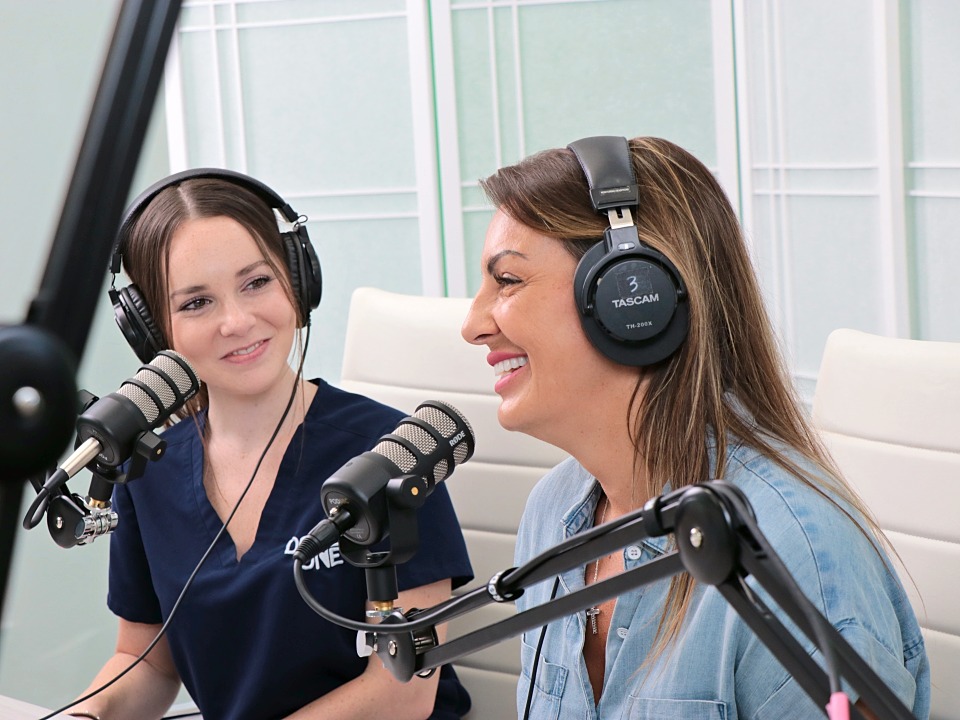
Hear it on the podcast
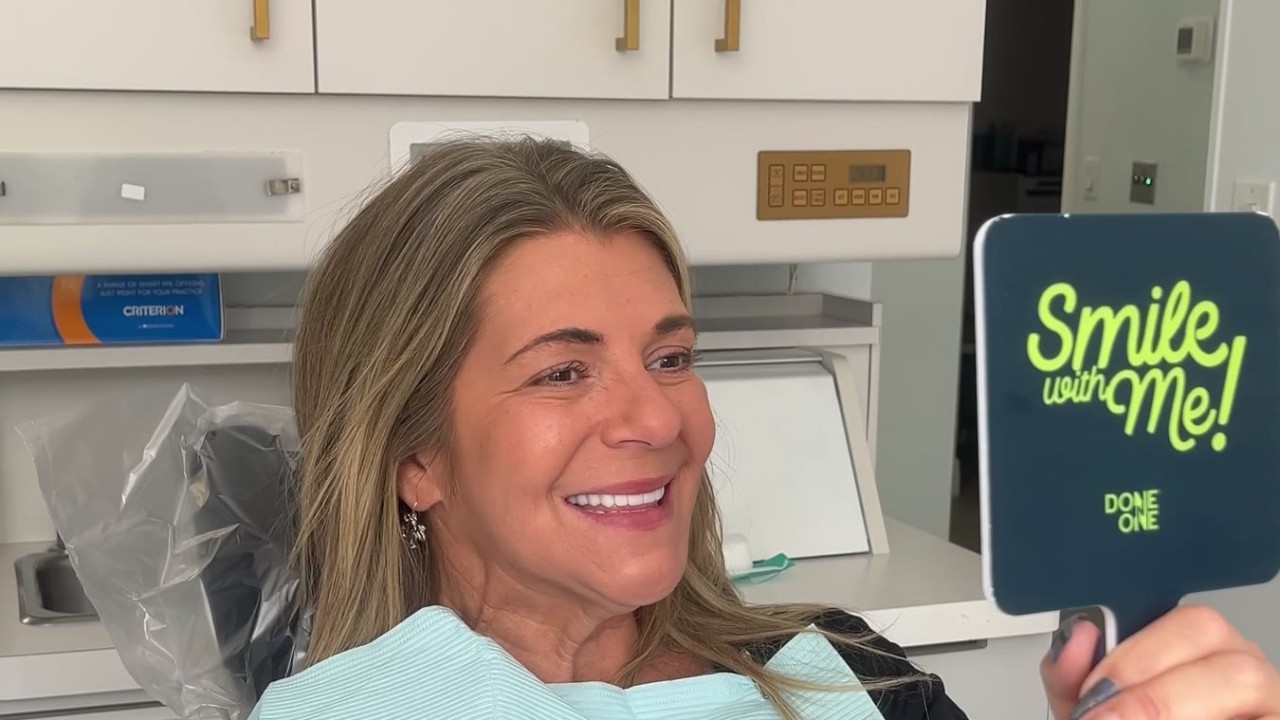
Angela, the chef who had moved to the back of the kitchen.
Before
Angela trained as a chef. She grew up in a large Italian family on Staten Island where everything happened around the kitchen table.
"To get to people's heart can be through their stomach - there's nothing like sitting down with really great food, to share that community."
Her teeth had given her trouble since childhood, with cavities, abscesses, crowns and root canals by ninth and tenth grade. Then in her late twenties and early thirties several things went wrong at once, and she stopped fighting it.
"I can't put this any more delicately. My teeth rotted out of my mouth. And I was really young. My teeth looked like something out of a ninety-year-old."
A car accident in 2007 cost her front teeth and seventy-two stitches in her face. After that, she says, there seemed little point.
For a chef, that was hard. She moved out of the dining room.
"I leaned on my degree and I went back to the back of the house so I wouldn't be around people."
She was also in the hospital again and again.
"Going to the emergency room because I had an abscess. I need intravenous. It was a normal thing. I would wake up and my face would be swollen."
She had accepted where it was going.
"I accepted the fate that I was going to be wearing dentures and smacking my gums for the rest of my life."
She had her denture appointment booked, two weeks away.
A dog, and a business card
Dr. Noorthoek and his wife were staying at a hotel with a new puppy. Angela came out from the kitchen to ask whether she could cook the dog a chicken breast.
He noticed she had almost no upper teeth. He also could not think of a way to raise it.
"I kept telling my wife throughout the whole dinner: I don't know how to bring it up, but I've got to leave a card. I have to let her know this is something that happens. But I also don't want to say, hey, I noticed you don't have any teeth."
He left it with the hostess.
"She said, that really sweet couple that had the dog — they left you a card. And immediately my ego, you know. Oh my God, all he saw was that I had no teeth."
Her fiancé told her to get a second opinion before going ahead with the dentures.
She nearly did not come
The day of the consultation was beautiful and she lives on the beach.
"I was going to cancel because I wanted to go paddleboard. I called my husband — you know what, I'm going to cancel. It's beautiful, the water is so flat. And he was just like, are you nuts? You have to go."
She went.
"I never show anybody inside of my mouth. Ever. To be comfortable enough to open my mouth and let you look in there, and not have that negative reaction — like, oh God, what happened, you have a lot of work to do."
What she got instead was one sentence she still repeats.
"You looked at me, and you were like, you are a perfect candidate for this. Here I was sitting in all my shame and fear and anxiety, thinking nobody can fix me, I'm a disaster."
She booked immediately.
After
She was married that November, on the eleventh, on the beach.
"I got salt water and sand in my dress and I wouldn't have it any other way."
The day after the wedding she surprised her husband with tickets to Staten Island and ate her way around the island.
Then she and her husband started a business, a sober living house for men and women coming out of treatment for drugs and alcohol.
"We just love them until they love themselves. And I feel that I would not have been able to do that until I loved myself."
She is also head sous chef at a country club, back in the middle of everything.
"My career has taken off. And it all stemmed from being more confident with who I am."
The tasting
Her teeth had cost her something at work too.
"When we're doing tastings at the restaurant, doing specials — it was embarrassing. Everybody kind of knew and no one ever said anything. They were being gracious."
That changed.
"Now I'm pushing you out of the way to take the first taste."
What she missed most was small.
"Almonds. The little tiny things. It's been years, since I was a child, that I was able to eat - my dad makes fun of me when I’m sitting there chewing almonds. He’s like, I hear you chewing those almonds over there."
And being able to bite straight into a burger.
Living with them
Asked how much extra work her new teeth are, she gave the same answer another patient once gave us.
"It's not more work, and it's not less work. It's just different work."
She keeps a portable water flosser at the restaurant, because she eats all day. Beyond that:
"You guys made it really black and white. Use this Waterpik, come here on this day, and enjoy your life."
In her first year she twice felt something odd and messaged the office. Both times we asked her to come in, and both times nothing was wrong. She sees that as part of the care.
Seeing herself
A while after treatment, one of our videos came up in her feed, and it included footage of her before.
"I was like, oh no. Everyone's going to see now. And my husband's like, who cares? Look at you now."
She watched it through.
"That initial shame I felt all those years was triggering. And it took that one moment — that's not you anymore."
What she cooks
At home, for people she loves: fried eggplant rollatini with fresh ricotta, because it is her father's favorite.
To eat: chorizo tacos, crispy corn tortillas, and she will argue about it.
Her one desert-island ingredient is curry, which she concedes is an odd answer for an Italian chef.
"It's a spice people don't really use often, because it's very prominent in the taste buds. But it can be very delicate. Like me."
Outcomes vary from person to person.
This page was built from the recording of Ep. 17. The quotations are edited to read on the page: filler words taken out, repeated words dropped, a dash for a hesitation or for words left out. Nothing added, nothing reordered, nothing put in the speaker's mouth.