
Your first questions
Could treatment suit me?
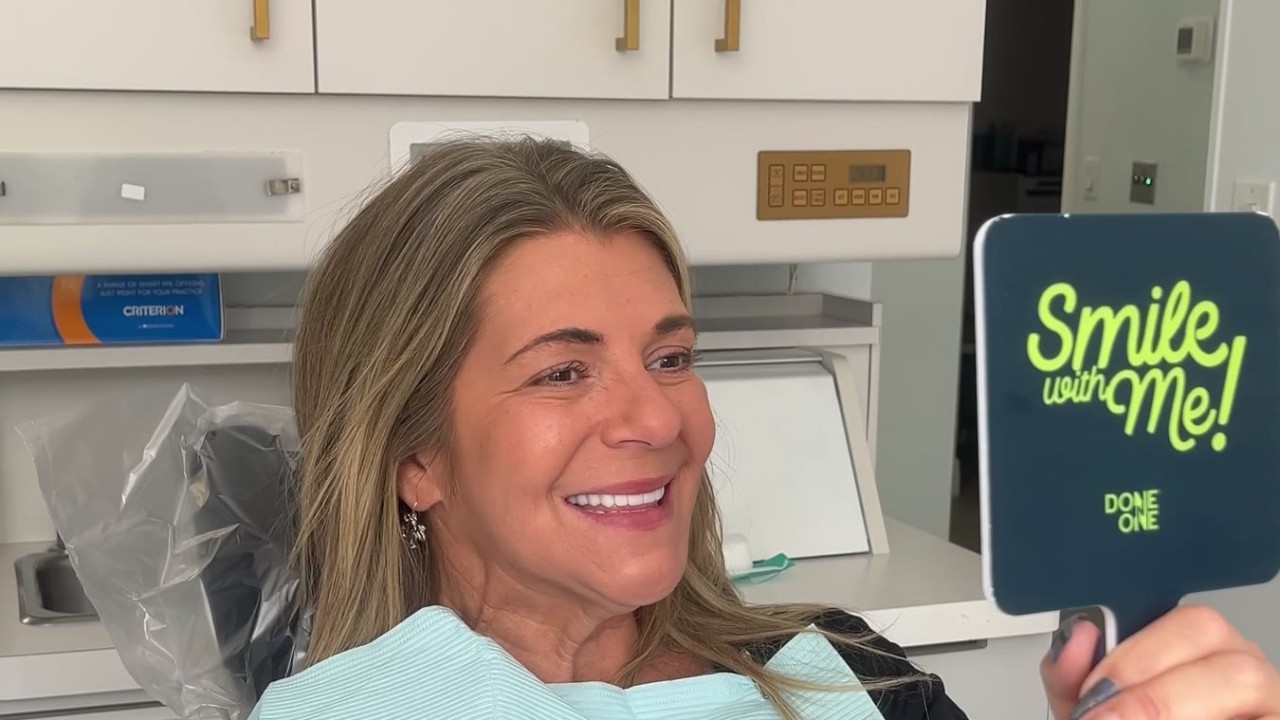
Start with a conversation about your teeth and what you'd like to change.
A clinician will review your scan and medical history to see whether treatment could work for you.
A SECOND LOOK
If you have been
told no elsewhere.
“You need extensive grafting”, “you need a sinus lift”, “your bone is too thin”: that advice is very often given with single implants in mind, which is a different procedure with different requirements.
It is worth a second look at your own scan by someone who does full-arch work every week. And “mine are the worst you have ever seen” is something we hear constantly and have yet to find true.
The bone-grafting questionOPEN WHAT MATTERS TO YOU
What the team
looks at.
Your scan
Your CT scan helps us find the bone available for implants. Full-arch treatment uses selected areas of bone, so it may need less grafting than replacing teeth with individual implants. Many people told they need a lot of grafting turn out not to.
Read the full answerYour health and medications
Tell us about your medications, including blood thinners and osteoporosis treatments, and any chemotherapy or radiation. These don't automatically rule treatment out. We may speak with your physician before scheduling surgery.
Read the full answerDiabetes
How well your diabetes is controlled matters. An A1C in the six-to-seven range means well-controlled diabetes; eight and above is worth working on with your physician first.
Read the full answerSmoking
Smoking affects healing, but doesn't automatically rule out treatment. Cutting down before surgery and staying off it for six to eight weeks afterward improves your chances of healing well.
Read the full answerGum disease
Gum disease is a common reason people consider full-arch treatment. It doesn't disqualify you, but your history affects how we plan your treatment and ongoing care.
Read the full answerGrinding and jaw problems
Tell us if you grind your teeth or have jaw problems. We check and adjust your bite as you try the prototypes.
Read the full answerAge
Age alone doesn't rule you out. We've treated adults from their thirties to their nineties. Growth must be complete, so this treatment is for adults.
Read the full answerONE THING THAT SHOULD NOT WAIT
An active infection
needs attention.
An active infection in a tooth is a live infection. Swelling that is spreading, swelling under the jaw, difficulty swallowing, opening or breathing, or fever means the same day, not next week, and an emergency department if breathing or swallowing is affected.
Removing an infected tooth is a separate, much smaller procedure than a full arch and should not wait on funding a whole plan.
AT THE CONVERSATION
What to bring.
- An X-ray if you have one from another practice.
- Your list of medications.
- Your questions, even if you're not sure how to ask them.
You don't need to have payment arranged before we talk.
What the first conversation is like