
In this answer
It starts as gingivitis
First comes gingivitis: red, puffy gums, bleeding when you brush, and tartar around the teeth. The bone is still intact.
Periodontitis is when it reaches the bone. The bleeding and swelling are still there, but now you're losing what holds your teeth in. Abscesses can form. If decay sets in too, gum problems and root-canal problems often show up together.
How it's diagnosed
Dentists follow the American Academy of Periodontology. You're given a stage from one to four, based on how much bone has been lost, and a grade from A to C, based on how fast it's moving.
The grade looks at how quickly the bone is being lost, how well any diabetes is controlled, and whether you smoke. Diabetes and smoking are built into the system because they change how fast the disease moves.
Full arch usually comes up at stage three or four. By then there's a lot of tooth loss, teeth may be flaring outward, and the bite has collapsed.
Can it be reversed?
Not fully. Once you have periodontitis, the lost bone doesn't come back. But it can be controlled, so the swelling and bleeding settle down. For most general dentists, that's the goal.
Full arch comes in when it won't stay under control, when teeth get loose, or when you don't want to live with how your smile has changed anymore.
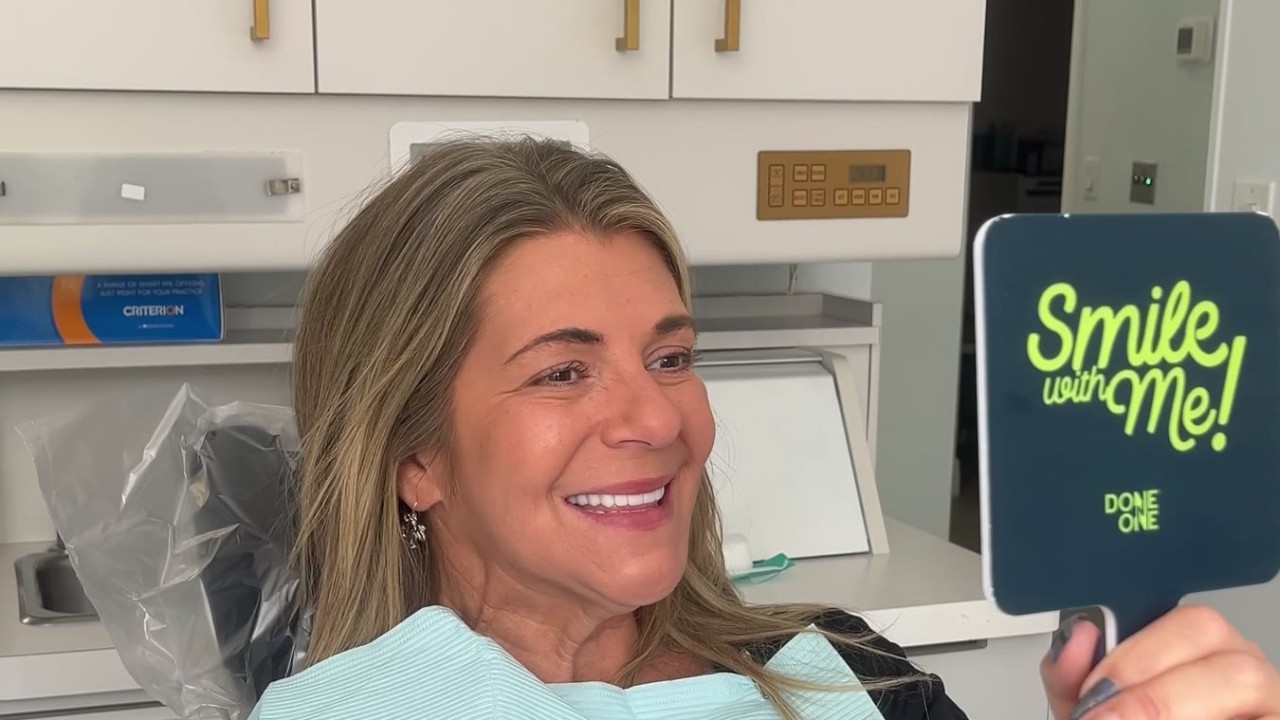
After years of having my teeth either fall out or becoming visibly loose and/or chipping, several local dentists here in Michigan recommended the All on Four procedure.
When does it start?
Usually at 40 or older. When it shows up in your twenties or thirties, it often runs in the family and moves fast. Those patients often have serious bone loss by their sixties.
Losing the teeth doesn't erase the history
Taking the teeth out cuts down the bacteria behind gum disease, but it doesn't get rid of them completely. Past gum disease still raises the risk of implant problems later.
That doesn't rule implants out. It means your team should know your history and plan around it, and we will.
Gum disease history and implants
Times as likely, with a history of gum disease
Past gum disease raised the chance of both. It doesn’t rule implants out. It’s why your team should know your history and plan around it.
A review that added together 16 studies. Ranges: implant loss 1.31 to 2.17, peri-implantitis 1.51 to 3.12. The authors call the evidence strong for implant loss and moderate for peri-implantitis. It is not about full arch in particular.
- Sgolastra F, Petrucci A, Severino M, Gatto R, Monaco A. Periodontitis, implant loss and peri-implantitis. A meta-analysis. Clin Oral Implants Res. 2015;26(4):e8-e16. doi:10.1111/clr.12319. PMID 24382358.
Quick answers
What is the first sign of periodontal disease?
Red, puffy gums that bleed when you brush, and tartar building up around the teeth. At that stage it's called gingivitis, and the bone is still fine.
Is periodontal disease the same as gingivitis?
No. Gingivitis comes first and affects the gums. It becomes periodontitis once it reaches the bone.
Will removing my teeth cure it?
It helps a lot. But past gum disease still raises the risk of problems with implants later. That doesn't rule implants out. It means you want a team that plans for it.
Hear it on the podcast
Read next
What is peri-implantitis, and how is it different from gum disease?
Peri-implantitis is inflammation and bone loss around an implant. It's the implant version of gum disease, and it can move faster. A natural tooth is held in by a ligament and a root layer called cementum. An implant has neither, so the gum holds on less firmly and trouble can build more quickly. That's why your yearly check matters even more once you have implants.
Answered by Dr. Blake Hauer
Read the full answerCan I get dental implants if I have diabetes?
Yes. And it's one of the few risk factors you can improve before surgery. What matters is whether your diabetes is under control. An A1C between six and seven is a very different picture from an A1C of nine. If yours is high, we'd rather work with your doctor first than rush you into surgery.
Answered by Dr. Blake Hauer
Read the full answerCan I get dental implants if I smoke?
Yes. Nobody here will turn you away because you smoke. Smoking does raise the risk to how your implants heal, and how much you smoke matters. The research draws the line at about half a pack a day. If you can cut down before surgery and stay off it for six to eight weeks afterward, you give yourself noticeably better odds.
Answered by Dr. Blake Hauer
Read the full answer