
In this answer
Why losing back teeth affects your jaw
Your jaw joint works like a hinge, and your back teeth carry most of the load.
With your back teeth in place, the joint sits where it's meant to and your muscles don't have to work around anything.
Lose one tooth, then three, then five, and that support goes. It's like a door on a hinge that no longer sits square. The joint wears differently, and the muscles work harder to find a comfortable spot.
Most of our patients have been through exactly that. Many tell us they grind or their jaw aches, and they think of it as a separate problem. Often it's the same problem.
Why a full arch is a chance to fix it
If the jaw trouble comes from lost support and lost height, rebuilding a whole arch lets us restore both.
Your jaw has a natural height it's meant to sit at. In a full-arch case we choose that height instead of working with whatever is left. The goal is to seat the joint properly, give you back support at the back, and set a bite your muscles don't have to fight.
When someone who grinds still has their own teeth, the usual approach is to protect what's there. With a full arch we're rebuilding, so we get to set the height and the bite from the start.
Compared with crowns on your own teeth
If you still have your teeth and need a lot of crowns, changing the bite is hard. The work has to be done a section at a time, keeping the bite your body has settled into. Change too much at once and it's hard to get back.
With a full arch, the old teeth are gone, so the whole bite is planned together.
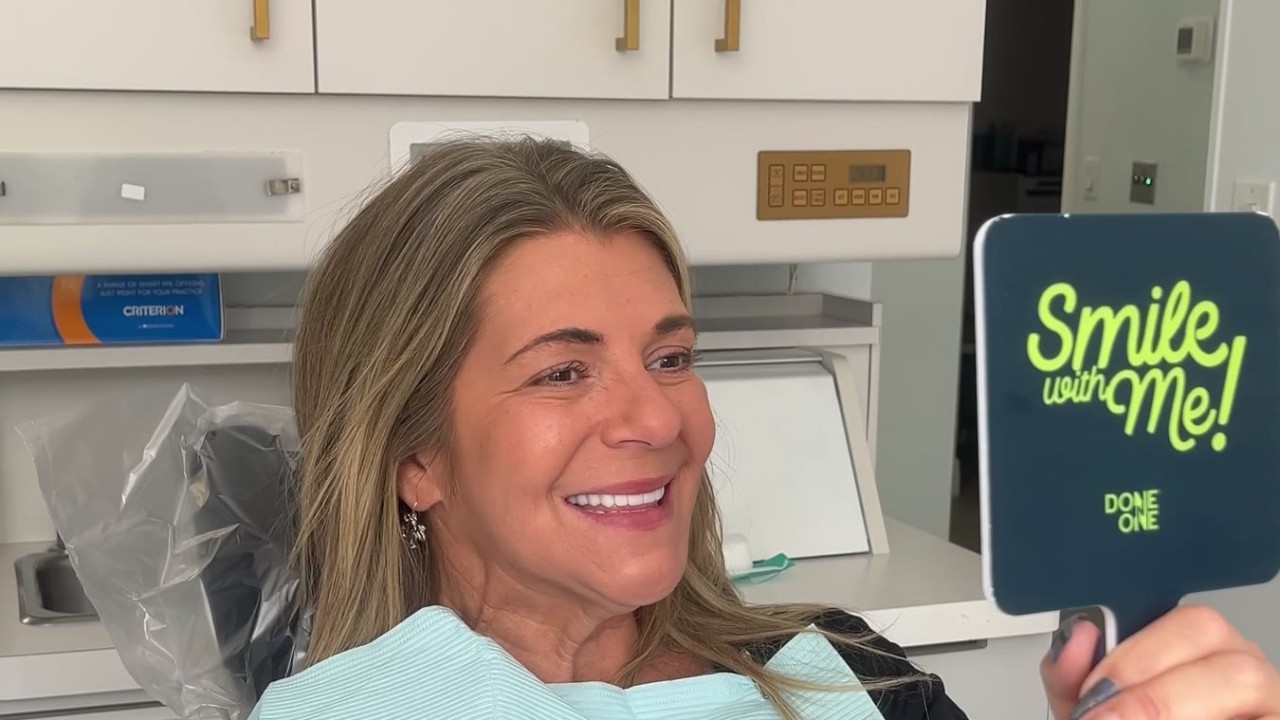
I was never afraid to voice my concerns.
If something still feels wrong afterward
It's usually one of three things.
The bite needs a tweak. The most common and the smallest fix. A slightly-off bite causes more jaw discomfort than people expect, and adjusting it is a short appointment.
The height is off. A bigger fix, but fixable. Your teeth are a digital design, so we remake them from a corrected file instead of grinding down the finished set, which would weaken the zirconia.
The muscles are the problem. Rare. One patient here had spent years holding her jaw in an awkward position, and her muscles didn't settle even once the teeth were right. Botox was used to relieve it. That's one case. It isn't a service we offer.
Why the prototype week helps if you grind
This is why we don't lock in your bite on surgery day.
Right after surgery, your jaw has been open for two hours. If your joint is already sore, that's a poor time to set a bite you'll live with for years.
During the week you wear prototype teeth while you eat, talk and get on with life. We check your bite height and lip support while you use them, and change the design before anything is made in zirconia, which is too hard to adjust comfortably. If you grind, that week does even more for you.
Quick answers
Will grinding damage my new teeth?
We plan for it. Your bite is checked and adjusted through the prototype week instead of being set on day one. Zirconia is very hard, so it resists wear, but it passes force through instead of absorbing it. That's why getting your bite right matters so much.
I already have TMJ pain. Will this fix it?
Often it improves, but we never promise it. For most full-arch patients, the jaw trouble started when they lost their back teeth, and restoring that support at the right height often helps. This isn't a treatment for a jaw-joint disorder, and we don't offer it as one. If symptoms stay or show up later, we check three things in order: whether the bite needs adjusting, whether the height of the teeth is off and the arch should be remade from a corrected design, and, rarely, whether the jaw muscles themselves are the problem.
What if my bite feels wrong after the final teeth go in?
Tell us. Adjusting a bite is a short appointment. Your design is digital, so if the height itself is wrong, we can remake the arch from a corrected file instead of grinding it down.
Do I need a night guard afterwards?
Yes. We recommend a night guard for every full-arch patient, whether or not you've ever ground your teeth. Zirconia is hard and passes force through to the implants. A guard at night takes that load off your teeth and screws while you sleep.
Read next
Will my new teeth feel like real teeth?
Close, but not the same, and it helps to know that going in. Fixed teeth on implants feel solid in a way a denture never does, and most people stop thinking about them within months. What you do lose is the fine feeling that comes from a natural tooth root.
Answered by Dr. Daniel R. Noorthoek
Read the full answerHow do you decide what my new teeth will look like?
We decide together, with your new teeth in your mouth. We don't show you a digital mock-up or ask you to pick from a catalog first, because a smile on a screen looks nothing like the same smile in your face. We get the bite and fit right first. Then we spend the rest of the week shaping how your teeth look, with you reacting to the real thing.
Answered by Dr. Sarah Laks
Read the full answerHow long do full-arch dental implants last?
The implants, the titanium anchors in your jaw, are meant to be permanent, and once they've fused with the bone they often last for decades. The teeth attached to them get used every day, so over the years they may need repair or replacement. Like anything you use daily, they need some care, and we'll look after them with you.
Answered by Dr. Daniel R. Noorthoek
Read the full answer