
The conversation
▶The best moments are marked. Tap one to hear it.
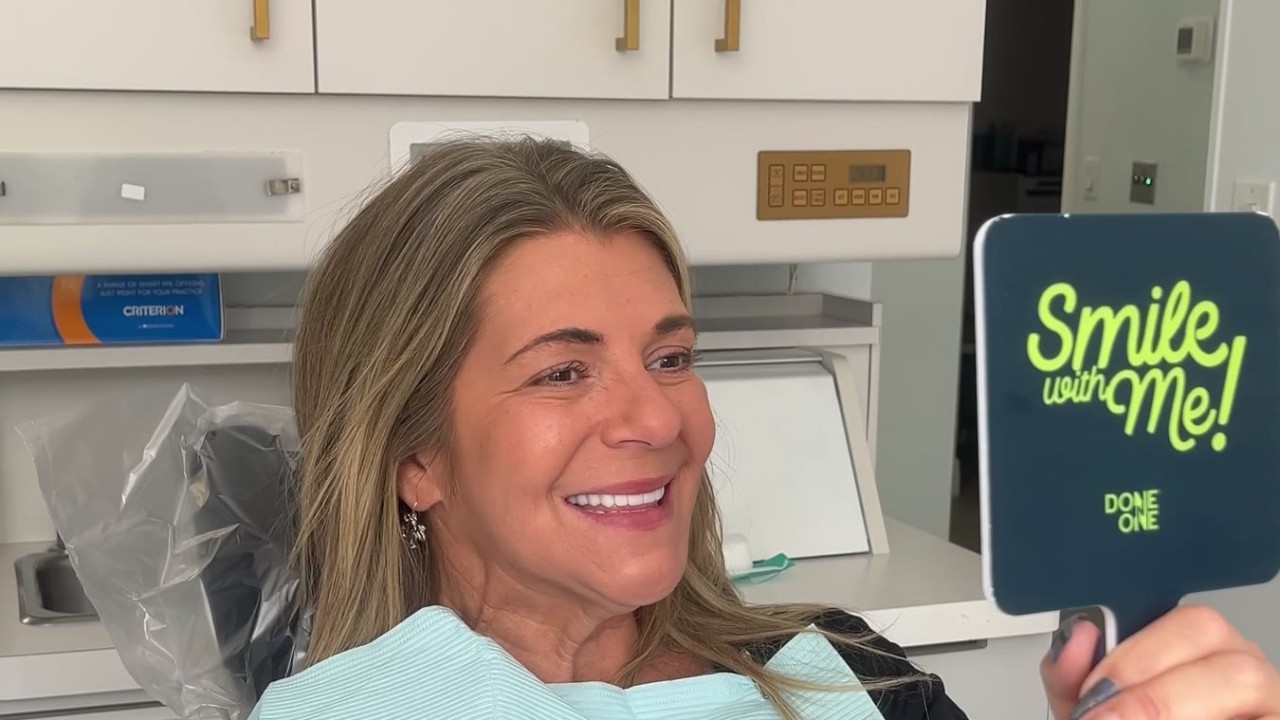
In this profoundly personal and unexpectedly uplifting episode of Beyond the Arches, Erica sits down with Dr. Dan and Kerry Norris, a lifelong New Yorker whose dental journey mirrors that of so many patients who “toughed it out” until they could no longer. Kerry opens up about the years of breaking teeth, hiding his smile, and navigating discouraging dental visits before discovering full-arch implants through a YouTube video…and eventually, Done In One.
Read Kerry’s story'I was being chastised. Okay — but what can we do about it?'In this profoundly personal and unexpectedly uplifting episode of Beyond the Arches, Erica sits down with Dr. Dan and Kerry Norris, a lifelong New Yorker whose dental journey mirrors that of so many patients who “toughed it out” until they could no longer. Kerry opens up about the years of breaking teeth, hiding his smile, and navigating discouraging dental visits before discovering full-arch implants through a YouTube video…and eventually, Done In One.
Key moments
Part 10:00
This is Beyond the Arches, where full-arch dentistry meets real talk. Let's get into it. Hi, and welcome to Beyond the Arches. My name is Erica. Today, I am joined by the wonderful Dr. Daniel Noorthoek and Keri Norris. Thank you. I'm happy to be here and to discuss Done In One. Hello, hello. Hello. Welcome, welcome. So, do you have any questions? Like, why don't we get the normal, you know, who Keri is? Yeah, yeah. So, Keri, why don't you tell us a little bit about yourself? Kind of how did you get yourself down to Boca Raton, Florida?
How did you hear about us? What was kind of the most enticing thing that made you want to come down? All right. Well, my name is Keri Norris. I'm from New York City, Queens, New York. And I came down because I actually came across you guys from the Shabby Guys YouTube. Yeah, YouTube. Yeah, so. Do you do a lot of furniture restoring at all? No, not at all. Shout out to that Shabby Guy. Yeah, that Shabby Guy. Well, to backtrack, I was researching all on fours because, you know, I think, you know, I was getting to a point where I was like, I think my teeth need to work.
So, at one time, you know, when I was a lot younger, I actually had gray teeth. I never had cavities. And, you know, I used to go to the dentist and get them checked out. Maybe not every six months, but, you know. But around, like, 30 years old, 35 years old, around, like, I started having my teeth just break. Like, I could be eating chicken wings. I could, just random food. And, like, my molars started breaking off, like, in half and then on the other side. So, it was weird. Like, I turned, I just ended up having brittle teeth.
Mm-hmm. So, and I guess from there, you know, like, kind of just was like, who cares anymore? Like, my teeth are broken. What does it matter? So, like, I guess the rest of it, like, the gums. And the decay of, you know. Did you, do you think that, were you seeing a dentist at the time? Or was it, did it get to a point where you just said, oh, I'm, you know, to heck with it. I'll figure it out later.
Probably like that. Yeah, it's probably pretty normal. Yeah, it got, it got, like, overwhelming. And I was like, oh, wow, I got to fix this. I got to fix that. And it's probably going to cost a ton of money. So, I probably just let it go. And, you know, by the time, and it just went downhill from there. So. What was the precipitating factor that made you get online? Did you research it? You know, did you go to a dentist and get an opinion first? Did you kind of know that that was out there and kind of had it in the back of your head when this happens, I'm going to start doing my research? Or did you, how did you make that decision?
I kind of had it in the back of my head. And then the straw that broke the camel's back was one of my front teeth all of a sudden became loose. And I could tell, like, you know, the gums were receding, you know. And that's when I kind of was like, okay, I need to do something because, you know. That's your front teeth. I could hide broken molars in the back. But, you know, I don't want to go around losing my front teeth.
I really got an issue. So, I did some research about dentures. And I didn't even know this procedure existed. I just figured. Okay, yeah. I'm probably going to end up with dentures or maybe like a bridge. You know, I know somebody that has a bridge. So, I was like, I don't know how it works. We've talked about it a bunch. As a side, that's actually like one of the biggest problems with doing this procedure is bringing. To light that this even exists.
You know, I've said it a couple of times when I see and meet random people that don't know necessarily what I do. I kind of try to explain it to them really quickly. And I don't know that very many of them have ever understood what we actually do. Which is kind of crazy thinking of all the people that I've ever met and randomly talked to, you know. So, just as a side, that's a very normal thing to not even know that this exists.
Right. Like this dental technology is. Like. I've heard of implants. But, you know, at the time, I'm thinking like every tooth has to be implanted. Like when I have 23 implants in my mouth. You don't want that. No. And so, then I was like. So, when I came across this technology, I was like, oh, this is interesting. Like, okay, it's basically like a full bridge of your mouth of both sides. So, you know, it was one of those things I came across.
So, I end up going to a dentist. I was like, I don't know. I'm not a dentist. I don't know anything. So, let me go find out. Maybe it's savable, you know. Yeah, absolutely. Maybe if we start in baby steps. You know, eventually, I could get it back to where it's functioning. Absolutely. I could chew into a steak or a burger without worrying if my tooth is going to be left in the bun. So, I go to a dentist near my house, get like a consultation.
And the dentist was basically like, yeah, you're done. Like, there's nothing we can really do. But, in a way, it was kind of like I was being chastised. Chastised for like, you know, and I'm like, okay, yeah, I get it. Yeah, I wasn't, yeah, I messed up. Right. But, okay, what can we do about it? So, then she brings up the all-on-four procedure that I read about. So, I was like, oh, okay. And then I never knew how much it cost.
I knew it was, you know, it wasn't cheap. But, you know, I figure, all right, let me see what I can do. You work in New York City. So, was this dentist in New York City as well? Yeah, like right near my house. Classic, tiny, tiny little office. Yeah, like for my neighborhood, she was known. So, I was like, I'll go to her. She had, like, people went to her. Like, she's, you know. So, when she, you know, she was like, you're basically done.
This is, I think this procedure would be good for you. So, I was like, oh, okay. Well, that's what I read about. All right. How much does it cost? And then that's when I was like, wow. You know, she gave me a quote of almost like top and bottoms, like for $65,000, $70,000. And I was like, wow. Wow. And I was like, that's a lot of money. You know, I was like, you know. So, I was like.
Two cars. Right. Exactly. So, I was like, thank you. And then as I'm leaving the dental office, you know, and it became like, like I'm trying to run out of a timeshare meeting. Like, please. Like, come on, please. You know, like, you know, they sent me the. You didn't get your $100 Visa gift card yet. Right. You know, I'm like, okay, let me think over there. Like, it's not like I could just whip out 70 grand. And yeah, maybe there's a guy down the block that's cheaper.
All right. Like, take it easy. So, like, that just turned me off right then and there. So, now that I had a number in my head about like how much it costs, then I started doing some research, got deeper into the research. So, I find out, okay, you know, some places offer, you know, you do it, you're in your temporary T for like six months. And then I found places where they do it in like a day.
And so, it just seemed like, all right, what is really the nine months, six months, or the day? You know? And the prices, you know, they varied. And so, then I come across the shabby guy. You know, I'm doing my research. So, this is like, seemed like a real guy that actually got the procedure. And that's another thing, too. It was hard to find, at that time, like, hard to find, like, people that actually discussed it without, like, an agenda.
Like, without saying, oh, yeah, I got my teeth done X, Y, Z, and look at me. Like, he seemed like, when I started watching the video, he seemed like a legitimate guy. And, you know, he really didn't, like, advertise you. He was just saying, this is what I got done. This is where. So, I started watching him. And he had, like, a follow-up video about what happens after. So, I was like, oh, I wonder where he got that done.
And that's how I came across you guys. Like, I came, I looked at the website. And I was like, hmm, this is interesting. The one thing that, the first thing that got me with you guys is that it was, like, there was no hidden, everything, like, the cost was up front. Like, these other websites I try to go to, you look them up, like, okay. What's the price on that? And it's always like, oh, well, we got to examine you.
We don't know. Everybody's different. Bah, bah, bah. So, like, you had, you know, it was, like, clear. It was like, okay, this is what we, this is the price we offer. This is what you're going to get. And then, also, when I saw the price and compared to what the dentists quoted me, I was like, well, that's, like, the whole mouth. Did that, I'm curious for my own sake, did that concern you at all? Because it's something that kind of.
Frustrates me is, at some point, the price is too good to be true. And you say, well, then it's definitely not, right? That's a consumer thing. So, was that ever a concern of yours? Well, I just, yes, at one time I was like, well, it seems a little on the cheaper side. But then I also saw websites that promoted, like, $10,000 and blah, you know. So, it was hard to get, like, a fixed, like, what's the range?
Is it, like, $10,000? Is it $100,000? Like, I want to know where's the midpoint here. Like, it just seemed like people just, because you're, you know, you're in a need for something, is that they could just charge you whatever they want. And I also came across things about going overseas. And I was like, I'm not doing that. Like, if I'm going to get, I'll pay the extra money to stay in the States. Not that I'm sure they do great work.
But I was like, I'm not flying to Turkey every. And then who's to say, you know, like, okay, their follow-up. Yeah. You know, like, what happens if something goes wrong? I got to go to Turkey. And will you? Help me out. So, but I did like that your website was clear, at least for me. Like, the pricing was there. I didn't have to, like, put in my email to get, like, text on my Facebook to get a, it was clear.
This is what we offer, you know. And you went, like, step-by-step, basically, you know, like, this is. So, I was like, oh. And with the shabby guy, you know, he was saying how he got his teeth in a week. So, I'm like, okay, there's six months. Once, there's 24 hours. I was like, I think a week. Goldilocks. It's like, okay, we'll get the procedure done. And then, you know, we still have some time to fix it. So, I was like, at that point, I went away.
I think I went away overseas after that dental appointment. That was in November of last year. And then when I got back. Vacation? Yeah, I went on vacation with my girl. Where did you go? Guatemala. Oh, cool. Yeah, great. Great. Great. Very underrated place. Is there any, like, family history or any ties there? Or what brought you to Guatemala? Oh, no. My girlfriend's from Guatemala. Okay. So, you know, we go there. That was my second time there.
You know, like, Guatemala is, like, very underrated. When you think of places to go visit, you don't think of Guatemala. You know, it doesn't come on your radar. So, like, with her, it was easier because I kind of had a tour guide that I could, you know. Yeah, a local that can show you. Yeah, if you're, like, nature and they have the most volcanoes in the world. I didn't know that. Very cool. We climbed a volcano and there's beaches and all that.
So, when I came back, and then my front tooth was getting worse. I was, like, it was starting to get to the point, like, I think I could pull this thing out myself. And, like, I got tired of chewing on this side or watching, like, what I ordered to eat or because I'm scared, you know. Now I'm, like, to a point, like, it's really going to be horrible. So, I decided, I was, like, you know, what do I got to lose?
So, I gave you guys a call and I spoke to Alex. Alex was the first one that I got in touch with. And after that, oh, she's, like, yeah, you know, you have to come down, you know. Well, I don't think you have to come down, but, you know, to get a consultation, I was, like, well, I want to be there. Like, I know you're in Florida, but I come to Florida a lot. So, it wasn't, that wasn't a big deal for me.
Like, it's only a two and a half hour flight. But then I also, she gave me a link to the Facebook page. And that's where my interest really peaked. Because now, okay, it's one thing to, you know, you see the stories on your website. And who really knows? You know, I don't know. It could be, you know, plants. Another difficult thing, and that's one of the intentions of doing this podcast. One, we don't want us to just be a done-on-one advertisement.
Of course, you know, we're biased because it's our product. It's all in our system. And we think we've tried to do everything as best as possible. But getting out real, genuine stories. You know, we haven't put carry-up for anything. And we haven't, you know, financially, you know, I haven't even bought you a beer. No, not at all. You know, and that's the intention is to come off as, or present genuine, authentic conversations and stories. Because that's what's out there.
And presenting that on your website is a lot different than presenting. Yeah. In mass, repeatedly. Right. Yes. So. Yeah. So, like, when she got, I got a hold of the, you know, when I went on the Facebook page for done-on-one. And I saw all the form of patience and how much they loved it. And, you know, I was like, you can't fake that. Like, you know, there's, you know, there's a couple hundred people on that page. And a lot of them got the work done.
And rarely did I see any issues, like, long-term. And, like, I didn't even realize you guys were in business for a couple years at that time. Like, I don't. I remember. I remember commenting on one guy's post. And he was like, he had his, he had his work done maybe, like, five years ago. So, I was like, oh, okay. So, there's, like, a history behind it, too. With regular people that had it done. So, I just figured, right, you know what?
That seems legit. So. Starting at Facebook was probably the most scary career move I've ever made. Because we don't touch it. And God knows what can go out there. Yeah. So, it's been great that it's kind of self-regulated. It's self, you know, if somebody has a problem, it's still on there. But a lot of people will help that person. But also point us and point them in our direction. So, we get to kind of get hands-on a little bit quicker.
Right. It just, it's been actually a really good community. But just starting it was that nerve-wracking. Oh, well, yeah. Like, let's say the first five people that joined and three of them have a problem. Yeah. And it could just be the most random thing. Yeah. Now you're, you know. Yeah, absolutely. So, yeah. When I got in touch with the Facebook page and I joined the Facebook page and I started reading. And I mean, I went back years of posts.
Just, it was like, okay, you know what? You can't fake that. So, you know, every now and then you get somebody that says something. But other than that, though, it was pretty much all positive. So, I was like, I decided to come down for the consultation. And that was last December. I came down right after work. I went to JFK. I was like, I'll fly down for a day. Spend the night. I didn't fly. I didn't fly back.
So, that was it. I remember. You're probably one of, what would you say, five or six that have come for like an in-person from out of state prior to six? Absolutely. And I think you were already almost pretty solid that you were going to go in our direction at that point. Because I believe you booked for your procedure like a week or two after that. Yeah, it was like right away. Yeah. It was just like the most.
Yeah. Once I. Oh, and the other. You gave me the consultation, but you wasn't supposed to. I remember. I remember at the hotel. I was supposed to come in at like 930. I think it was Nadia. I could be wrong, though. And I think she had a migraine. I think. Maybe Lax. Probably Dr. Lax. Oh, Lax. Okay. Yeah. Well, like somebody had a. Something happened. And so, it was like, oh, well, the surgeon is actually here. And he could do your consultation if you come a little later.
Yeah. So, I'm like, oh, you mean that guy. The guy is on the website. He's going to be. You know, it's not. It's not. I mean, you know, it's not. It's the actual surgeon. I was like, sure. Yeah. Whatever time you want me to come, I'll come. So, that, you know, talking to you at that consultation. And we did my x-ray. And then you said, you know, it pretty much looks like straightforward. You know. And that's another, too.
I was worried about my bone loss. Like, I had some missing teeth. So, yeah. You gave me like a little. You know, you gave me. You said, hey, this should be. Should be, you know, no problem. You know. I mean, obviously, there's always. But it should be straightforward for you. So, I was like, okay. And it was just a matter of, you know. Let's go on to your actual experience. You went travel package or you went on your own?
No, I just went on my own. I have friends that live down here. So, I just. Did you stay with them? I can't remember. Did you come with somebody? I came with my girlfriend. She came down with me. We stayed in Deerfield Beach. And for the surgery and like the first two try-ins. And then I went to stay with my friends in West Palm. For the first days, describe. What was your pain level? Zero to ten. It was.
I would say. You can be honest. You can say that if it's ten. No, no, no. It was like a three, four that first day. Okay. Actually, like the most pain was leaving the office and getting into the car. That initial. And I was like, what's going on here? Right after surgery. Right. Like right after surgery. It was like a little, you know, burning. And, you know. But a couple hours later, once I took some of the, you know.
The pain killers, the pain relievers. Then it wasn't too bad. Then the next day wasn't that bad. I was like, oh, my God. Like, this is a lot better than the first hour, basically. The first hour was the worst. And then it was manageable, at least for me, you know. And the pain actually subsided a great deal when I got the first try-ins. So, it felt like it was like a compression sock on your sprained ankle. Yep.
So, it kind of just like numbed, died down that pain. So, that was. When I got the first try-ins, it got a lot. So, it was just the first day. Which is a great perspective because I feel like many people don't realize that when those first teeth go in, whether they're made, you know, in a lab or if they're made chair side, that's such a protector. You know, it's kind of an umbrella that it really creates that.
It's almost like a bandage, like a dressing. Right. It's a fancy dressing that looks like teeth. But for your wound, it's in a happy place now. It says, oh, goodness. Thank you. Thank you for not being exposed anymore. So, for a lot of people going into it, you expect, oh, that's going to get really bad because you're pinching it and it's awful. Right. But many people experience what you're saying, which is that it's actually better after that because it's so protected.
Yeah. It's like it's in reverse, basically, of what you. Yes. The moment somebody touches my gums, I'm going to scream in pain. Yes. But then you're like, oh, wow, that actually feels like massage. Yeah. It's soothing and it's protective. It's very soothing. Oh, wow. Why did you put them in yesterday? I mean. Did you do anything fun while you were here? Like during that time, like on that weekend? No. Yeah, I was at the beach. Oh, great.
Yeah, where I was staying was in Deerfield. I was literally right across the street from the beach. So, we hung out on the beach. It was a little chilly because it was January when I got my procedure done. But, yeah, we just, you know, I took it easy. I didn't, you know, eating options were, you know, were lacking because of the soft food diet. Especially, it was just, I was scared to do anything. Like, I was basically.
Eating soup and just water. And I think, I think like Huel, like that liquid food. That was basically all I was scared to eat because I was like, yeah, they said soft food diet. But I'm going like super soft. Like, you know, I'm eating like, you know, mashed potatoes like the whole time. Yeah, absolutely. Yeah. I ask every patient this. What was your favorite go-to when you were in soft food? And what was your, what's your favorite relief that you have had since then?
My favorite? Uh. Beforehand. So while you're healing, what was your favorite go-to kind of comfort soft, like your go-to favorite meal? My mother does make a really good meatloaf. Okay. So she used to make meatloaf a lot for me. So I definitely ate that a lot. Um, I did like certain mashed potatoes, like depending on the recipe. Um, oatmeal was pretty good. Like I devoured boxes of oatmeal every two days. Um, and I like corned beef hash.
Like if. Yeah. I know like a lot of people, it's not like a big breakfast thing anymore, but give me some, give me some scrambled eggs and corned beef hash. I'll eat that all day long. It's a great, great breakfast. And, uh. It's a great dinner too. Yeah. You want to have breakfast for dinner. Breakfast is perfect at any time of the day. I agree. I do not care. Very few people. I don't like people that don't agree.
I love breakfast. Uh, what about afterwards? What was your favorite? Like, yes, I'm back. Oh, my favorite was, um, steaks. Steak was good. Um, common one, chicken wings, like Buffalo wings, because at the time when my front tooth started getting, you know, usually need your front teeth to bite it. At least that initial part, I used to have to like peel them off, you know, instead of like biting into the flats and drums, like everybody else. And here I am all dainty, like just peeling little, okay.
I like to, I'm sorry, I'm sorry, but I need to go, er, you know, bite right into it. So that was like a big, like, wow. Um, yeah. But. And, uh, like a nice juicy, oh, a Jersey Mike's sub also, because they're very thick, you know, like they pack the meat in and just to be able to, you know, after my, my soft diet was over and even like, even then I still was like a month nervous, but then I finally relented and was able just to bite right through a Jersey Mike's Italian sub.
Beautiful. That was the best. Did it take you a while to get to that point of being comfortable with eating after that 90, when you were cleared for your implant integration, did it take you a little bit to get back into that? Yeah. Like I said, even after the 90 and when I came back up here and you guys said, you know, you're good to go. Um, I still, you know, still have that apprehension because I was like, you know, I'm not really good to go.
Like, I want to, like I said, I want to eat a Jersey Mike's sub, but you know, but I, I finally, you know. I think that most, another interesting thing that you bring out is most patients, when they think about the soft food diet, they only think about the limitations in that first three months. And one of the biggest shocks to them, I think, isn't just the foods that they get back, but the position to your point, the position that they were in when they came in prevented them from eating the stuff that they enjoyed even to that point.
And so getting back some food that you haven't eaten in a year, two years, five years is, it can be really fun and like really bring you back. It could also be fattening too. I was just inhaling food. Like, like tomorrow we wasn't going to have any food anymore. But, uh, yeah. If you like a packed sub, by the way, here in Boca, we have a really awesome deli. It was established in like eighties, 87 or something.
It's called VNS deli. It's right here off of federal. It is awesome. It's all like made to order by the, I think it's basically just the family that's working in there, but, uh, it's kind of a, kind of a, you'll feel right at home. It's very like New York feel. Okay. It's top, top, top, top. VNS you said? V and S like it's the letter V and then ampersand and S I'll give them a look. It's one of my favorite, favorite subs.
I am a big sub fan myself. I worked, um, the way I fed myself through college was working a subway as a sandwich artist and we would get paid, you know, every four hours we got a six inch and every over four hours was a foot long sub or a salad. And so for the whole time in school, when I was, had just moved to Florida, all subs and actually, it didn't kill me on subs. I, I sandwich is one of my favorite foods.
Yeah, me too. Yeah. I do like a good sub is, you know, pretty good. But your bar is really high. Cause you're from New York, New Yorkers have a high, high food level. Yeah. Yeah. And that's a compliment. No, I, I appreciate that. And that's another, that's another thing about not having great teeth living in New York because I couldn't bite into like the best bagels, you know, I would have to like take, like, I just want to bite into this thing, you know?
So it was tough. It was tough because, you know, all this great food and I'm, I'm always constantly thinking of the menu, like, Oh, what can I eat on this menu? What can I not eat on this menu? Like I could, even before my, my front tooth got loose, like I lost a lot of the mole, the molars because they broke off. So it was hard to like, you want a good steak. Even if I cut it up, I was to have to chew it.
And it was just hard to chew it without the molars. So, um, did your bite improve dramatically over even when your teeth were okay in this? Procedure? Yes. I do feel, I do feel that it's improved. It's different, right? It's different. Higgles, the one thing that I realized, I didn't realize even though like your, your teeth, your real teeth have sensation when you bite. So when I started biting, maybe not so much like mashed potatoes, but when I started buying like solid food, I realized like, it took a minute for my brain to like, I couldn't feel, I could taste it, but I couldn't actually feel it.
The, you know, the, like that feedback of chicken wing bone and stuff, right? I couldn't really tell. It was almost like, I tell people there was like, how does it feel? And I'd be like, you know, it's, it's basically when your hand goes numb and you try to grab a pen, like, you know, it's there, but it's the feeling. So it takes, it took my brain maybe a couple of months to alter the feel of my teeth.
Being a year out. How, how normalized is that down? I can't remember how my real teeth felt like. Do you feel like you can sense the pressure now? Yeah. As if it was, not exactly, but, but similar to what your teeth would have felt like? Yeah. It's like, I would say it's like 90% back. There's certain foods. I'm trying to think off the top of my head, which food that I have, that's still kind of like, okay, that's weird.
But maybe like, like stuff like noodles, like that's like not super soft, but not hard. But for the most part, I, like I said, I can't remember how my real teeth felt like when I bit into something. That's one. That's one of the most highly variable in terms of timeline and end results. Right. It's not like 90% of people can't feel anything and 10 can. It's like almost a hundred percent gets some sort of pressure feeling back, but it can be two years, two days, three weeks, three years.
It can be all over the board. So it's always kind of very interesting to me. You know, you're only a year out that you already have it back. I would say most people fall within a year of getting it back. But also an interesting insight that you say, you can't even remember what it was like with the teeth, which tells me that you're feeling pretty comfortable with it. Although 100%, like, um, like I can't, like, I literally can't remember something.
Oh, how does it feel? Maybe you asked me that question nine months ago. I could give you that answer. I can't, my brain has totally accepted them. Absolutely. And, um, like they fit so well, at least for me that they fit so well that I, like I said, I don't, I forget that I have. I don't have real teeth. Like I forget that there, you know, so it's, you know, I, I, you know, I, I don't, everybody's different, but it worked out for me, at least as far as the fit and my brain's acceptance of the teeth.
So, you know, it's awesome. Let's get away with teeth. Let's get away from teeth for a second. Cause we don't always have to talk about teeth. Cause there's a guy behind the teeth here. So, um, where did you grow up? Did you grow up in New York? Yes. Grew up in Queens, New York. Right in Queens. Uh, you did say that. Uh, and how did you end up in Manhattan? What do you do? And, and et cetera.
Where do you live in Queens? Yeah, I still do. You still live in Queens? Um, yeah, I know I work in, um, I work in for tele, in telecommunications, fiber optics. Um, basically I work in Midtown Manhattan. Uh, I've been doing it for, uh, going on 29 years. Excellent. In January. So actually when I got the surgery done, it was my 28th year anniversary at work. When you started your position, what were you installing? Like coax cable?
And T1 type cables? Or were you, no, we was doing like copper. Like, you know, I worked for like New York telephone. They became Verizon like later on. So that's when landlines ruled the world, you know? And, uh, and since they're copper, copper lines and in Manhattan, they're all on the ground and not on the poles. There's no poles in Manhattan. So we will have to go into manholes and fix them. If they get wet, they short out.
But this is in an era where cell phones weren't so, you know, so a cable could knock out a whole block and we would go fix it. But the technology has changed. You know, everybody's got a cell phone now. Um, but there is the fiber optics. People forget that even though there's cell phones, the connections to the cell towers are all still on the ground and there's still landline like hardwired. So, um, we maintain a lot of that.
Um, so, you know, do you have many problems? I just saw a video actually just this week. It was a construction crew cut one of those big fiber optic, like I forget what they call them, but there's a mess. There's a mess of strands in there. Yeah. And they were saying, yeah, the ribbon and they were saying how big of a deal that is because it's, is it true? You basically have to lay all new cable in between a certain point because it's not really repairable.
Yeah. If it's cut, if it's cut in a way where, uh, where they can't, like if let's say it's banjo tight and it gets cut, we deal with that all the time. We also deal with a lot of manhole fires, like because the electrical company Con Ed is underground also. So, uh, sometimes. Sometimes they just catch fire, they overheat, they catch fire, it goes into our. Are there nodes of sorts that you then run new cable in between or is there a way to fix those if they get cut or ruined?
Well, it depends. Like if, if there's still slack in it, you know, if they just get, if it's a clean cut and there's still like some play in the, we could pull it in and we don't have to run a new cable. But, um, sometimes we do like, especially if like things catch fire, sometimes the cable, some of the cables in Manhattan, you know, fiber optic. Fiber optics is a fairly new technology, like in telecommunications terms, but, uh, it's still new, you know?
So it's like maybe 30 years ago, 40, you know, some of those cables that's old and that's because it's New York. And then also the problem is we have a lot of like customers that, you know, when they get knocked out, we got a lot of the financial district. You, you cut one fiber cable, you could knock out all of wall street, you know, and, and bananas or like, uh, the UN, like that was another, we had a, you know, a, a, a, a, a, a, uh, an issue with the UN a couple of years ago.
So it's, you know, it's, sometimes we just install regular work, you know? Good point. Like there's guys that run fiber optic here and then there's guys that run fiber optic right next to all of the important stuff. I was going to say that would definitely ruin my day, but I don't think it would ruin my day as bad as wall street. No, I mean, I mean they have like redundancies just in case, you know, like one cable gets cut, everything gets rerouted to another cable, but you know, sometimes like if the whole entire.
You know, like, like, like I said, cause structure crew just happens to dig up the wrong part of the street and didn't realize, oh, they went too far down. You could, you could knock out a lot of things. Absolutely. So, um, how do you, do you commute into work daily, uh, via subway or just take the subway? Yeah. It's fascinating to us cause we, I know, you know, don't have that. I know. I know. I mean, you know, the subway gets a bad rap sometimes, you know, and, but it's still the quickest.
And cheapest way to travel in New York. It's a great way to travel. Yeah. I mean, you know, if, if you just keep your head down and don't do any touristy stuff and, you know, just don't be looking at your map, like why, you know, you'd be fine. You know, it's a great opportunity for some viral moments if you capture them. Yeah, definitely. Definitely. You know, just have your phone on video ready to go. I guarantee you'll find something.
You could put someone on TikTok. And, uh, so let's talk about your hobbies. So we were talking just before this about baseball. You're into baseball. How did you get into baseball? Did you grow up playing? What position? All of that stuff. Oh yeah. No, I, I, I started playing when I was young, little league, like even softball with the grownup guys. And, uh, I just, I enjoyed it. Like, you know, when I was younger, they, they thought I was decent.
You know, they was like, oh yeah, come back, come play, come play. So, um, I've been, I've been playing for, I'm 50 now. I've been playing for 40, 40 years. Like, you know, fairly competitive. You know, so, um, you know, I didn't, I didn't, I didn't go the college route or the high school route or try to get drafted or anything. I just, you know, I, after high school, I started playing softball. And then like a couple of years later, maybe like 15 years ago, a friend of mine, he's like, uh, Hey, you should play baseball with us.
I was like, wait, there's, you guys still play baseball. There's still baseball. What are you talking about? Time portal and go back to, yeah. I was like, okay. Yeah. So then I got back into it and, but I always played like softball and all this stuff, but now. Like it's, it's, it's gotten like back into like, you know, what I missed when I was growing up, you know? So I'm just, uh, I'm just happy that, you know, somebody still wants me on their team and, and, uh, not knock on wood.
I'm not, haven't got injured yet, or, you know, I'm still in fairly decent condition. So, you know, describe to us what that looks like for an adult league. So what was it first? What position do you like? I play outfield. Yeah. I play outfield. Any particular side? Oh, like center and right. I play wherever the team needs me. So, you know, um, yeah, it's basically, we have a season, like, uh, we started like in April, kind of like the same, uh, and there's usually like a weekend schedule and a week night schedule.
So a lot of us play after work, you know, um, play out in Long Island for the most part. That's, that's the league I play in. They play out in Long Island. Mostly for accessibility to fields, I would imagine. Right. Yeah. Well, yeah. Long Island does have the nicer fields. It's just that league that I happen to play in just, and where I live in Queens, I'm like, I'm actually right on the board. I'm on the boarder of Nassau County and Long Island.
So it's like, for me, it's not like I'm coming from the Bronx, which would be a little harder. Um, yeah. And then we play, it's like different age divisions. So like, it's like an 18 and over 25 and over 35 and over. So I play on a 35 and a 45, you know, but you know, some of the guys, a lot of the guys are, you don't know, they're older. They're pretty, and they have a bigger resume than me.
Some of these guys have actually played pro. Yeah. You know, I would imagine we played in a tournament, uh, uh, just two weeks ago down here in West Palm where the Astros and the Nationals play. I forgot the name, the Cacti Stadium or whatever. I'm not sure. I only know really Roger Dean. Roger Dean. Right. Yeah. So, um, yeah, we played at Roger Dean too. So, uh, and one of the guys used to play for the Braves, you know, Atlanta Braves.
So, you know, um, so it gets, it's competitive, you know, it's like guys, you know, could still bring it. And I know probably somebody listening to be like, yeah, sure. Yeah. You got, no, but you'd be surprised. There's a lot of guys that still could play, you know, better than me. So that's awesome. Yeah. And, uh. Um, how much time commitment is it for you and like how many people are on a team? Let's just start there.
How much time commitment is it? What's about like. It's gotta be a lot. Yeah. Like three hours a game. You know, we play, we play nine innings, uh, on the weekend. How many days a week are you involved in? Well, for me, I usually play two or three times a week during the summer, but you know, it keeps me busy. Yeah. It's awesome. I love it because, well, one, cause I love the sport, but I also love the fact that I have something to do.
Yeah. Like I. I don't want to be home watching, waiting for the, the new, you know, like the next show on Sunday to come out on Netflix, you know? So, uh, like it gives me like something to get up for, you know, and I get to, you know, it's like the camaraderie of my friends and we hang out and, you know, every now and then we'll have a couple of beers after the game, you know, and then we'll, you know, go home and go back to our, go back to our lives.
Incredible. Yeah. How big is say your team? We've got about like 15 guys, give or take. And is it hard to get them together? Cause now you're old and have kids and all of that stuff. Well, yeah. I mean, a lot of. I shouldn't say old, older, right? Any league you play in and above the 25 year old. Oh, definitely. Yeah. Definitely. Everybody has responsibilities, you know, family work, you know? Um, I mean, most guys, they play what they can play, you know, like they don't, you know, I, I play on two teams, sometimes three.
It depends. Like it depends on because, uh, you know, my daughter's, I have a daughter, she's, but she's grown. She's 27 years old. So like, I don't have little kids anymore. Um, and, uh. Uh, yeah, it's, it, it could get, there's some guys that drop off and then they come back, you know, the year later after they have, you know, their wives have babies. And so it's always revolving. So I think the older league you said you're in is 35 and up or.
Yeah. 35 and a 45. A 45. Say, say just for example, the 45 and up, how many teams are like, how many, you know, you said you play like say two or three games per, well, I would imagine it's one or two games per week for each league. So the one or two games. How many new teams, meaning how many teams are in said league? Oh, uh, you'd be the 40, actually the 45 and over is probably has the most.
Okay. Because you know, there's a lot of guys. Then they're released in their grand grandparents, which you are now. Yeah. Congratulations. Thank you. I appreciate that. Um, a shout out to Royal, my grandson. If you're listening to this 30 years from now, I hope you remember this, but, um, yeah. Only if the fiber, a fiber optic cables are intact. By then. No, that's. That's out of my hands. I'll be retired. But, um, yeah. Well, I'm sorry. What was the question?
I asked how many, um, how many teams are in a league? Oh, more or less. Yeah. I would say maybe like 10 to 15, but like the 35 and 45 age, that's probably the most teams because I guess nowadays, like a lot of guys, they stay in better shape longer. You know, it's not like even 30 years ago, you know, so not to say baseballs are, you're, I was a demanding sport like football, but, um, you know, guys just have the itch and they still play and, you know, and, and, oh, there's a lot of older guys that like to play and they could still do it.
So I'm asking him leading questions because I grew up playing baseball as a catcher. It was all my life, a whole, you know, what I lived for. Okay. So I'm asking me, and this is like a subtle, like interrogation of like, they have leagues down there in the foot. I know. And catchers, one of the big positions, like, especially in like 35 and 45, cause that's demanding. Yeah. So, Hey, if you, if you still got it, come down, get your catchers met.
I, I, I will. I still have it. I actually still oil it every once in a while. You'd be surprised. Busted out every once in a while. What, um, and then tell me about the travel, uh, to here. Is this your whole team is coming or is this, uh, almost a pickup game of sorts when you, when you say that you play at, uh, Roger Dean, is that, uh, let's all get out. Spring training type style, or is it a tournament or is it tournament?
Yeah. And is it pickup style where it's a conglomeration of different people? It's like a different team than say your league. Well, yeah, it's, it's like for the most part, my team, it's like, we have our core that comes down, but then, you know, my coach picks up all the guys that from like the West coast, we all, but it is a competitive tournament. Like there's teams from Venezuela and Dominican Republic that come and it's, it's like, it's different than like fantasy camp.
Like for. The Mets or whatever, you know, it's, it's, uh, it's, it's competitive. Like these guys are here to win. Like it's so cool. And they have tournament. Yeah. They go to like Vegas, uh, Arizona and they, they play at a lot of the, most of the tournaments are at the spring training facilities for whatever team. So, you know, Good size stadiums, not used all the time. What, uh, how, what's the field like there? How many teams will come to a tournament?
We'll say like an average size tournament. You've got about like 12 teams. It's great. And, um, for our like age to be like, we were 45 and over, you got, uh, there's even like 18 and over. There's even like 70 and over. Wow. Tournament. Yes.
Part 240:31
That guys, but like I said, you'd be surprised. Some of these guys, you say. Do they still pitch at 70? Who's catching? Yeah, exactly. So, like I said, some of these guys surprise you, like they kept themselves in shape and they're out there playing. So amazing. It's, it's really, really like, and it's competitive. Like, you know, these, you know, the guys may not throw 90 miles an hour no more, but no. They're playing. So yeah, it's all, it's all ages.
It's a fascinating, fascinating niche of, of a hobby that you've gotten yourself into. It definitely, it definitely little by little, you know, it gets less people, less people that play it as you get older, but they're out there or out there. What's also cool is like, not only does it get you out of the house locally and keep you active, but obviously there's some travel and some exposure, right? So that, that was like one of the reasons why you came here is because you play relatively frequently.
So it wasn't going to be a lot out of the norm. You come to Florida, but it's, excuse me, I, I find that it's cool because not only is it a local thing that you can be a part of, but you also kind of have an excuse for a vacation to simultaneously do that. Right. Yeah. Yeah. That's neat little thing that you got yourself into. Yeah. Like I, the, the location here, even though I know I had to leave New York, but Florida is like my second home in a way, because I have so many friends here.
I even come, I come down here, not even just for baseball. Yeah. So for me, it's, I get to use my points. I can, you know, fly down, go back, you know, so I feel like it wasn't a stretch to, but if you ever, you know, if you're ever looking to come to the Northeast, you have a, you have a ton of people waiting. I haven't touched the, I haven't touched the ball in a long time, but maybe I'll have to dust it all off.
Maybe you will. Did, I was going to ask you, how long is that, is a tournament like a week? Yeah. It's about a week. Yeah. Yeah. Yeah. And how many games will you play? I would imagine. Five, five, six. Like there's like a little round robin. It's almost like the world cup. It's like a round robin. And then the top teams play in the playoffs, the worst teams go home. So same, same, same thing. Incredibly expensive or not terrible?
No, it's just like a fee per team. So like, depending on how many guys we bring, I mean, obviously you don't want to bring too many guys for playing time, but let's say I'm just throwing the number out. Let's say it's $2,000 per team. So if you got 20 guys, it's a hundred bucks plus airfare. Yeah. And then a lot of guys, they, they get like, a big Airbnb, you know, one of these big homes and we're all, you know.
So cool. Right. Some of, some of, some of my teammates there, like they used to play, they work for the FDNY and used to play for the FDNY team, which is a very competitive team. Like those guys play at Citi Fields and all that. So they, when I room with them, they have that firehouse mentality where like, all right, everybody chip in. I'm going to go buy the food. We're going to make, we're going to cook this huge dinner, you know?
So it's cool when you hang with them. That's awesome. Fun. Yeah. It's like a buffet. Yeah. It's like living in like. Living a little bit of college as long as you want. Right. Yeah. So cool. Like a little bit of that, a little bit of like, if you feel like a major leaguer for like, you know, like a couple of days. So, you know.
Part 343:33
And Erica, what, what team is Carrie a fan of? Can you tell? The New York, I'm between the Yankees and the Giants right now. Well, only one exists and neither one is correct. Yeah. Well, I am a New York Giants football fan, but I'm a New York Mets fan, die hard. New York Mets. The Giants are in San Francisco. I should have known better. Did, how did you get into the Mets? Just local. Just growing up. When I got into baseball, the Mets were the team in New York.
Like they won the world series. They had Dwight Gooden, Dow Strawberry. So I just became a fan of them. Plus like, like I said, I'm from Queens. So Shea stadium was in Queens. Now city feels in Queens. So, but yeah, I became a fan. Like a, like it got to the point, like I had to stop getting season tickets because I was just throwing cash away, you know, COVID kind of messed everything up. I used to have season tickets for the Mets, not a season, but the weekend plan, but we had a group of people that used to come.
And then there used to be a bar across the street from the game. So we have some drinks there. We have some beers. So when COVID hit and you couldn't go to the games, I was like, I just realized how much money I was saving. That probably paid for my teeth. Sure. Yeah. Two, $300, $400 a day. Thank you, Mets. Thank you, COVID. Thank you, COVID. Yeah. Well, you know, I can get behind the Mets because they're, they're my colors, you know, the Florida Gators.
So I like your color scheme. Alonzo is your. Yeah. Yeah. We may lose Alonzo. I hope not. The other thing I was, oh, so Giants fan. So they still play in the stadium with the Jets. Yeah. MetLife. Still the same. Same. Yeah. So MetLife is really cool. I went to one Jets, Miami Dolphins game years ago. We were training an office to do a procedure. So we went in a one fall. I think we went maybe like 10 times.
One particular falls just before COVID and COVID kind of ripped that deal apart. But we got to go to a Jets game. What's really cool is they actually switched their stadium and everything is removable. So they'll, everything is Giants. Giants paraphernalia, Giants, you know, their locker room. And then they switch it out when it's Jets and they trade off and on. Even the lighting changes from blue to green. Yeah. It's bananas. Yeah. It's amazing that they can pull it off.
Yeah. When I win, you couldn't really tell that it was a neutral or a host to two teams. Right. And you go and you're like, how, I would like to see this next week when it's say a Giants stadium. Cause how do they switch it? It's pretty, pretty awesome. Yeah. Yeah. It's just. Makes sense. I mean, there's no reason why a stadium should just be there decaying half the time. Right. Yeah. Yeah. No. Yeah. They, they may.
My, my only, my only thing is we get the Giants and Jets gets a lot of flack that from the Bills fans, because technically the Buffalo Bills are the only team that actually plays in New York state because MetLife is in Jersey. Yeah. So we, you know, a lot of the Bills fans from up north, they give us a lot of slack for that. So. Yeah. MetLife is like way far out. Yeah. Well, it's not that it's a little outside Manhattan, but it's in Jersey.
It's. Yeah. So. It felt way far out. Cause I had to fly out that day and then got traffic coming back. I think we were getting out of, we were going out to JFK. Yeah. That was far out. Yes. Yes. You're a bit off at like Newark, but yeah, that's to get from there to JFK is, is a trek. Yeah. My wife, God bless her. Almost lost her marbles. We made it though. Yeah.
Part 447:14
New York could do that to you, man. It will. It's tough, man. It will. It's a very, it could be very frustrating place to live sometimes. So let's talk about, so your year out, we got your surgery, you play baseball. It's awesome. Let's talk about, so we actually found something which happens. So we're going to talk a little bit about lifetime warranty and why it's important because not everyone heals perfectly, even if they're healthy and active and do everything right.
And so when you came in, this was for your cleaning, right? Yes. I was, I was, uh, I was due in January for my cleaning a year after my surgery. And two weeks ago, I just, I, I felt something weird on my, on my teeth and only in like the back molar section of my teeth and I could feel like a clicking or like some looseness. So my first word is like, oh my God, my implants are failing.
I didn't, you know? So I actually reached out to Erica. Mm-hmm. I sent her a text. I was like, hey, listen, you know, I'm feeling this, like I thought maybe a screw came loose. Yeah. I don't know. Um, she hit it right on the, on the money because she said, oh, you know what? That sounds like you may have like a, a break in, in the bottom arch. And when she said that, I remember I was able to feel like a crack on my, on the side of my teeth.
So I was like, you know what, let me, let me make an appointment to come earlier than January because I want to fix this as early as possible. Right. So I come up, um, well actually I drove down because I dropped my daughter off with her mother in North Carolina. Ooh, you drove. Well, no, but I broke it up. Not one shot, but I drove. Still. Yeah. Um, because she wanted to see the new grand, grand baby and grandson.
So. Okay. We'll let that slide. Right. Yeah. So, um, anyway, so I, I come down and, uh, so Nadia did my, uh, was yesterday. Yes. She, so the first thing she takes her and boom, the pieces in two pieces, my, my lower arch. So you were correct. Erica. Thank you. Erica's on the money. On the money. So I was like, do you think it'd be a screw? He said, we need to talk. Oh goodness. What is going on?
But then, um, then another problem arose that I had no clue about it. I had no issue. I thought I had no issues that my, one of my implants in my upper right in the middle, it just happened to fail. I had no pain. No bleeding. I, my, you know, my upper arch was rock solid. No movement. It just Nadia found it during the, um, yeah. So what turned out to be, I thought I was just coming down to fix my, well, the original clean out there was just going to be in and out one day I'm out, right.
I turned out, you know, it turned out to be, there was some issues and it just so happened to be so close to your initial cleaning date too, that we, right. Very close to it. Just had you come in a little bit earlier and you know what, you know, it's the, I, when I came down for the tournament in November. I played like two, three weeks before and I had an appointment set. I was like, oh, maybe you could just, I know it was a little couple months before my year cleaning, but I'm already down here.
But then I changed my mind. I was like, you know, I'll just come later. Cause I didn't want to stay longer. I was like, let me just get back to New York. It's kind of a good thing. I didn't because I would've had to come back anyway for the, for the break. Yeah. Cause it wouldn't have been my clean, but they could have maybe caught my, uh, my, uh, failed implant. So, yeah. Yeah.
Part 550:38
And that's, you know, what is cool is that we can have this conversation ultimately it's a little inconvenient and it's not what we want for you, what you want for yourself, but that's the reason why we do stuff a certain way. And the reason why we do the consult and like spend the time with our patients. One, we love to get along with our patients and find out random stories. I mean, I can't think of many places that probably have the random baseball to, you know, the author, to the cook, you know, there's, there's so much variety behind the background wise.
There's such a variety to our patient base that it's always really fun to, especially now that we do so many travel patients to get all walks of life and all backstories and all different hobbies. It's amazing. But, um, what's cool is when we spend the time on the console and we let you know, you know, I'm sure a hundred percent positive in the console, I said, you're human, I'm human. Things go goofy, screws go loose. I mean, you live, you fix fiber optic cables, you've seen some crazy stuff go down.
So I can't prevent that from happening, but I can't have your back and I can fix it and we can work towards it. And that's, what's really cool about the way that we do our processes before when I would do this and there was a problem, it kind of became like a fight and, uh, maybe you weren't totally in the loop that something bad can happen. Right. Right. And then somebody draws a short straw and has to tell Carrie that something is wrong and you go ballistic.
That's just human nature if you're not told. And then fixing it then also becomes a tension point because now I'm deep in the hole cause it costs me a ton of money, et cetera, et cetera. But now that we have a better process and it's kind of pretty like straight forward and we'll call it assembly line, it's custom, customized, but it's a very assembly line. We don't have that tension cause we're just going to replace it. We replaced your, your implant on the fly.
And apart from the other, the minor inconvenience, obviously we would choose not to have that for you, but it's not this like big life encumbering 30 visits, start back from zero, who's paying for this. I don't want to pay for it. Kind of try to get away with something, a fight. That's what I love about it is you're still here talking to us. We're still getting along, you know, and that, that comes because we've really been intentional about the way that we do things.
We build the protocol, um, out and you know, the lifetime warranty cause it didn't cost you anything other than the extra days. But right. Well, and that's, uh, getting back to like when I first discovered you guys with the website. Um, that's another thing I caught was the warranty and at that time it was, I don't think it was a lifetime warranty. Yeah. We were at the time we were doing five years. Yeah. So I was like, okay, that's actually, you know, there's a transparency of, okay, here goes the practice that's willing to.
Back up the work and help you, you know, if something goes wrong, because I mean, this is medical dental and medical, you know, nothing in life goes a hundred percent. So if you, if, if you come down to, especially something like medical or dental, if you come down here with like, this is going to be perfect, I'm going to have no issue. You know, I'm going to be here a week and get my three try-ins and go, that may not happen for you.
You know, it's just the way it is. Uh, you know, it may, you may need an extra day or two. Um, you have to prepare for that. Yeah. And I'm living proof. Cause I came down here, uh, two days ago with no issue except for the, I was like, Oh, they'll fix that. Yeah. They're going to fix it. Give me a new one. Don't change anything. My fit was perfect. Now I, now I had a failed implant and Dr. Dan comes in, I'm sitting in the chair.
I'm like, Oh man, I'm gonna have to maybe come back tomorrow. He goes, give me five minutes. I'll put a new one in, numb me up, put a new one in. I was like, okay, that's a, that's great. No problem. Like, you know, I didn't have to wait. You know, like a week or come back in a week when he's freed up or, you know, so I, I appreciate that. And, you know, and like I said, but the transparency of your warranty on your, on your webpage, it's, you know, it's legit.
Like I, you know, I'm the, I'm the proof of it. So I do appreciate that warranty because I guess it's a peace of mind for you, right? It's very intentional. It's a peace of mind and it's a reasonable fee for you. And there's enough success. There's a, you know, the vast, vast majority don't have these issues. So in a way it's not officially an insurance plan, but it's kind of an insurance plan. Right. Somebody else got their cleaning and kind of covered you for this year.
Right. And vice versa. And you know, your money eventually will cover somebody else and that's how it works. And what's cool about it is there's a freedom there on my side to be able to just offer it. No problem. Right. And there's a freedom on your side that you have a peace of mind. Like, yeah, there's, I don't want that to happen, but if something happens, I got a guy. Yeah. Right. Right. Right. And your investment is protected basically.
So, which is, you know, you, you, you know, I mean, you're, you know, your prices are reasonable, but it's still, you know, fairly, you know, it's expensive.
Part 655:44
It's one car. Right. Yeah. It's not two cars, but it's one car. It's one car. Like a, like a, like a new Altima, Nissan dealership. And you know, that's really, that's how I kind of rationalize it. I was like, you know what? Absolutely. My teeth are not only, forget the visual, you know, but it's also the function, you know? Like, and I, I kind of like related to like any type of plastic surgery or you just want to fix something, you know?
Like, oh, you know what? Let me, let me take care of this and take care of that. And I was like, yeah, you know what? It's probably, I paid, I bought cars that I don't even own anymore that cost me probably 30 grand. So, you know, this is an investment, like it wasn't like something like a car that, so that's how I kind of rationalize paying for the, uh, for the surgery, but, um, yeah, no. Um, yeah.
Like, like I said, I'm here, um, right now getting things fixed that didn't work out right. So, uh, and I'm still here on the podcast. Seven did and one did not. Yeah. Yeah. And that's unfortunately the way it is. I love that freedom because if you don't have that, then it becomes a finger pointing game and it can be very, uh, encumbering on everyone's life, you know, especially if you don't have it all built out. Yeah. Yeah.
You know, you're going to end up your, your final new finals will be the same teeth as you had before, right. Which is essentially amounts to really two visits, but we put a temporary in there. So three versus starting all over again and who knows what, and your dentist's office doesn't love you because they think you did something or whatever it is, you know? So I love like taking those excuses or those problems out of the table and just saying, got it.
No big deal. Plus everything's in house. So like, like yesterday with the, you put the implant right there and there, like if I went to a, let's say a dental practice that, you know, I'm sure there's a dentist and I'm sure there's a surgeon and then I gotta wait for the surgeon to come and fix and this guy and that guy, like, you know, everything's and this is like, and like, I keep hopping back on when I first discovered you, but that was one of the things also, because I, this is all this guy does.
He just does it. Right. So like, I like, right. I want it. Like if I want to get my car painted, I want a guy who paints cars. I don't want the mechanic, you know, I want the guy who specializes. So that that's another thing too. I was like, oh, well, you know, this seemed like this, all this guy does. So yeah, trust me. You don't want me anywhere near fiber optic cables or electricity, or I have a big respect for people that do.
I love to work with my hands, obviously that's what I do. And I love to mess around with hobbies and stuff, but like people that do stuff that sort of, you know, you have to trust a lot of like routing and pulling cables and stuff, right. If I'm doing it correctly. Yeah. Those sort of unknowns really freak my brain out. I have a lot of respect for people that can work in the, a little bit of the, you're still working with your hands in the abstract as well.
It's not, that's not for me. Well, like I could say that in, in reverse because yesterday I'm sitting in the chair and he goes, oh yeah, it'll take five minutes. And I'm thinking like, you're about to drill into my jawline into my jawbone. Oh yeah. That's just five minutes. Just give me a minute. Let me get my machine in here. And I'm like, okay. Like, sure. You know? So even that. Yeah. That's like, like I can't wrap my brain around that.
That's why we stick on our own, on our own processes, right? Anything else you got to add or ask Erica? I'm just glad that we're able to get you down here, nice and prepared, have you for the whole week. We thought it was one thing and then actually ended up kind of being two, but it was, it was an easy fix. And you even said it to me on the way out yesterday, you were like, well, good thing I have that warranty.
Yeah. Yeah. It's definitely worth it. It's definitely. Yeah.
Part 759:27
Like I know it was like a monthly, I pay monthly, but I figured like the price is what I would be paying for a yearly dental appointment if I had real teeth. So to me it's just a wash. It's the same. It's going to come out to the same. We caught everything in time. Yeah. That's intentional. And we'll have you home before the weekend. Yeah. Super intentional. Yeah. Definitely. You know, if you, if you look at it like that, you may even pay more at a regular dentist throughout the year, especially if your teeth are not in the best shape, you know?
So I feel like the warranty is definitely a peace of mind. Good. Good. So the, um, industry standard, if you want to call it, that is typically get the high dollar cases and let somebody else deal with problems and cleanings. Right. And we understand that you're attached to that. Right. And so the intention of the lifetime we're switching over to the lifetime, even though it ruffled some feathers was to reward the people that are responsible enough to realize, Hey, this is probably less than I would be paying for dental insurance.
Right. And if I take care of it, they're going to see me every year and know that I take care of it. So we wanted to reward that behavior with a, with that peace of mind versus the way that it was before with a five year, you were getting rewarded. You had groups of people that were straining the system because they weren't taking that responsibility into their own hands and, uh, say wouldn't show up for two or three years and then say, well, I have the five year warranty, even though it explicitly said you had to be cleaned.
Right. But you're still caught in a very weird scenario. So this allows us to delineate good behavior, bad behavior. Right. No, that makes sense. You know, I didn't think of that because you know, you're, you're, you're still investing. So why wouldn't you want to take care of your teeth if you're still paying, you know, for the warranty? But I, but like I said, I think, I think it's like, I'm lucky that I have dental insurance or at least, I mean, I still do.
I probably don't use it as much anymore, but, but I still have it through my union, you know, my job. Sure. Right. But I, there's a lot of people, especially in my family that don't have, my daughter doesn't have dental insurance because I can't insure her anymore because she's too old. So if you get the procedure done and you pay for the warranty yearly, that's way cheaper than what you would have to pay for dental insurance. Even probably monthly, you'll probably come out to close to the same for decent dental insurance.
Cause you know, it's a big, you know, dental insurance is if you're not paying for, you know, it's, you know, it's a, they don't give you a lot. So, you know, It's tough. There is not just like politics. There's no great answer. Right. Yeah. There are answers. They're just not maybe great. Right. Yeah. Right. So, well, we appreciate your time and appreciate your understanding coming on and explaining how you, you know, you're one of the first ones that we've had to really use the warranty with, but, um, and you know, fractures happen, like what happens the least often is an implant going bad, especially at your point when you've been a year out with no problem.
Right. Because what happens more often is the mechanical failure, because there can be a ton of things that go different or wrong, or, you know, it could be on a seam of the material of the zirconia material. And that could be nobody's fault. Right. It could also have been a little bit overcooked or maybe you fell and you didn't realize that there's a million reasons. Um, so mechanical failure is pretty more normalized, but in terms of like implant failure, very, very infrequent, but when it happens, it's, you know, we try to make it as minimal.
As possible. Yeah. But, uh, yeah.
Part 862:53
Well, we appreciate it. Keep playing your baseball. It's awesome. Hats off to you. Thank you. Thank you for having me. Thank you for taking care of my issues and, uh, I appreciate being here and just, we'll be here regardless. Yeah. We'll see you next year. Right. Yeah, definitely. Yeah, definitely. So awesome. We appreciate you, Kerry. And, uh, again, we'll see you next year. All right. Thank you. Thanks for having me. Thanks for everybody. Okay.