
In this answer
Why quotes arrive in pieces
For most of this treatment's history, two offices were involved. A surgeon placed the implants, and a restorative dentist or prosthodontist made the teeth.
Practices aren't allowed to split fees, so each office had to charge you separately for its own work. That's why so many people heard one number from the first office and then another, just as big, from the second.
It's also why some quotes still come in stages. If your first teeth are temporary and the final teeth are billed later, sometimes by someone else, the first number isn't the whole number.
Why itemized quotes get long
Dentistry uses a billing code for each step, like placing an implant, bone grafting or removing a tooth. List a big case line by line and the total grows fast.
We charge one fee instead. If an extra implant turns out to be the right call during surgery, it goes in, and your price doesn't change.
Where a lower fee comes from
From doing the same thing over and over.
The lab, the mills, the printers, the scanners and the people who run them cost about the same whether a practice does five cases a year or several hundred. Spread over hundreds of cases, the cost per patient drops.
Time works the same way. A team that does this every week moves through a case far faster than one doing it now and then.
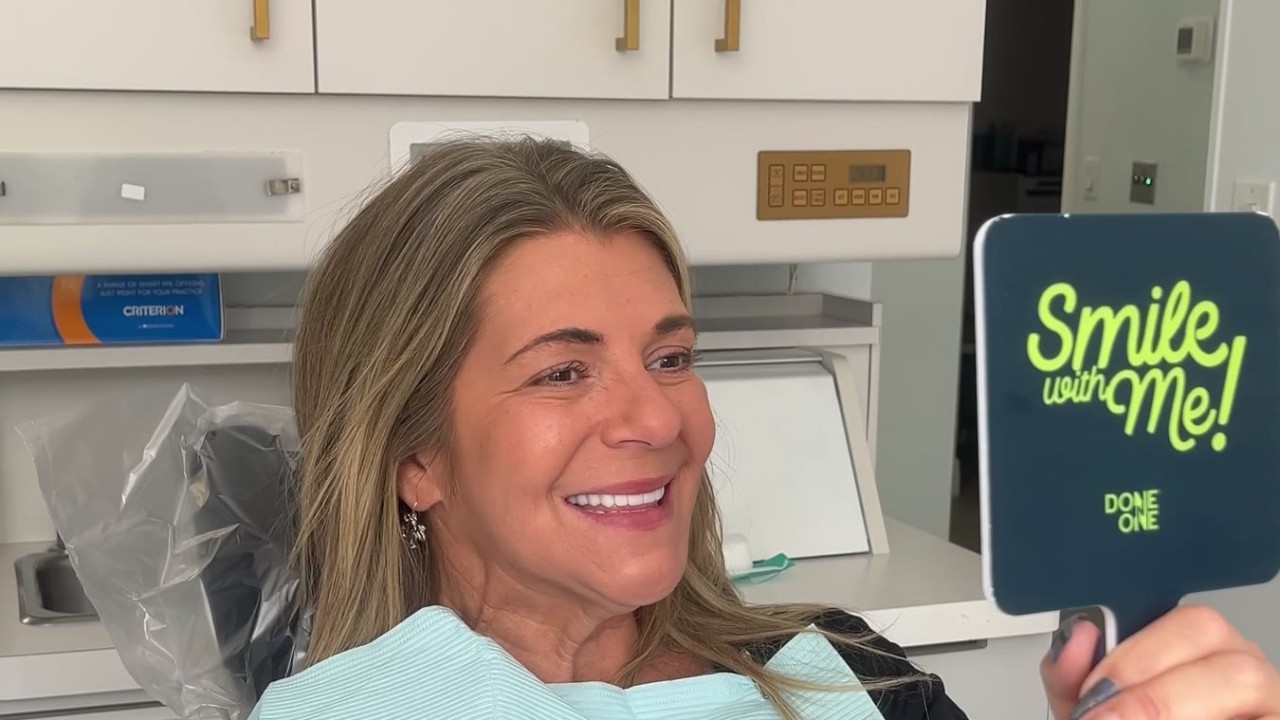
I received their call and they scheduled an appointment for me, I loved their transparency, this is not an “Come here, we’ll check you and we’ll tell you…” office, this office is a real what you see is what you’ll get.
Price and quality are different questions
Some practices charge a lot and do poor work. Others charge less and do excellent work. Price tells you how a business is run. It doesn't tell you what your teeth will be like.
To judge quality, ask:
- What's included, and what's billed later?
- Who does each step, and where?
- What are the first teeth made of?
- What does the warranty cover, in writing?
- How many of these has the surgeon done?
We publish our fee
When we started showing our price, people told us nobody does that.
We understand why practices hesitate. When a case varies and a second office is involved, it's hard to promise a number. But without one, you can't tell whether this is within reach, and many people wait years because of it.
If a practice won't give you a number, ask them this: what would have to happen for this price to change? A clear answer tells you they've thought it through.
Quick answers
Why can't some practices give me one price?
Often two offices are involved, and practices aren't allowed to split fees. Each one has to bill you for its own part.
Does a lower price mean lower quality?
Not necessarily. Price mostly reflects how a practice is set up and how often it does this work. Ask what's included and who does each step.
Why is your fee lower than my dentist quoted?
We do this all the time. The lab and equipment cost the same whether a practice does five cases a year or several hundred, and an office doing only a few has to spread that cost over fewer patients.
Hear it on the podcast
Read next
How do people pay for full-arch dental implants?
We work with several lenders, or you can pay outright. This year most of our patients are financing, though a couple of years ago it was closer to the other way around. Applying is a soft credit pull that does not hurt your credit score, and most of our lenders don't charge a prepayment penalty. You don't need your finances sorted before your consultation. And if a lender says no, that's not the end of the road.
Answered by Dr. Daniel R. Noorthoek
Read the full answerWhy does insurance treat teeth as cosmetic, and is dental insurance a scam?
No, dental insurance isn't a scam. It's built differently from medical insurance because almost everyone uses their dental benefits every year, so the coverage has a yearly cap. As for "cosmetic," the thinking goes that a denture lets you eat, so anything fixed counts as a preference. That holds up on paper. We think it's wrong in real life.
Answered by Dr. Daniel R. Noorthoek
Read the full answerWhat should a full-arch implant warranty actually cover?
A good warranty covers the things that really go wrong, like chips, breaks, a failed implant and the grafting to replace it, relines, adjustments and X-rays. Our Lifetime Warranty covers all of that, for as long as your membership is active, and it tells you plainly what you need to do to keep it. It's $700 a year for a full mouth ($59 a month), and it includes your annual visit. It renews each year, and we ask two things to keep it running. Keep your annual visit, and hygiene the practice judges adequate.
Answered by Dr. Daniel R. Noorthoek
Read the full answer