The conversation
▶The best moments are marked. Tap one to hear it.
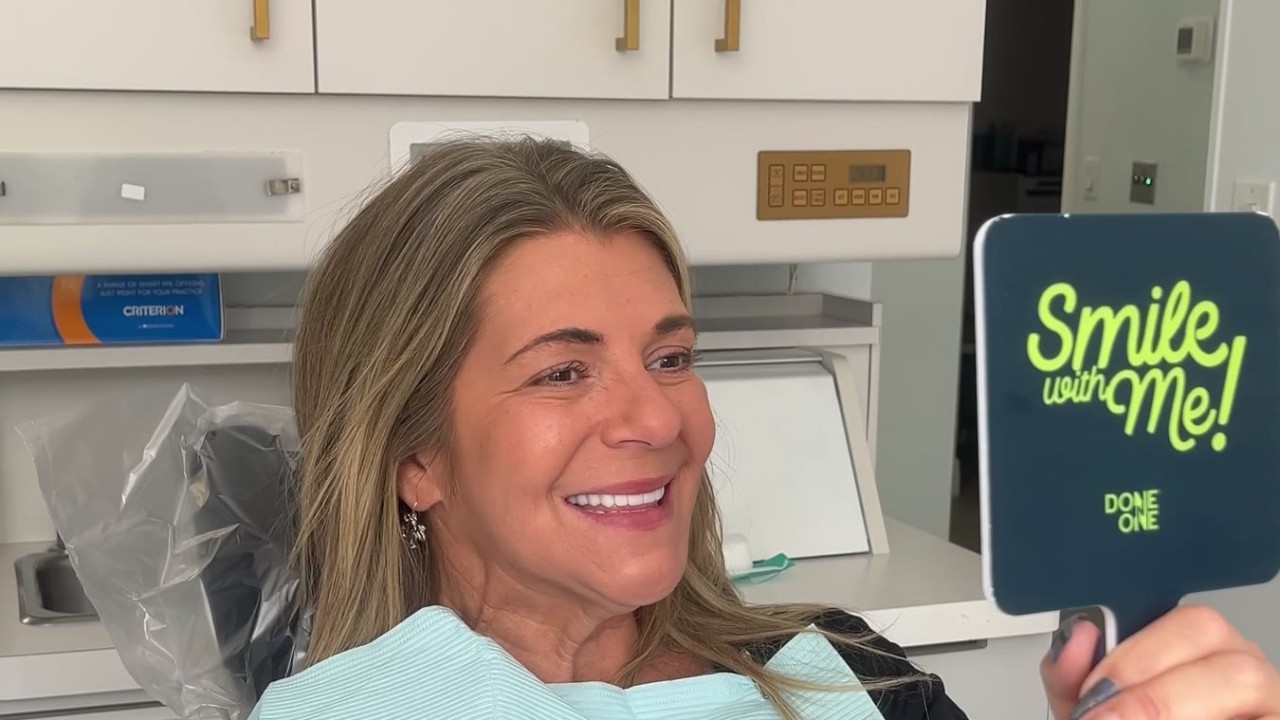
In this episode of Beyond the Arches, Dr. Daniel Noorthoek and Erica sit down with Alex, Dawn's daughter from last week's episode, and the first voice patients hear when they call Done In One. Alex works remotely from Indiana as a Patient Treatment Coordinator, and her path to that role is one of a kind: she was a patient first.
Read Alex’s story'I didn't even know they had failed'In this episode of Beyond the Arches, Dr. Daniel Noorthoek and Erica sit down with Alex, Dawn's daughter from last week's episode, and the first voice patients hear when they call Done In One. Alex works remotely from Indiana as a Patient Treatment Coordinator, and her path to that role is one of a kind: she was a patient first.
Key moments
Part 10:00
This is Beyond the Arches, where full-arch dentistry meets real talk. Let's get into it. Hello and welcome to Beyond the Arches. I am your host, Dr. Daniel Noorthoek. Today we are blessed with the honor of having Alex with us. Hello, Alex. Hi. Alex is not only a patient, but she's also an employee because she loved it so much. And we also have Erica with us as well. Hello. Welcome, Erica. Erica. So this could be a really long one because we have lots to talk about.
Why don't we start at the beginning? Let's start with more or less how you ended up meeting us and just the problems that you faced more or less with your teeth to then end up becoming a patient of ours. You want the whole story? Sure. Bring it on. I've always had dental issues. We were actually just talking about this last night. My mom and my brother, she was telling me about this horror story, and I don't even remember it because I was so little.
But I was at the dentist for something, and I was screaming and crying, and I guess the dentist was yelling at me. So my mom took me out of there. So I've always had issues, always in and out of the dentist. And then I got braces when I was 12. I had them on for two years. And I have... I actually had to get them off early because I had root resorption so bad that, like, my teeth were really loose.
Was it just bad orthodontics where they were putting too much pressure too quickly, or did they have an idea of why that happened? No, I don't think so. Root resorption is, like, potentially just braces were on there too early or too much pressure. I don't know what happened, but, yeah, it was bad. And then I had to get, like, one of those permanent retainers put on the back of my teeth. And I don't know. Then I just...
I had a lot of cavities, kept getting fillings. They'd fall out. I have to get more fillings. And then I actually couldn't go to the dentist anymore because my dad lost his job, so we lost the insurance, and my mom couldn't pay out of pocket. So things just kind of went bad. At this point, you're around what age? So when things started going really bad, I was probably about 16 because then my wisdom teeth were coming in, and they were impacted.
And so it started pushing on my teeth. And so I had those removed. And then maybe about a year later, I was 17, and this is when my teeth actually started breaking off. And my mom was able to find a surgeon, and I went and had five teeth pulled. Yeesh. And it was, like, all my molars. And things just, like, really went downhill from there. They were just, like, crumbling, falling apart. Then I was 18. And at this point, I qualified for, like, the government insurance on my own.
Medicaid, right? Yeah, something like that. And because I was under 21, a lot of stuff was still covered, like root canals, crowns. But you were really limited in who you could see. So I went to this guy. It was just him. His wife was the assistant, and they had, like, a front desk person. It was a very small office. And he... He root canaled every single one of my teeth that were left, did a post and core buildup, and put crowns on all of my teeth.
And it took, like, a year. Yeah. That's a lot of work. Yeah, it was a lot. But, like, within a year, the crowns started popping off. I started getting infections. And then I was back to getting more teeth pulled. So I went to see... What's a root canal specialist called? Endodontist. Yeah, I went to see him. And he's like, no, like, I can't redo these. Like, it's just... So at that point... How devastating is that to be a young...
Yeah. I mean, very young adult at that point. Yeah, I was like, I don't know what I'm going to do. So then there was, like, a point in time where I was, like, looking into dental implants because I really did not want to get dentures. But it just was, like, so crazy expensive. I actually... I went to see someone in PA. And I think he quoted me... It was 30... It was $35,000 per arch. Wow. Yeah. And I was like...
I think I had, like, a waitressing job at that point. And I was like... So eventually, I just kind of accepted that there was nothing else I could really do. And I just had to get the teeth pulled because I was miserable. So I started with the upper arch. I think I was 21. Okay. And I had all those teeth pulled. And I had the denture. And I hated it. It's such a hard... It's such a hard time with it.
I kept going back to my dentist. And I kept having her take some off the palate. But she wasn't doing enough. So I went on YouTube. And then I got my own Dremel. Because it was putting pressure on. I just kept gagging. I just kept gagging. The length. Yeah. It was just too much. And I have a sensitive gag reflex. Yeah. So for just... I'm going to add a little, like, dental context. So when you're... The big thing that sort of sucks about dentures is you need whatever is there to hold on to and put pressure on.
And so there is anatomical structures that you're trying to capture that kind of give it sort of like a hook in. And so for you, where that anatomical structure was, was probably, you know, further back. And she couldn't tolerate it. So for retention, it just... You either lose... You either gain comfort and lose retention, or you keep the retention and you lose the comfort, which is pretty... Awful. And then the other problem is, of course, they're loose.
They don't give you the pressure and the power of chewing, which I'm sure you can get into. But the other thing is, like, sore spots. Did you have a lot of sore spots? Yeah, initially. And so it was, like, really rough for probably the first two months at sore spots, bone spurs, gagging. Yeah. And then I just... Things were not getting any better. So I just completely took it into my own hands. I bought a Dremel. I bought...
There's this stuff called Reline-It that you can buy. It's, like, you do a Reline at home. I bought that. I bought Cushion Grip. I bought all this stuff. And I took the whole palette off that sucker. Like, completely. Like, it literally was, like, the size of, like, what I have now. Like, there was nothing holding it in. And I just smushed as much Reline-It and stuff in there to kind of... So it had a little bit. And then I just would put glue in it.
And that was okay.
Part 26:53
I went back to my dentist and she was like, what did you do? Like, are you wearing... I'm wearing this. And how long did you wear that one and such? About a year. And then I went back a year later. Had all the bottoms removed. And at that point, I was ready to have, like, my... Did it fix it? Like, were you happy with it at that point? So once I had the bottom done, it was weird.
Because then I was actually able to kind of adjust. So I had my permanent denture made for the top and the temporary bottom made. And with the new one, I think because I had, like, the bottom to focus on a bit more. So I was able to tolerate more. I was able to wear the top of the palette on the top. So I didn't take that much off that time. But I still took off a good amount.
But I was able to wear the top with no glue. And then the bottom, same thing. I just smooshed the reline in there and made it, like, super, super tight. So it would stay in. But at that point, I was, like, thriving in them. I was eating corn on the cob. Wow. Yeah, I was able to really, like, eat anything. I mean, there was some movement. But I think after some time, you... Like, your mouth learns, like, muscle memory.
And I was able to just kind of control it. But, yeah, I did really good with them. I probably wore them for two years. Okay. Two or three years because at that point, I was 25 when I had this done. Okay. So you had that done. You had it for two years. Tell me the story about how you ended up sort of becoming who you were on TikTok. And, like, where did that idea pop in your head?
Was it out of frustration? Was it out of seeing a need for, you know, companionship or sort of, like, consolation? Where did that come from? So I think it was when COVID first happened. So everybody was stuck at home. And TikTok started becoming, like, a big thing. And I think it originally started in... There was this Facebook group called Dentures and Implants Before and After Support. But it's, like, a big denture group. And I posted in there a lot.
A lot as I was going through, like, that denture journey. And I would post about, like, foods I had that day and just different things that were, like, positive. And then I just started... I made a TikTok. And then, I don't know, I just started, like, doing all the trendy things and posting on there. And the following built up really, really quick. Yeah. You had a quite significant following. And after getting to know you, especially with talking to your mom, you know, she was saying, like, how...
You've always been very quiet and keep to yourself. It's kind of a funny juxtaposition that you would have taken that on yourself. And, you know, in context, it seems kind of crazy that you would have done that. Even looking back now, it's pretty crazy. Because I'm actually, like, more quiet again. I don't really post on TikTok anymore. But, yeah, like, I was posting multiple times a day. And just... I think it's because I was thriving so much.
And it was something that I really struggled with at first. And so I was doing really good. And I was posting about it. So then we found each other through, essentially, we were doing some promotion for an office that we were working with at the time. That's how we met. And then, very long story short, we were able to win you over into our team. Because on our side, one, we always enjoyed the interactions with you. But most importantly, I would say that we always felt like...
We always felt like... Your story and your background had come along so earnestly and in such a unique sort of fashion that you were going to be able to really be that compassionate friend more than just, like, a sales pushy rep or somebody that had always had teeth or, you know, just got this done because... But they had had the financial resources. Like, there are many different pain points that... That a lead, I'm sure, that you see on a day-to-day basis will come in with that you can empathize with and that you understand and you can help hand-walk them through that process.
And having that sort of position or where you're coming from is a big help for, I'm sure, the patients that are calling in. Yeah. And that was sort of the importance of applying pressure into you working with us. Yeah. On top of that, we've always enjoyed you being around. And we like people that have curious minds about how things work and such. And, you know, you're always participating in what the heck we were doing. Yeah.
Part 311:33
Little did I know you were vetting us for how you were going to use your Dremel on it. No. But, okay, so we got there. And once we did your surgery, we did your surgery with your mother. We talked about that in that other episode with your mom. And things went well. Yeah. The striking thing... Now that I know a little bit more of your background and history with your dental struggles is that you had a strikingly minimal amount of bone for your age.
So that tells me either the dentist's technique really wasn't thinking about ever putting dentures in or implants in. They're really bad dentists or the infection really did a number on you. Or anatomically, you just didn't have much to begin with. Probably it's a version of all three or four of those items. But the reason why I mention that is without having a ton of bone, we sat down and had a conversation of we got to be real careful with these and we got to really make sure this is our best go and things are taken care of because we don't want to go down our backup routes too early because you are still young.
And, you know, part of that is also kind of bringing to light is if you look at the numbers of the people that you end up talking to every day and they end up the people that we treat, it's sort of striking how evenly striated the groupings are for the age of a person that gets this done. You know, if I'm out in public talking and somebody's asking me about what I do, immediately, usually like the second or third question is, well, you know, you probably deal with a lot of older people and your patients are generally older.
Not at all. They can be very young. And typically in the world of dentistry, that's always been looked at from afar as, oh, if they have a younger patient base, that's, you know, they're probably doing the wrong thing. They should be saving those teeth. Like for your example, you're a young person with a bright future ahead of you with a really crappy amount of bone that was just absolutely forced into this scenario. And there's a lot of that.
That's what you see in our numbers is there's kind of a lot more of that than you would think. So sort of fascinating to kind of look and put it all together. But I just wanted to mention that, that the age almost doesn't matter. If you're in a situation that requires that you get this done, like we said, like we talked about when we did the surgery, okay, so you don't have a lot of bone. What does that mean?
It means be careful with it. It doesn't mean don't do the surgery. Because what are you going to do? Wait till it's worse or not live that portion of your life or, you know, feel bad about it. So we've had lots of conversations about that. Yeah. But I also mentioned it because we did have an issue with an implant going bad. We did have to replace it. We obviously never want that to happen. It can even happen in our employees that we're treating as perfectly as possible.
But everything kind of came out smooth and easy, right? Yeah. I mean, and that was one of my biggest fears. Like even before I initially had the surgery was I don't want to go through any more pain, infection, and I was so scared of implants failing. But honestly, I didn't even know they had failed because it happened twice. Oh, really? Was it two separate times? I don't remember it being two separate times. Yeah, so the first time I came in for my first cleaning and we knew right away.
I remember that one, yeah. I felt like just it's like a tingle. Like it's weird. It's not super painful. And you just you took it right out. And there was no infection. There's no swelling, nothing. I think we put one back immediately. Like, yeah, we put one right back in and it was so quick. I didn't even feel it. Um, put my teeth back in and another year later, I came in for a cleaning and same thing.
That one I thought you were going to have a come apart on. Um, it was the same thing. It was fine. Um, no pain, no symptoms. Um, this time. You took it out, you packed bone grafting in there and then we let that heal for three months and then we put another implant in and that one took. I had my cleaning yesterday and it was solid. Beautiful. Yeah. Boom. I was so happy. That's awesome. And that's like, it's hard to explain to someone that hasn't gone through it like yourself or somebody that sees it every day.
Like Erica, it's hard to explain that it can be a big deal, so you need to jump on it quickly, but it's also not this like life changing, devastating, like check yourself into a mental facility type scenario because it can get fixed pretty easily and it's, it is a pretty smooth process if you're in the right type of office with the right protocols and basis, like you can make it sort of a nothing bird or you just got to get to the point where it, it's finished.
Yeah. And that a little bit comes from when we're in our training or when I was in my training for this, the attitude towards hybrid dentistry and full arch stuff was that when Alex has a problem, now she's young and she can never get an implant replaced. And I don't know, maybe there were bigger disasters with lower technology or whatnot, but that's not what we see. We see if you have a failure pretty much for the most part.
You can fix it, you can address it, you can find other bone, and we're not putting you in this constant. The way that you stand today is, in my opinion, almost identical to when you had the first implants put in. And that's really cool. That doesn't tell me that this is not a thing that we should, or this is a thing that we should avoid in you or that we should be scared of implant being replacement or needing replacement.
It's something we want to avoid. But if it happens, it's like... It's not the end of the world. It doesn't, that doesn't alter my, oh man, that didn't work for Alex this first time. I guess we're going to go, I'll go home and cry. No, fix it and move on. Yeah. So I have a very curious question because I think this is the first time I've ever asked this question. So we're always sort of pitching that when you have the original teeth, the design that you love, that when you have implants in...
You can't lose all of them, but when you have enough to have reference points in the mouth for the design that we can sort of match it and get it really, really close to what you originally had. And I'm curious about your raw, uncut, unfiltered opinion on what that transition was like, if it was very identical and very matched to what it was. With the caveat of, did you make changes immediately? Did you want to make changes in between and therefore then you didn't experience what I was explaining?
Like my original teeth? Yeah, like did we ever go from the implant failed to put the implant in directly into a finished product again? Or did you go back to the drawing board some and redesign something? So we definitely made some changes. On the first time, right? Last March, I know for sure. Oh, you did? When the new implant was put in, I had to have a new upper made to... To match, to like line up. Right.
And at that point, we also checked my bite and made some small tweaks to my bite because I was having issues with my TMJ. And that actually, like I almost have no pain now. So whatever Dr. Laks did last year has been... And she just made very, very small changes. Like we didn't even change the aesthetics. They're all the same. But that's what we did last year. And then the time before that, there was one other redesign just because of the implant placement on the top.
And then on the bottom, something wasn't lining up. So a whole new set was made. At that point, I think all we did was just make the teeth a little bit shorter because they were just too long. And then I went whiter. All good. Okay. So no reference point. That's good. Yeah. And that's, you know, the joy of being in digital is that you can either jump to... Sometimes you have people that will come in, they don't know, they love their teeth, you just jump right into it.
More or less, you probably were more apt to be making changes because more or less you were here on a business work trip and had the time and could take part of the process and take advantage of the getting really tweaky. So that's probably what happened with your case. So that's probably what happened with your case in terms of just not going directly into a finished product. But I've always been curious. I've never asked anybody that question.
I guess I'm going to have to ask it again. Okay. Tell us, let's move out of sort of dentistry and move actually more into... So you work remote and you have a... What is your schedule like these days? Are you sort of sporadic still with kind of it interspersed? No. How about... I have a pretty set schedule now. Typically, I'm logged in about 9 a.m. Some days, like Mondays, I'll usually, since we have our meeting at 8, I'll check over everything starting like right after that.
And then I typically work till about 5 unless somebody wants to talk later or I decide I just want to work later that day. So usually like 9 to 5. How often does that happen where you have this like extra sort of after time that you end up working? How often does that happen where you have this like extra sort of after time that you end up working? These are not leading questions, by the way. I don't...
This is not even... Maybe like once a week. Not too often. No, not often at all. And then I work Saturdays and that's pretty much just kind of what I want. Like if I see there's like a couple morning calls, I'll start at 9 or 10. If there's nothing really going on until the afternoon, I'll start at like 12 and just call people back. Not really a long day at all. Sure. And for you? How has working remotely been for you?
I guess you kind of already did it with... I've been fully remote for probably six years now. Yeah. So I used to work at Benco. That was fully remote. And then I worked for a company called Frontier. That was remote. But yeah, I don't know if I could ever go back to an office setting just because I'm so used to it. Sure. Yeah. Your job does not like lend very well. To an office job anyways, because you do have that variety.
And then when you're on a phone, you know, unless you're going to set up like soundproofed cubicles, what do you want everyone like listening to your phone conversations and stuff with? So I'd imagine I've never seen your position as being anything but remote really. We're kind of on your own space and schedule because you're the one that's going to be able to know when those calls come in, etc. Yeah. You know, I think one time... Robert came to me and just mentioned that, you know, maybe you were starting later on Mondays because generally like people are getting back to work and such.
And he said it kind of like I was going to be like upset and like, dude, it's whatever the schedule is correct for you and the patients for the best amount of time and contact. There's no reason to be bothering people when they don't want to be bothered. Yeah. So interesting. And so you working remote. If you... You do miss a little bit of the office culture. So that's a little bit of a downer. Yeah. Like if I live down here, I'd come into the office a lot.
Mm-hmm. Just pop in. Even I think watching surgeries would be super cool. Yeah. And just seeing everybody. Mm-hmm. So I would definitely come in. Yeah. Maybe someday. Hopefully. Maybe. But even though you're remote, you're still in communication with the office every single day. Oh, yeah. Like 24-7. Yeah. Because we're constantly texting each other. Yep. I guess that's where I was getting at. And I did it poorly. But I guess I was getting at like, do you ever feel like even though you talk to us every day, you know, say you talk to Eric every day, do you...
So you're like in heavy communication, but like you're still distant. So there's like also an aspect of like feeling left out a little bit, I would imagine. I don't feel that at all. Okay. Awesome. Honestly. Like... Yeah. Yeah. I guess we have access to all the same things. Like I'm looking at the same schedule they are and we're talking about it through text or I'm calling them. Hey, can I... Can we see this patient at this time?
And so we're constantly talking and looking at the same stuff. Mm-hmm. That's true. Yeah. So moving on from there, you moved from Pennsylvania. When we met you, you lived in Pennsylvania. You've now moved to Indiana. Mm-hmm. And how do you like living in Indiana? I do like it. It's pretty similar to Pennsylvania in regards to the weather. We have all four seasons. Mm-hmm. We get snow. Are you a seasons gal? I am, but I'm starting to get really, really tired of the snow.
I just hate it so much now. I do like fall and I do like spring, but I hate winter. Yeah. It's brutal. Yeah. You don't have to tell me. There's a reason why I'm down here and not in Michigan. Yeah. So same type of seasons. I live in Fort Wayne, which is a really, really big city. So like where I grew up, it was like a little tiny like farm town. Yeah. That no one's ever heard of.
So Fort Wayne is like a really big city. So there's like a lot more crime and stuff. Do you like living in the more populated area of Alabama? I mean, there's more to do, but I'm also like kind of like a hermit. Mm-hmm. So I don't really go out much. But if I want to, there is like a lot to do. That's awesome. And do you, speaking of hobbies and interests, what are sort of like your big things that you like to do?
Are you a art person, go for a walk person? We know that you love animals. So how do you pacify that passion during the week?
Part 426:46
So I kind of go through like stages of things where like, I'll be super into something for like a month and then I'm sick of it. I'll put it away for a year and then I'll move on to something else. Like I like collecting like rocks and things and I have a little rock tumbler. So I'll go through stages where I'm like, oh, I want to tumble all these rocks and get them all polished. And then I'll forget about it.
Let's pause on that. How well can, like how well polished do they get? Is it pretty, pretty wild? Yeah. Like where they're just like, like you can rub them on each other and like, they make like a certain sound and they're like super shiny. Like what I would imagine, like the teeth are like, yeah, like a similar feeling. But it takes a long time and there's a lot of steps. How long does it take from sort of start to finish?
It's like a month or something, right? Yeah. Like month, month and a half. Sometimes you have to repeat certain steps. Do you ever, how do you select a rock that you're going to put in there? And it has to be a bunch because they're rubbing on each other, right? Yeah. I don't know. Just whatever ones I think are the prettiest and are kind of similar in size. Did you, do you ever put rocks in there that you think are going to turn out really awesome and they turn out terrible?
Yeah. More often than not, based on your response. And then some of them, like I think like, oh, they're not really going to turn into much. They actually like look pretty cool. That's awesome. Like you can see through them. Do you have like a certain, I don't know, rock that you like? Like a type of rock that you really kind of know consistently this is going to turn out really good? So not that I actually can find anywhere.
But like. Like when I go to rock shops and stuff, I always look for a Labradorite. It's so pretty. I don't know that one. You can like, it's got like different like dimensions of like color in it. So like if you shine it in the light, like you'll see all different colors. Okay. Yeah. I really like those. And how did you get into this hobby? Did somebody randomly give you a rock tumbler when you were a kid or?
No, I've just always liked looking for things. For going for a walk or something. I'm like, oh, that's a really cool rock. I'll just take it home. Or like even like the seashells. I'm always looking for stuff. Just neat little things. You found a shark tooth the other night. Yeah. You were saying the other day. Yeah. Just like looking for things. And then I found out we had like this really cool like rock and crystal shop by our house.
So me and my friends started going there all the time. And I started spending way too much money on rocks and things. That's awesome. And do you have a rock shop local in Fort Wayne? There used to be. There used to be. I'm sure there are a couple. I try not to go too much because. I would imagine like rocks are not like you can't just Amazon the rock that you want. I think you can. Really? I don't know if they're real or not.
Maybe. You'd be surprised. Geez. Yeah. You can buy them online. I know you know what I'm talking about. But you know the prank that everyone was doing like six months ago where they were fake gifting each other. Yes. Like the rock from Anthem. The prology that was like the five hundred dollar rock. And I saw. So like how the setup was like say Erica's boyfriend was just like sort of peripheral to her and you came over to like give her a Christmas gift and you came over and the gift would be a wrapped like rock.
We'll say, you know, about 10 inches around six inches around something like that, like a big almost like an entry stone that you would put somewhere or something. And when Erica. Opened it, she would freak out and be like, oh, my God, Derek was her boyfriend's name, Derek, like it's Alex gave me the anthropology rock and he'd like look at it like this. And she'd be like, babe, it's like a four hundred dollar rock, you know, like because it was like a name brand rock.
Yeah. And the guys like ubiquitously would just like unanimously would just all freak out because what? Four hundred. Are you stupid? Why do you pay four hundred dollars for a rock? Oh, my God. That's hilarious. I would have thought for sure with your. It was so funny. Like involvement on social media and your love for rocks that you would have seen that. Honestly, so like when I'm scrolling through TikTok and such, a lot of what I see is just like animals, teeth stuff.
A lot of teeth. Yeah. I have one last question. I promise we'll get off rock tumbling. Do you have like a better than kids version of the rock tumbler? Or. Do you have like the one that you would buy at like the learning store or like the hobby? So my mom got it for me for Christmas one year. I think it's just like the National Geography. The little kit. Yeah. It's a little. I think it's like a hundred dollar.
Like it's like pretty. It's not that big. Yeah. It's kind of loud. And yeah, it's loud. Yeah. Yeah. Keep it outside kind of thing. Yeah. Or put it in the closet. Shut the door.
Part 531:45
And the like, do you have to get the different like. You put like pumice or like. Yeah. Like different grits. And then there's like these little like waxy looking cube things you put in. Oh, the whole polish them. I never made it that far. I've only seen the rock tumblers. It's such a tedious process because you have to like clean it all out each time. Make sure you get rid of all of the previous grit. Yeah. That's a lot of work.
So usually I'll kind of just give up on it. And then maybe like a couple months later go back to it. Yeah. All right. So we'll get off rock tumbling. I was just very curious about it. Next. What else do you do? I don't know. I have a closet full of like paint supplies that I'll pull out like maybe once every six months if I'm bored. Do that for a couple of days and put it all away.
What's your medium? What do you like to paint? I don't think I'm very good or anything. Like sometimes like if I see something like maybe like a little like mountains or something, I'll try to like paint that. That's cool. Yeah. Always been into sort of art a little bit like that. Yeah. Um, I like reading on my Kindle, um, like thrillers, murder mysteries. Um, I watch a lot of TV. So for the, okay. So for the Alex fans out there and there, I'm sure are some, um, what are the, like in the last year, what are your top two books that you've read?
And, uh, then let's go on to, you know, top TV shows as well. Um, books. I can only think. I can only think of one. Um, well, it's like a top one. Um, it was called haunting Adeline and then hunting Adeline. It was like a two part series. It was really good. Um, TV. Oh my God. So I finally watched all of the walking dead series. Okay. I'm obsessed. Like I've said, you watched any before that? No.
Everybody kept telling me to watch it and I was just bored. Didn't have anything to watch. I started watching it. I was like, there's plenty of it. Right. Yeah. I couldn't stop like multiple episodes a night. And then, uh, recently we started breaking bad. Okay. I just finished breaking bad. Have you, have you, this is your first time through, you'd never watched it before and you watched it a long time ago. I just recently finished it. Yeah.
I, I had a big hiatus between like season like two and three. They really like lost me and I was over it. And then they kind of had like a rebirth. Yeah. Um, but, uh, but that's a lot of show to watch as well. I love having stuff on the, yeah, on the rack behind what you're watching. Yeah. I think we have a couple of shows going right now. We just started watching rooster on, I think it's HBO.
Yeah. Um, Steve Carell. Yeah. It's so good. Is it? Yeah. It's really good. We have that. And then we have the pit that we like. Never got into that one. Lily is watching that. She loves it. It's good. Um, Ted Lasso was really good. I think that's on Apple. I love Ted. Oh. It's so funny.
Part 634:49
Yeah. What about movies? Um. What's your genre? We'll go there. We'll start there. Where's your, what's your genre? I like to watch spooky things. Okay. Um, scary. Going back. Are you a stranger things fan? Um, I didn't watch all of them, but the last one I watched was pretty good. Um, I'd probably have to go back and watch it all over again to. I just finished it. I prefer, I liked the third season, but I really like, I know this is like blasphemy.
I mean, for the stranger things fans, but, uh, as a person that was just trying to get it done and watching it, just to say I've watched it, I had season, the last season really lost me. So I wouldn't say on my recommendation, I wouldn't make you go back and watch it. Maybe if I have nothing else to watch, I'll go back through and watch it. So category movie, like sort of like spooky stuff. I also like a lot of medical shows.
Um, maybe last year I binged all of ER. That was, it came out. Mm-hmm. Oh yeah. George Clooney. Yeah. Uh, Grey's Anatomy. Did you ever watch, um, oh man, I'm going to mess this up so bad. I forgot. It was a show that was on Showtime and it was a doctor from like turn of the century, like 1900s. And, um, he, uh, it was, uh, Clive Owen was the actor. And he was a. He was a heroin addicted, um, medical doctor and, um, is a really cool, it was only two seasons.
Oh, it's called the Nick. Yeah. K-N-I-C-K. I don't think so. But it sounds good. You should check that out. If you, cause it's got like medicine in it and it's got like, I won't say thrill, but it's, it's on the edge the whole time. Yeah. It's not a, it's not just a, a story. It's he's kind of like on the edge of just totally falling apart all the time. You should watch it. It's very fascinating. Turn of the century kind of stuff.
That's my list. People just dying for what you would never die from now kind of thing, you know, just medical mistakes, et cetera. Yeah. Probably not what we should be talking about. Wow. On the podcast, but. That was good stuff. Yeah. I just saw Project Hail Mary. That was pretty good. At any rate. Can't relate. Moving on from movies. Cause you guys don't, uh, watch movies. Sorry. I was just telling Alex actually right before we started, I said, I, I don't own a television.
So I already told her I'm not gonna be able to relate. Let's talk about your house. So when you moved to Indiana, you took on a pretty big project and have done some pretty cool stuff. Yeah. Yeah. So, um, I moved in with my boyfriend, owns that house for probably 13 years. Um, it was built in the eighties, so it had like the original popcorn, um, cabinets, uh, countertops, toilets, everything. Yeah. Um, so after living there for some time, I just kind of started taking over and doing things.
Of course with his permission, um, and we picked things out together, but yeah, I removed all the popcorn. Um, that was a nightmare. I hated it. I can't even imagine that you've done it. You did that yourself? Yeah. Wow. Yeah. And at first it like really stuck, but then I kind of like figured out like little things to make it go faster. Sure. Like I'd hold like a bucket up and just scrape the popcorn into the bucket.
And then it was like, okay. I'm going to dump it in a bag. That's a lot of work. Wow. Yeah. How long did that take you? Months. Yeah. Cause then you have to like, I had to go and spackle and then sand and then re-spackle and re-sand. And then you have to prime it like twice, then you have to paint it like twice. It was a lot. Your dad's a carpenter though, right? Mm-hmm. So you probably have some sort of like point of reference or some skills.
A little bit. Or like I always have him. Like I'll call him and be like, okay. I want to do this. Like how do I do this?
Part 738:47
What do I need to buy? Yeah. What's the latest project? We got a new shower door for the master bathroom that we have to put on. We replaced the toilets. I think the last like big thing was like the pantry laundry room. Oh yeah. I saw pictures of that. Yeah. It was amazing. Yeah. You need to show Erica. Yeah. I'll show Erica. It's unbelievable. The before and afters. Yeah. It was basically like a side-by-side washer and dryer.
There was some shelves above it and that was it. And then so we took that all out. We've ripped the shelves out of the wall. We moved the dryer vent and then we got a stacking washer and dryer and then I put some shelves in like in the corner and then we got put like a pantry thing in and painted it. Yeah, the new trims. It looked professional. I love organization. Yeah. Yeah. It drove me nuts that there was no pantry.
in there and like you'd open the cupboard and like all kinds of things would fall out yeah and that's what i love about talking about like your hobbies and stuff is it especially you know seeing that on this podcast we're talking about how you're the phone call in the beginning in the face like i love how uh you're you can easily be you very clearly can be easily inspired and you are not afraid of a big project and so putting those two things together is a great you know attribute to have to work with a team and be sort of on your own because you don't have to worry about oh is alex going to be motivated to wake up every day well heck the woman took down popcorn ceiling she'll be fine you know um but that's what i like to get into is just sort of to exemplify just you know how and why we pick our employees and how they fit into sort of the mesh and the calculation and the mesh and the we like people that are fired up and ready to do and become passionate on projects and such yeah lucky for us we weren't one of those hobbies that you put down and like put away for like six months yeah no um what else you got anything erica the only thing i can think of so far we still haven't asked her her favorite meal things that she would eat after the 90 day that's a classic what was your first meal after healing from surgery i love corn on the cob so once i was able to like eat that i was so happy um not a huge steak person um salads yeah that was really good to have to be able to have like croutons um crunchy tacos uh crunchy pizza because i mean i would have like really soft pizza and kind of cut it with a fork so like good like crust pizza that was good very nice we were chatting about how whenever you come to florida you kind of make your own food and you're like oh i'm gonna make it into a family trip and it's always like really fun and we get jealous because you get to go to animal adventures on friday and we'll be in the office and we were talking about the little mini cows and how you just you love animals your mom said you'll like spend 10 hours with them yeah my dad wanted to kill me growing up because me and my brother we would bring home all kinds of animals we actually um right by our house there was a possum that got hit and killed by a car and all of the babies died except for one oh boy so we took it in and we had a pet possum it was awesome yeah we named him mickey um probably a year or two wow that's a long time to have what does a possum act like what is their demeanor they're kind of like a cat um they eat cat food um you could try to like litter train them i think but he just was not doing it so did he sleep upside down um sometimes or like he liked snuggle up like in my armpit he would put like his old nose there he was cuddly yeah wow yeah he would fall asleep um on me should you bathe him like take him in the shower with you or like no we would wash him in the sink um and he would just roam around the house okay um they would um they do this thing i think it's called snubbing where like they rub their mouth and like nose on you and it means they like love you oh that's cool yeah what how did you end up then not going to like releasing so it ended up becoming a lot so sure um we reached out to someone that had like experience with them and they they took them on we were really sad but like almost like a possum sanctuary because i can imagine like after two years of domestication or like yeah like he would never be able to go back in a while because we had him when he was like a little teeny tiny thing uh-huh yeah wow nicky mickey mickey and then we had betty the same thing she ended up going to um my brother's friend had a farm with other chickens so when she was like really big we couldn't keep her in the house anymore yeah yeah yeah yeah we had chickens um did she lay eggs probably oh you know actually unfortunately um now that i think about it i think she ended up getting eaten oh by a coyote on the farm the story is true so sorry fantastic mr fox yeah it was a long time ago we were real little um we would bring kittens home we brought uh bella lily was a stray i found her under um a trailer oh boy she's crying um what is it about animals you know other than the obvious that they're cute do you like feel like you bond with them yeah yeah i just love them yeah like my dogs i talk to them all day what kind of dogs do you have how are we this deep in and having talked about your dog oh yeah so we have so jeff has a buster he had him for a couple years before i moved in um at first he did not like me because he's very like reactive to people and other animals so at first he was like did not like me what kind of dog he's a boxer okay and amazing dogs within a week he would be sleeping on top of me on the couch and now he's a complete mama's boy that's awesome um and then i brought linson home um after jeff was feeling better and good um i went to humane society and um originally they told us they were mastiffs um but then i found out he is great pyrenees lab and anatolian shepherd wow so great pyrenees i lived with one for a while in uh perio school uh when i was in my residency and those he she was so loud in the morning like didn't stop barking is your dog winston so he loves barking at um we have tons of wildlife in the backyard like we have geese squirrels uh groundhogs he loves barking at them and he's just very loud overall like he makes these dinosaur noises when he gets up in the morning like he'll do big yawns and like just makes the funniest sounds and he loves playing with buster and like he'll just go over and he opens his mouth as big as he can and he just makes like dinosaur noises like right in his face and he's like oh my god he's like oh my god he's like they're very noisy yes he is great pyrenees is like think of like a double or triple size golden retriever wow yeah he's super hairy there's a lot of work to clean up after with a with a hair
Part 846:28
yeah and allergies like he uh he has really terrible allergies and he sheds like crazy so we have to take him in to get like allergy shots and i take him to um there's this place where you can groom your dog yourself and i have to give him a bath it's a lot yeah yeah wow dogs are a lot of work they are but i love them human mouths are a lot of work a lot of work everywhere yeah well um alex we've had a wonderful time talking to you i'm sure the patients really enjoy uh the ones that will be working with you in the future but also the ones that have worked with you in the past i'm sure will really enjoy this episode so we appreciate you coming on and making the effort to open up and let us talk to you about your personal life and uh get a peek on you know a day in the life and um you know if you enjoy this podcast and you're wondering about should i do this and i people are going to judge me and feel scared or you know and you feel scared or ashamed about anything i guarantee you alex is the same way on the phone as she is uh here on this podcast so give her a call ring her up and um make that appointment because no one's here to hurt you or make you feel bad we're here to to help and fix and um we've always had a a nice comfort having you as the the um initial contact so we really appreciate it alex and um you know we'll come back to next time and uh we appreciate everybody listening and uh like subscribe follow all that stuff thanks alex appreciate it