The conversation
▶The best moments are marked. Tap one to hear it.
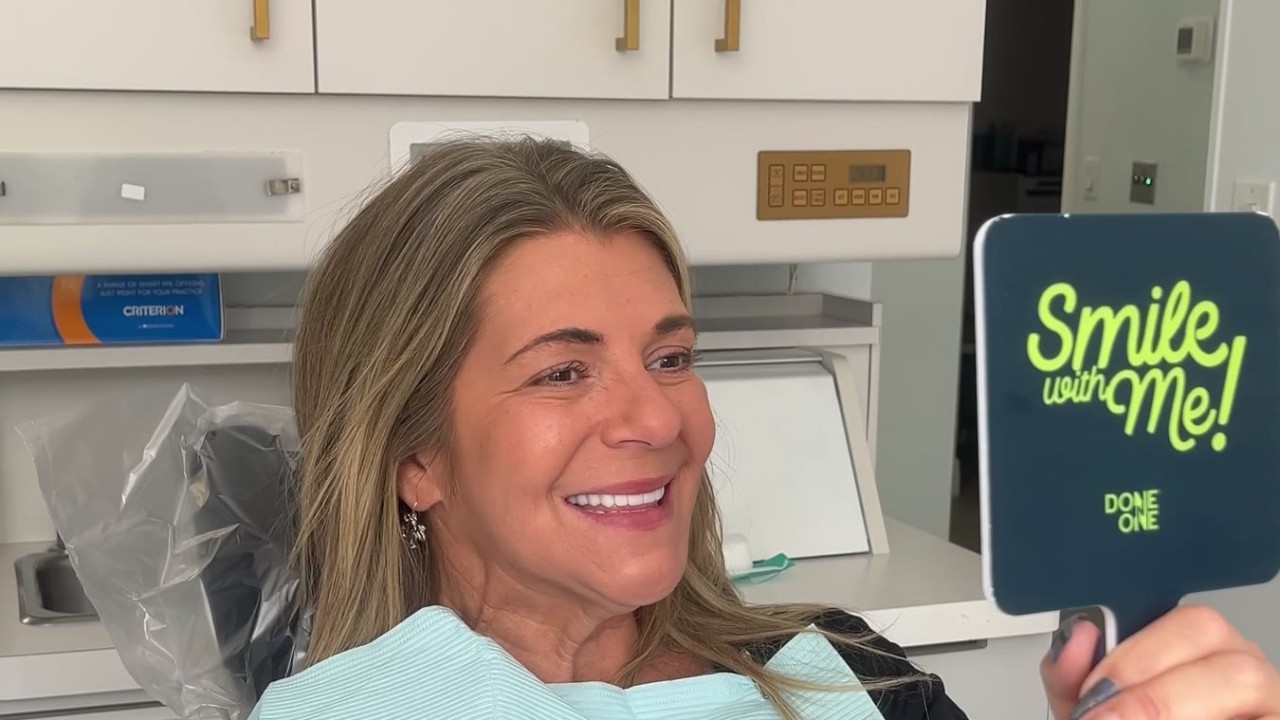
In this episode of Beyond the Arches, Dr. Daniel Noorthoek and Erica sit down with Done In One Lab Manager, Donaldo, for a behind-the-scenes look at the lab that helps make the full-arch process possible. This is also the first episode recorded in the brand-new Done In One studio, marking an exciting new chapter for the podcast.
This episode answers Who actually makes your teeth, and where?
In this episode of Beyond the Arches, Dr. Daniel Noorthoek and Erica sit down with Done In One Lab Manager, Donaldo, for a behind-the-scenes look at the lab that helps make the full-arch process possible. This is also the first episode recorded in the brand-new Done In One studio, marking an exciting new chapter for the podcast.
Key moments
Questions answered
Part 10:00
This is Beyond the Arches, where full-arch dentistry meets real talk. Let's get into it. Hello and welcome to Beyond the Arches. I'm your host, Dr. Daniel Noorthoek. With me, we have Erica Pullen. Hello. Welcome, Erica. Thank you. And we have Donaldo Sandoval. Is that how you say it? Yes, sir. I always mess it up. Donaldo is our lab manager here at Done In One. And so today we thought it would be appropriate to bring him in and discuss just sort of his journey and what his day-to-day looks like and sort of introduce you as a patient or a listener to sort of what he does and what his day-to-day looks like. Before I do that, you may notice that the audio and visual feed are a little bit different. And that comes from we are in our new home.
And actually, that's probably the main reason why we have Donaldo here today is we are located in the lab. So we have built out our own studio and decided that the time is right for us to do our own thing and get our own feed and audio and be able to use this as a little bit more of a home base and be a little bit more creative with getting video and audio and different things with patients, etc.
So, Donaldo, welcome to our Done In One's podcast studio's first episode. Thank you. But also, we're in your backyard now. So thanks for having us. Yes, as a matter of fact, what better way to start this new journey than having the lab manager to be the first guest. Exactly. So I really appreciate it. It's fantastic. So, Donaldo, your name is on the door, lab manager of the Done In One. Why don't you give us a quick overview of maybe what Done In One, the lab at Done In One has in terms of like brief equipment and kind of the things that we do day to day.
Okay. So as far as, you know, the equipment, we have printers. We have a 3D printer that is awesome. We use that printer to process our temporary cases. Once the patient is done, after surgery, after the scans, after the design, then we do the manufacturing, so to speak. Okay. We start with the PTIs, which are the prints that the patient is going to wear, you know, let's say max of 24 hours, sometimes much less because they have two or three or even sometimes four set of printers.
We also have a milling machine. We have three milling machines right now that are the ones in charge of actually just manufacturing the final product. Okay. Zirconia. Okay. So we have those two machines right now, which is basically our bread and butter that we do every single day. That's awesome. And so what's interesting about our lab is we'll have people. Ask us about making a partial for their, you know, maybe I have a general dentist that's a friend or somebody may call into the office and say, do you guys make X, Y, Z crowns?
We really don't. And there's a reason why. And that reason why is just the efficiency of it. There are lots of labs that do it well where they make hybrids and crowns and different things. But when we were starting this, we wanted to really focus on sort of being a one one trick pony of sorts and really get the efficiency. Out of everything. And so every single one of our machines has the ability to do all of the extra stuff, but it's nice to always be speaking the same language to, I'm sure for you guys, for the doctor to speak to the lab and everyone's always speaking about the same machinery and the same sort of parts and pieces as it were.
And so that's, that's proven to be really pretty cool. Something that's really cool. I find that's cool about your job. And although is that you kind of. It's a oversee sort of all these different pieces coming together and get to sort of be the orchestrator and the conductor of sorts to, to get all of these things running and keeping running smoothly. Correct. Correct. Correct. I think that, like you said that to the, the flow is very important.
Some kind of like the glue guy between the office and the lab. This is true. We communicate with Denaldo pretty much 24 seven from the office and like myself and Lilia, Dr. Lacks, Nadia. Jessica, I know everybody is in constant communication with Denaldo. Correct. Correct. Constant. It's key. I mean, it has to be a key. Otherwise, you know, the left hand has to know what the right is doing. Basically. Absolutely. The, uh, and that's, there's a, there's the personal contact that you guys have to stay in contact with.
Part 25:18
And then there's also the lab side. So there's the management software that makes sure that your cases and all of the files come through correctly, which is what allows us to have. My, uh, different locations and different, uh, offsite design tools and, and things like that. Do you find that being home in Boca that say, for example, Erica talks to you more than say Vanessa in Tampa talks to you? Yes. Is it, does that make, do you think that that makes it more difficult for the Tampa cases or in, I'll tell you the reason why I'm asking this.
Okay. Okay. When we started the Dunham one, when we were just a lab up in Jacksonville, there was a part that I would see where, uh, when I would go do a case in Palm beach, we'll say when I would come do a case, I could see the frustration from the doctor's side that was in Palm beach because they would say, well, this isn't perfect. And this isn't perfect. But then when I would try to explain that to my business partner who only worked in Jacksonville, since the lab was in his backyard, he had this sort of.
False sense of reality that all of the cases go perfect. And what's funny is I feel like I've kind of created that same thing where I've kept my own lab in my back door and I'm like, oh, it's great. Everything works great. Um, do you see that that's sort of a thing, right? Like it, it's not even the convenience of the office speaking to the lab, but sometimes it's just a sub subconscious of, oh, this is Dr.
Noorthoek's office. We have to make sure that this one goes out. And we'll figure TAMPA out in a second. Correct. I think that's, that happens, you know, uh, I think also that the fact that let's say for instance, Dr. Lacks, um, which is located, you know, in our main office in, in Boca, uh, if there's, for instance, a case that I would like to speak to her about, I can actually physically go and see her. I can show her, okay, this is what's going on with these try-ins, this is what's going on with these finals, you know?
And. There's a sense more of a connection with it that way, you know, then for instance, talking to, you know, Dr. McDuffie, let's say FaceTime or by phone, you know, so, uh, I, I could definitely see that, you know, um, that doesn't mean that we will not be able to get the job done, so to speak, you know, but it is easier, you know, when you can actually talk to a person face to face, you know? Okay.
No, no, no. So, for instance, if the doctor wants to stop by the lab and talk to us directly, okay, you know, can you guys show me what's going on with this, for instance, with this case, it's much easier for us to show her, you know, how to, you know, what's going on with particular case at the point. I will say our restorative team probably does have a little bit of an advantage when it comes to that, because I know at least like even this coming Thursday of this week, they, they will be here in the morning and the restorative team is going to be meeting with the lab just to discuss a couple of specific cases.
Okay. So, I do think that we have kind of the upper hand in that, but at the same time, we don't necessarily, we don't always call you for, um, you know, like, um, it's not, it's not all the time. It's more so like particular cases or emergency cases or something that we're like, oh, this, this would be so much easier communicated just face to face. Correct. Correct. That's what I agree with. Yeah. There are some advantages and I see a little bit of, a few disadvantages.
For instance, we have a lot. We have two printers here and each of the other locations have their own printer that they know how to run, that they are responsible to do the temporaries on. And so their restorative assistants and their doctors are much more comfortable with that being in their workspace. And what that brings to them as an advantage is they can get it done really quickly. They don't have to ask or talk to anyone or run it across the town.
They also are a little bit more. Apt to be able to figure out what is wrong, if there is something wrong, uh, versus here, it's kind of still just an enigma because the printers are located here in the location. So there are some advantages and disadvantages, um, to us being here because if we needed Dr. Lex to run the printer, that would be a, probably an ugly, ugly morning. Yeah. Nothing, nothing against her. It's just the way that the system works.
So you have the comfort of somebody being in home. But you also haven't been trained to sort of have the, like, wherewithal to figure that part out either.
Part 310:02
Yeah. Um, and so we also, in addition to having those machines, um, you're in charge of like the scheduling. So we have somebody that's here overnight that runs the temporaries. Um, some temporaries get shipped out still, or, um, do they don't know temporaries go out to the other locations, correct? That they all make their own. Exactly. So you're in charge of making. I'm sure that any of the finals or Coney has get shipped out to the other offices.
Uh, anything that needs to be remade goes there. And then also the temporary cases in the finals for delivery and Boca, um, which includes doing the milling timing and, and all of that, we are still a small business, so we don't have a ton of machines, right? So you mentioned having the, the three machines, do we, do we, is that including the one? It just got remanned completely. So for a little while, we were actually even only on two machines.
Yes. Um, that's something that's always been astounding to me is how much can get done when you properly schedule and how much can get done on, on so few machines, the amount of cases that we put out in a month, uh, is sort of astounding when it comes to, if you're to take a. Uh, a tour of the lab for us. it's normal now but i remember when we used to when we were sort of deciding what our model was going to be and when we were developing done in one the it was always um when we would have somebody that was looking to like invest or maybe become a partner with done in one we'd bring them into the lab and you always had to kind of prep them now this isn't going to be astounding you're actually going to be astounded at how few machines there actually are um but that's a positive because it allows us to keep our costs low it allows us to again know what is wrong with that machine because they're all pretty much identical same thing with the printers um and i think that that gives us sort of like a little a little bit of a fiery force or a little bit of a an advantage if you will yeah tell me um about let's let's talk a little bit about how you came into this role and how you um stepped through the process of getting to this point so tell me what why don't you tell the listeners rather um what you first did when you came here i first started as an overnight uh overnight person basically i was just running the printers and i was running the milling machines um that was my job you know i was making sure everything was printed making sure everything was milled um of course by that time nick was still uh nick which is our supervisor uh he was still doing the scheduling so i would have to basically file the schedule once the designer was done with his part then i would have to upload the cases to our software and then go from there either to print or mail so so i did that for about maybe a year so you had like 18 jobs i was i was teaching full-time i was teaching full-time i was teaching middle school um that is a local school my schedule was really insane i would start at eight o'clock in the morning stop teaching around four o'clock go home take a quick shower come to the lab be here by 7 p.m and then um sometimes leave two o'clock in the morning two o'clock in the morning depending on how much workload we had that night and mind you at that time we didn't have a nice machines or nice printer that we have yeah so it would sometimes take us maybe an hour two hours to bring the one single arch yeah you know so it was a bit frustrated i remember that i feel like our overnight position is probably one of our most underrated but most important positions that we have and our whole entire like team that we have built just because they're there i remember days like that where you know sometimes if you were out and if nick had to cover you or now now actually daniel covers sometimes if the overnight person is ever out just because there's nothing worse than like coming into the office and then getting a message being like hey guys like something didn't print properly but the overnight guy like you know unfortunately he had to be out last night so he wasn't able to catch it or whatever so i that definitely keeps us running smoothly from the get-go from our eight o'clock start that is what keeps us going it's your role yeah it is it's very crucial yeah because if if that's kind of like the first step of manufacturing none of none of that gets done then what do we have for the next morning how are we going to take care of these patients that they're expecting you know this set of teeth you know being you know trying and so yeah like you say it's a very important role uh it's a role that for instance uh in my case sometimes i get a weird text one two o'clock in the morning hey i don't know all those something's going on with the machine or there's anything that i need to do so you know my sleep is not the best sometimes but i love it you know it's you know i i take pride of what i do yeah and now luckily since coming from that overnight position now you just get here pretty early and check all the cases before they arrive at the office that's always been our sort of secret sauce or what we've always really looked for is not necessarily the background and we've talked about this many times in our podcast but it's not necessarily the background and the knowledge that you come in with it's about how much you care about the result and if you care about the result enough then you're going to bring that forward into your knowledge base and your care for our patients and our group of people that we care about um didn't you at that time didn't you uh during that time or or at some point didn't you start working at fedex for holiday season or something like that yes yes yeah then although it was a working beast yes i you know i i'm one of those people that i'm not afraid of getting my hands dirty you know i'm pretty flexible when it comes to doing all the different type of things i think in life you have to you know um as much as you know how to do you know when times get rough sometimes because we never know life could change in a matter of seconds the better you're prepared the better you'll be better off you know so um yeah it's one of those experiences that i i i'm thankful for you know and that thanks to that experience i got to this job because you know at one point i was doing fedex part-time and i was like i'm not going to do it again i'm not going to do it again i was working here part-time you know and of course the opportunity came around you know to to run the show and it was i wasn't afraid of the big moment you know um because i wanted to be part of this team and and what four or five years later i'm still yeah so the learning we talk about the we talk about the critical nature the the crucial role that the overnight person plays and and and and and and and and and and and and and and and and and and and and and and i think that if you were to rewind back to sort of the beginning nick and i always kind of knew that the person that was going to end up running our lab was going to be the person that had shown their dedication and their consistency because when you're hiring someone that the number one thing that you need to find is somebody that's dependable that you know obviously does work but is is hard working but is most importantly i think dependable especially in your role if if something doesn't get done it's a big big big problem especially because we'll we'll we'll switch there into um talking about the other offices they stick to a you know multiple try-ins and then delivery of the zirconia but here in the office we're in the miser office we're doing sometimes two different try-ins in a day and doing an accelerated into final position um so why don't you tell us a little bit about why why that process is possible in terms of the zirconia and the machinery why why are we able to get those cases out on time and be able to deliver on that what are the things that we do that makes us makes that allowed i think that the fact that we have a great designing team that is available for us to okay so if patient goes in eight o'clock in the morning we have second try-in for 2 p.m you know we have the the designing team that is able to to do it and on our end we have the machinery capable to turn around in a few hours and just have a case you know delivered you know three or four hours later you know and of course that includes our fabulous team of technicians that we have here which are awesome you know two massive technicians that have been around for over 25 years you know so for the people listening in addition to the overnight role we only have two additional people on top of um donaldo's role which are two ceramists who have been around with us for actually even longer than you donaldo um so six seven years and uh we will have them on shortly but that's uh what donaldo was referring to there yes so the fact that they you know the masters of the craft you know it's it's a blessing yeah so everything you it starts with the design and then from there we'll take it but you know it's a usually it's a very smooth transition you know sometimes these cases we can even you know there's been cases that we've been able to deliver even before let's say 2 p.m depending on the complexity of the the case but that's i think that's that's what it is you know the secret yeah i think that
Part 420:47
the double try-ins that we recently ish started incorporating with our um travel package that has been one of the biggest game changers since i've started working here like four years ago we've incorporated a lot of different stuff and tried out a whole bunch of different stuff but the double try-ins meaning like the patient can come in in the morning have a try-in come in in the afternoon have a try-in it just expedites the process and allows us to have that travel package available monday through friday and it's amazing it's amazing for the team and it's amazing for the patient because the sooner we see them the more comfortable they are are you getting a lot of good feedback from the patient in terms of the comfort on that first and second one yeah meaning meaning that because the underside the intaglio is the same there's really not a whole lot of discomfort it's just another they're already here on vacation so they're just here just boom boom no it definitely helps the patient be more comfortable with the second first day would be surgery so anybody who's not familiar with our travel package first day on monday would be surgery second day on tuesday we would see them around 8 30 in the morning and then again 3 3 30 in the afternoon and i would say by the afternoon time it's usually the way our try-ins go to is the first one's a little bit off second one is significantly better the third one should be just about perfect and ready to go to finals so with that second one being significantly better already just the second day that they're in town they can feel a difference they can eat more comfortably they can start functioning a little bit more with it it affects speech so i would say it is a huge improvement i almost wish we could do it for everybody but i know we can't yeah well maybe at some point that the the restriction flow is and you've already talked about them a little bit is the design team and why is that a restriction well we could very easily save an massive amount of money by outsourcing to another design crew they're in mass plenty of them but we are very particular about our crew and very particular about our designs and that helps everyone not that isn't just a patient that's also a donaldo thing that's a that's what allows donaldo to be able to get home go home and get some sleep right that that uh uh dissipates or reduces the amount of nightly phone calls you may need to get because even this is actually kind of interesting people may find it interesting if you have a bad design sometimes the the bad design um sometimes a design incorporates elements and ideas from that designer that'll that takes into account the machinery that is cutting or making the teeth such that it flows fine but if somebody does not regard what machinery you're working on you may get a take a perfect looking set of teeth for that person or whatnot and then go to make it and the machinery has a problem is this correct yes and so yes aspect too that the people working on the machinery and working on the um designs have to be in kind of sort of constant flow because if i give you crap to work with crap will come out correct so um it's sort of a fascinating world i i will tell you that the lab portion of this whole process is one of my favorites yeah it's very interesting even just coming from the office i almost wish we could like spend a couple days here just kind of learning about it we we definitely know enough but like i would love to spend the day like shadowing you guys and just really seeing what goes on and i think what you mentioned about knowing for your own knowledge is great because sometimes you have those patients that you know like play more like intrigue of okay so how you guys what's the process like in the lab you know so you have an idea of how to respond to you know the other day i actually got a question from a patient i think this i think this happened this week this question came up and the patient asked me is our zirconia layered or is it like a single and i was like oh it's a puck and like at least i knew that and i was how you know i'm obviously glad that i know that and it's important to know but i was almost shocked that like the patient did so much research that they understood that correct correct that's you find some of those patients and it's important to them you know they're doing all this research and they're figuring out what's the most important steps within the not only the implants themselves but also the implants themselves and then they're figuring out what's the most important steps within the implants themselves because we get a ton of a ton of patients totally just educate themselves to the highest standards before they come into their consultation and sometimes they definitely school me as a treatment coordinator they school me on my information on an implant but that's you know luckily enough i get to bring in the doctor and they can uh communicate with that properly but um i'm just impressed sometimes by the the information that people gather online there's a lot of good information and a lot of bad information this is true this is true which is why we run them on the podcast is hopefully we can get out the information that we care about when you're talking about layered it's so this runs into the lab stuff so when we first started doing zirconia zirconia kind of only came in one for the for the thickness that we needed to do a hybrid it only would come in sort of a solid block think of you know refrigerator white and it would be that color all the way through so when you would try it into the patient when you would deliver it to the patient the temporary would be made out of denture teeth which is made out of a bunch of different plastics and looks very real and then you switch them to this block single color patients didn't tolerate it very well because it was all the same color it didn't look very good at all they won't almost invariably back 10 to 12 years ago would request to go back to their temporary because of the way that it looked and so what we're trying to do is we're trying to do a hybrid and we're trying to test a little bit of the design and we've done a really good job and I can't wait to see what people would do this is also going back 10 years what people would do is they would layer the actual zirconia with porcelain and so what they would do what we would do and we actually never did it in our own lab we would send it out to have it done and sent back just to give you an example of how expensive it was after paying for the design and after having everything locked in if we sent the zirconia to this person to get layered this person i'm going to tell you about it was seven thousand dollars per arch hour cost on top of everything else right so what they would do is they would cut out a window inside of the tooth that would allow the structure of the zirconia to hold strong and then that inside of that window they would layer the porcelain so that it had sort of different shades and would make it look multi-layered since then there was the advent of well crowns we now know how to make multi-layer crowns in zirconia so we know how to make those good and they're this tall now we need material that's much taller for hybrids that's also multi-layer so in the last five to ten years multi-layer is almost like assumed but it never was even possible it used to cost us seventy five hundred dollars to have that and so now what we get to work with has that shading built in so right you know if you look at your own tooth in the mirror you have a transparency at the edge sort of to another color uh up towards the edge of the gum tissue and that's sort of built into the puck which is great um and it's also nice that the temporary is now a single block of color it looks great but it's a single block of color then goes to the better stuff that's a whole lot better scenario than the reverse yeah absolutely because they used to they used to absolutely hate it when you would put the just a single block in but i would guess when you said the word layered with the patient asking about the layered i would guess that that they read something that was talking about layering porcelain on a zirconia okay that would make sense this is the first time that it's ever come up but i just i know our lab because obviously i come here often i do know some things not not all their secret sauces but i do know enough and i i've definitely you know held a puck in my hand before and played with it and noticed the the transparency that comes from it that we like and stuff but when they asked me that i was i was impressed what when you what is it called a multi-layer disc multi-layer uh puck is is what it's called yeah um yeah it's pretty fascinating how that works yeah they have a higher translucency of course than the monolithic which is a single you know like like you said uh white refrigerator it's a solid color is there's some translucency to it but it's not as high as a multi-layer puck yeah there's some translucency just in in the nature of the material getting thinner correct so moving on from that let's talk about your day-to-day in terms of what's your favorite thing what gets donaldo up in the morning what is your favorite thing what is your favorite thing what do you what do you enjoy about your day-to-day life in your day-to-day work here uh that's it that's a pretty our team what's what's your favorite aspect of it is it running the computer to nest and figure out the
Part 530:32
the milling strategy is it uh taking the prints off the printer i know that's not the case what what's your favorite i really like you know locking the door at night uh i would say probably working on the btis you know some some crafts some handcraft you know that relaxes me i think is i get a sense of accomplishment every time i i do one of these you know uh but i'll say everything everything excites me about the job you know and like i tell i have told dr nothing before that doesn't feel like a job to me you know like i i come here with a great attitude most of the time i think i've never seen you with a bad one so you know so it's you know you're my wife sometimes now you're always so happy and it's a it's a sense of uh it's like i'm a second home basically yeah you know uh even when i sometimes i i pop in when eli is working on you know a certain case used to you know make sure everything is running smoothly you know i stick around used to hey you need help with a case or you have any questions about a million or whatever you know and this is kind of like my life you know really besides my family yeah so it's fun and learning i i learn a lot from our our technicians you know they're great they're great and uh i love learning everything from them yeah the community and the you mentioned doing the the temporaries i've never personally done one but uh i can imagine that sort of being in the quiet and the still of the morning before anybody's there you have that sort of inner peace and you're being able to create and fabricate something out of nothing is pretty pretty awesome like i said i love it you know uh even i've been here before like sometimes one o'clock in the morning there's an issue you know i just call instant you know start working on the case you know and there's there's been a few times that you know hey something has to be done no matter what the next morning and i take pride on it yeah i think this is really important too for our patients to hear and sometimes we do unfortunately have to like push a case back by an hour or so sometimes that could be like a potential request from our lab because we're like i said we're in constant communication back and forth back and forth all day and there are some times where we have to push it back an hour just because i feel like people don't realize that we have physical technicians sitting in our lab hand crafting your teeth please we don't want to rush it we're like we're still gonna see you it's gonna be beautiful but just give us a couple of more minutes yeah tell me do you have a story that comes to mind about a time like a uh done in one lab miracle or something that you had to pull off or a travesty disaster is there any case that's oh my goodness i didn't think we're gonna pull that off but xyz or anything that was like super memorable they're working on a case like that right now okay share you know uh look there are this is a lab things happen people break things like you know that's the only thing you don't you you're in such a spotlight where you can't really let it slip under the rug because if something happens here like i said like i just mentioned if the case if you guys need a couple more minutes to work on the case you let us know we don't let the patient know it's like ah i wish you could slow down time for a minute you know i think i remember one time we had a patient that came in for a hygiene you know and that's it hygiene everything's make sure it was good and i got a call from i think it was from lily this patient that was having breakfast and his lower yeah arch fracture you know yeah and she calls me he's like i don't know how the you know can't leave this patient at a broken arch he was having breakfast you know so so wow that's i mean what do you want to do she's like well you know we only have you know 24 hours basically to get this patient out because he has to go back to work on monday so you know we we took care of it yeah it was one of those things that okay once we have these cans we'll start you know milling it i'll have a guys even if we have to be here you know on a saturday which has happened before saturday or sunday because you know the amount of work or the or the patient doesn't have a lot of flexibility on the schedule so we have to make sure that this case is done by certain it's a lot of pressure especially when patients are traveling in and out constantly correct and most of our patients are traveling patients yes you know so they don't have the flexibility that a local patient would have so it makes our operation even more critical i make sure everything goes as smooth as possible yeah there's it's a it's actually a lot of work that we have to do to make sure that we have the best that we can do to make sure that we have the best possible way of getting the best treatment but i think it's really pretty astounding actually when you think about all of the different travesties that can happen to a set of teeth when we think about zirconia and we talk about zirconia we talk about them being really strong and resilient that's true when they travel like two inches up and down in your mouth right um but you drop them on a cement sidewalk or some you know fedex guy you know kicks it out and it gets run over by a car you name it, it gets too hot in the centering machine or runs too long or a million different things. They're actually a little bit fragile. So to pull that off and you've got pressure on you from the lab side, you've got pressure on you from the office side, you have pressure on you from the packaging and making sure that the FedEx labels and all of that works. And you're kind of the tie that helps bring all of that together. It's pretty fascinating and wild to see that even in that precarious situation, it is predictable enough and we've tried to eliminate enough problems that we all still get along, like you two still get along.
It's not like, oh, then all the dozen X, Y, Z, like everything, everyone handles it pretty well. And it's kind of a precarious situation to be, you, you have to sell that we can do it. The patient has to believe it, go to their bank account, draw out all kinds of money, come here. I have to be able to, to perform on it. The implant company has to be good enough to manufacture and do it. You have to be able to pull up, pull, I mean, all of the different gears that are working together is pretty, it's pretty wild. Not necessarily that we do it, but that we do it and are all very, very friendly and enjoy each other.
Yes. Yes. Which I think is also a testament a little bit to the technology as well. The technology allows that to happen, allows us to be able to all work together very smoothly. Yeah. Yeah. I mean, I mean, these machines are amazing. And, you know, of course I don't have experience, uh, like our technicians, but I know for sure that back in the day when 20, 25 years ago, I mean, the technology wasn't there. So everything was, everything was basically handcrafted.
Wow. Yeah. So it's, it's a huge advantage to be able to, you know, have a puck or a set of teeth, you know, milling an hour and a half, you know, and then, you know, two hours later. Absolutely. A brand new set of teeth. I'm going to ask a crazy question because our, our, like you just mentioned, our techs are like, they've been around for like 25 or so years.
Part 638:39
What did they do before the machine? Did they carve out the zirconia like a rock and a stick? What did they do? How did that work? Hybrids. It's a great, great question. Um, hybrids would either be made really pretty much one of three or so different ways. One would be, you would make a bar, which was, um, you would take an impression and you would, you would cast a bar. So you would actually make the custom form off of the, um, off of the impression.
And you would spin it in a gold mixed slash metal, whatnot, cast and make your bar, try the bar in the patient. And then you would try in a, essentially a denture with that bar in it. And that denture would have wax and denture teeth. And then when the patient was approving of it, you would really hope that it wasn't too warm in the car or in the shipping to get to the lab because things could shift.
But then you would essentially, you would, you would cast the in-between the wax gets melted out and the in-between turns into acrylic. And so the, the, the bar that you've made is wrapped in plastic acrylic, which is then bonding to the denture tooth. And what would happen with that over time is one, you could kind of see the bar underneath it and to the, the acrylic would eventually sort of break. And so you saw sort of teeth kind of.
Get splayed out, et cetera. That was one way to do it. That was very labor intensive and sort of, you were limited to whatever the teeth and the dentures were. I would imagine those would, those would chip and stuff if it's a, if it's a mold. Yeah. We used to redo the teeth and we would call them a retread. If they already had a bar made, you would make new teeth on top of the bar. And a retread was probably expected at, I would guess like seven years.
I didn't have a ton of experience with it. Cause I was. It phased phasing as they were phasing that part out. Okay. But that was sort of the best that they had at the time. That was really kind of when I got into hybrids. Like that would show a lot of the wear and tear. Oh, it was. Yeah. And patients weren't happy cause it's more bulky than the temporary needed to be. Cause the temporary didn't need a bar, but you know, the, the finals did the other way would be if you go way back, that's when you would do that three on six type garbage.
Got it. Uh, and I, I say garbage because I had saw a lot of problems with it. And so what we're seeing with this resurgence is just a picking up on an old style that used to be there. Um, there's lots of reasons. We probably do a whole episode on that, why I don't do those anymore. Um, but that was a way that you could get something that was made in like a porcelain, a porcelain fused to metal crown.
So a crown would, uh, crown base used to be metal and then they would put porcelain on the top. Yeah. You would do that in sort of segments where you would do the three bridges or four bridges, um, on top of the different implants. Right. That was another way. And then, um, was I thinking, Oh, the third way is still a little bit around. You could make a cast bar that had essentially nubs that came out of the bar and would hold onto a crown.
And then you would individually cement crowns on top of that and then essentially make an acrylic version. Of, of gum tissue as well. So those were sort of like the big ones at the time. But then when milling came out, it was just epic, mind blowing. Um, and what we used to do at the time and the big differentiator between us when Dun & One was starting and most other places that were calling themselves all digital is you would take the, the temporary and you would essentially scan that in and copy it and then make that copy in a zirconia.
Uh, versus a ground up design of teeth that are in the computer that are custom made and formed the way that we think of as now. Now everyone does it sort of very similarly, but that was a big differentiator for us was no, no, we design your teeth and that's what's in the computer versus we Xerox your teeth that you used to have.
Part 743:06
So pretty wild world. Interesting. Yeah. And seeing that happen. Over the last 10 to 12 years has been just a wild career. So that's, and that's why the, the lab is such a fascinating area for me because so much has changed yet. So little has changed. Those, one of the machines of our three, three main milling machines we've had for, I think like seven years. Oh wow. I mean, in terms of technology world, that's, those are might as well be dinosaurs.
Yeah. Um, but still does it exactly the way that we need it to, to the point that we don't need anything fancy with new bells or anything on it. Are you talking about the 200? Yes. Yeah. Well, the two and the 400 actually were purchased at the same time. The exact same time. And we needed, which one's the bigger one? It's the 200. The bigger one mills metal. And that's when we were still milling a bar inside of the nano ceramics.
Yeah. I remember earlier, one of our technicians, he was, uh, I work with you. Jacksonville. He mentioned that they used to do metal bars, you know, with, with that machine. Yeah. It was with, just as an example, when we were milling bars and teeth to go over top of them, the office did similar, the, the offices that we had at the time did a similar volume to what we do now monthly. And we had two of those machines for metal bars.
We had two of the four hundreds. So we have four. Then we had two of the machines that we have in the back that did the nano ceramic. And then we had three others that could do nano ceramic. If we needed to, we had eight, nine machines. So we, we now work with one third of the machine for, because we're not making the two pieces every time. Right. Pretty wild difference. That's awesome. Okay. Dinaldo. So in closing, let's actually, I wanted to make sure that we talked about you work.
You work very hard. Obviously you don't do that for yourself. You have a wife and you have a family. Tell us a little bit about your family. Tell me, tell us a little bit about your why and your drive and your passion as it relates to providing for your family. Who, who are those people? Well, I mean, like you said, they are my motivation to, you know, come to the lab every single day. You know, uh, my wife, we've been together for about seven years now.
Okay. Uh, we both have, uh, a child from a previous relationship. Okay. Mine, my oldest is 17 years old and she has a, my stepson, he's 16. And then we have our two little ones. We have a four year old and we have a six year old. Wow. Six year old, four year old. That's quite the striation. Yes. Yes. So, you know, my, once I'm done here, my job is not quite done, you know, for the day.
So, you know, I, I get to pick them up from school, spend time with them. Um, you know, I brought my daughter here once. One time, you know, uh, one day that she, she was a bit, you know, feeling a little the weather. So I brought her with me and I put her to work, you know, I had her, you know, painting one of the, one of the try-ins and she loved it. You know, she's very crafty.
She loves to do a lot of manual, manual things, you know, so maybe that's a technician in the making. Who knows?
Part 846:36
That's fantastic. Yes. Yes. So, um, yeah, they're big. They know what I do. You know, my wife, she, Hey, I, I come to the house and she kind of, okay, so what's going on today? All this will happen. And okay. So for instance, how is the milling machine doing? How's the printer? Yeah. Uh, she even knows about, you know, the type of pucks that we use either monolayer, multilayer. So that's kind of our conversation sometimes that we have after, you know, we've been doing a couple of times with the milling machines.
So we started with the milling machines and we put the kids to bed. That's awesome. What, um, if you guys are going to go out to, uh, restaurant or a friend's house or a vacation, what's the, what's the, Denaldo's family? Like, what do you guys do? What do you guys like to, what do you enjoy doing altogether as a group? Because there's quite a variation there. You got parents, you got basically young adults, and you have kid kids.
Well, it's a thing that sometimes we make plans, for instance, for a weekend that is planned towards the teenagers, the little ones have no other choice but to come along and vice versa. Okay. That's unique. That's cool. Yeah. So, you know, although, of course, they fight and it happens with brothers and sisters all the time, but they love each other a lot. You know, they can be a little bit mean sometimes, especially the teenagers, you know, but they got along a lot.
For the little ones, they get sort of like a free mentor, parenting, like in-between person. There's been times that, for instance, we don't have a babysitter. There you go. They almost have to stay with the little ones for a couple of hours, you know, and go have dinner, you know. But I think it teaches them to be responsible as well, you know, because they're reaching that age that, you know, you need to start thinking about, you know, as an adult, have more of a mindset, you know, so what better way but start being responsible, you know, taking care of your little ones.
For sure. Oh, yeah. It's awesome. Well, I think that's all I have for for Denaldo so far. I think so, too. I'm excited that we are able to film this in our new studio. This has been amazing. I'm excited. We have to get Ilya and Eddie on to now our lab technicians and just get a little bit more into that information. Coming up on our 50th episode soon. We are. So who knew that we were going to end up with 50 episodes worth of content in our own studio, our own spot.
Yeah. Yeah. Yeah. We appreciate you coming for our inaugural recording, Denaldo. And as always, it's a great time to spend with you and get to know you better, but also know what you do. And I think that for our listeners, this is a great opportunity for them to hear sort of like the nitty gritty and the other underside or the other side that they're not used to. So we appreciate your time and we appreciate everything you do for us at Dun & One and the.
Thank you. Thank you, Dr. Thank you, Erica, for having me on and next time, yeah, we will have our other two technicians here with us and hopefully they can share their experiences as well. Yeah. Yeah. We'll, we'll, we'll get them good. Yeah. So, uh, like always like subscribe, we appreciate you listening and your dedication to this channel. Hopefully you are either just learning or maybe you already have them. But hopefully this was of, of any kind of benefit.
Um, if anyone has any sort of, uh, critiques or questions, um, feel free to pass them on. We're happy to answer them and address them on these, uh, episodes and, uh, we will see you guys again next week. Thank you. Thank you.