The conversation
▶The best moments are marked. Tap one to hear it.
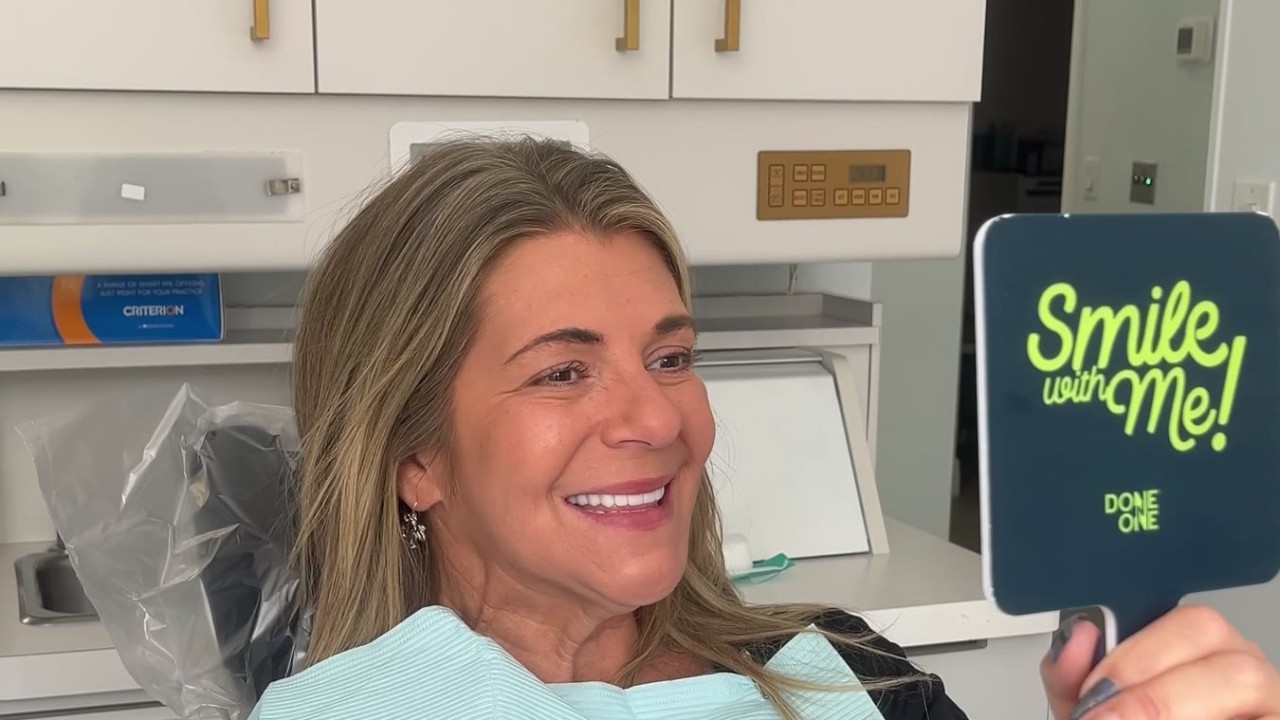
Dr. Daniel Noorthoek is joined by Erica and Nick to break down how AI is already impacting dentistry and where it is headed next. From early trial and error to real use in operations, they share how AI has evolved into a valuable tool for data analysis, projections, reporting, and faster decision-making across the practice.
Dr. Daniel Noorthoek is joined by Erica and Nick to break down how AI is already impacting dentistry and where it is headed next. From early trial and error to real use in operations, they share how AI has evolved into a valuable tool for data analysis, projections, reporting, and faster decision-making across the practice.
Key moments
Part 10:00
This is Beyond the Arches, where full-arch dentistry meets real talk. Let's get into it. Hello and welcome to Beyond the Arches. I'm your host, Dr. Daniel Noorthoek. With me today, I have Erica and Nick. Hello, Erica. Hello. Hello, Nick. Hello, Doc. What's going on? Welcome, welcome. So today we would like to talk about AI in dentistry. Taking over the world. Taking over the world. Specifically, I think that where we should probably start is maybe like our journey into incorporating different AI avenues and helpers, if you will. It's kind of crazy because it pervades into every part of our life.
Most people and friends that I have use it for figuring out how many ounces in a pint kind of thing. But there's definitely some really functional tools and functionalities that obviously that's going to come about. And, you know, it's interesting to look back just even in the last year to see, well, actually, it was last year was the first real, when we were on our ski trip, was the first time in which I can tell you that we were seriously discussing it in our friend group in terms of which one are you using and how do you use it. And so from there, it kind of took off. And at the first, in the beginning, it was like, oh, I'm going to do this. And then at the beginning, Nick, you kind of were a little bit against it because, right?
Yeah. I mean, I'm 29 years old, so I should be in that demographic that believes in AI. You are in that demographic. Yeah, you are. I am now. Well, I'm in the demographic, but I was not an active member of the believing in AI. So yeah, when you first brought it to us a year ago, you were like, chat GPT, we're going to have robots doing dentistry, all this and all that. I was like, well, you didn't say robots, but I want to throw that in. Yeah, I was totally against it because I didn't believe in it. I didn't believe that it would actually be a functionality piece that would bring any benefit to the office.
It felt like it would be a HIPAA violation for a lot of patient data. We also just didn't really have a true pathway towards AI automation in anything that we did. So in the beginning, yeah, I was throwing up roadblocks. It was like, hey, it doesn't make sense for any type of research on different topics. It didn't really make a lot of sense for the marketing side of it, the operation side, patient-facing engagement. But through the ever cycle and actually kind of dedicating some actual mind power and figuring out like, okay, what process can we do to actually maybe have AI be assistance to us? It seems like it's a no-brainer and non-negotiable to have it in today's landscape. And if you don't have it, you're just going to get left by the wayside. And so now I'm a believer and I'm fully in on all the different AI platforms.
You know, there's multiple different ones from chat GPT, Gemini, Claude, Perplexity, and probably like 15 other, or we can go deep seek too, if we want to start talking about some Chinese ones. But yeah, I mean, it seems like it's a no-brainer and Dr. Noorthoek, you definitely introduced AI to my scope of things. And, you know, I run on the operation side of Done In One, so it's been huge on that. So we can dive into that a little later on that. But yeah, I mean, you brought me to believing in AI.
I don't know about all that, but what I, what I will say is that where we start, we tried to start it as simple as possible. You have to temper your expectations. So we, we kept it very tempered. Let's not believe it's going to be the fix and the hope and the dream. And we, so we started with a very easy project. I remember we were looking at projections because projections was manipulating Excel spreadsheets that we had done before and then past data, obviously. And it was also a spreadsheet that we had done before. And then past data, obviously. And it was also a spreadsheet that we could start without having any type of patient names to make sure that there's no HIPAA compliance issues. And I think after about two weeks of just getting the absolute worst outcomes and no memory and a lot of hallucinations was when I sort of backed away from it. And we kind of left it alone for a little while, but because the thought being, if it can't do this yet, then why even put the time into it, which is kind of the, you know, the, you know, the, you know, the interesting part to me about AI and about where we're at, because people need to put that stuff in and it needs to sort of be able to self-learn to get us to the part of where we are today, which, you know, through we're off of chat GBT, we're using a lot more Claude. When you use Claude, he, he, she, whatever it is, remembers pretty much everything. And it's really very good at data manipulation and data presentation. What 8,500 light years better than it, than it was a year ago. Chat GBT was absolutely. However, it still does have some pitfalls to it. So like, you know, it has the capability of having different memory aspects. So if you were talking about it today saying, I really want to have a donor kebab here in Boca. And then in two weeks you say, Hey, I'm kind of hungry. It's going to recommend different places here in Boca that are in that kind of classified.
But one of the issues that we do see in running it with it is it makes mistakes. So you still have to be very cognizant of checking the data, ensuring that, and also ensuring that it's not kind of taking maybe some of your personal memories and business memories, trying to mesh them different projects that you're working on. Say we have like a worn off that we want to unroll a totally different style of implant or teeth or something like that. And we're just kind of spit balling with, with AI. Well, it might remember that memory and then try to implement that into later projections or fields. So there's always trying to separate the two. So it definitely is a, a little bit of like beauties in the eye of the beholder. It's the same thing
Part 26:11
with, with AI where, you know, everybody can use it, but you also have to have some education on how to use it and how to really get what you're prompted to get what you're, you're requesting out of it. Yeah, certainly we see at the time now it's a becoming more of a valid tool, especially we'll just kind of stick with. Um, Excel spreadsheet and word document manipulation of this time. It's, it's a valid tool to use, but you still have to know the content to a, make sure it doesn't mess it up and be, make sure that you're putting in the right stuff of what you, what you want. You still have to have the idea. Let's take the lifetime warranty. And I'm gonna bring up the brochures because human beings took about a year to, to come up with that and the back and forth with the company.
But the, in order to create that, it, it probably could do a pretty good job, but you have to know what to put in and how you want it. And so it deal, it's still at this point requires quite a bit of human input. Yeah. And it's an amazing tool. Once you know what to put in that it, you know, in very many ways, it's, it's kind of like knowing what to do with a dental drill. There's lots of people that have dental drills that shouldn't touch them every day.
Right. You have to know where that is going to need to go and see the vision of how it should go before you, you touch that drill to the bone. And in that scenario, when you do know it's, it's an incredible tool. Um, but in the wrong hands, it's a horrible tool. Absolutely. It's a, it's a great research to kind of continue to develop skills. And to your point, you could say, Hey, like the, this is a way that I approach my surgeries and I, this is how I set up a room, like kind of spit.
All back and forth. And the nice part about AI is it takes hundreds and thousands of people and takes all of their requests and the memories and searches the internet and kind of like compiles a lot of that research for you. So something in regards to like the lifetime warranty, when we were coming out with that, you can kind of simple do a search on and saying, Hey, how many other dental clinics offer something similar to this? And what, you know, from there, you can kind of get a list and kind of compare notes on what they offer compared to what we offer. And then, you know, you could have kind of like a stop check of saying like, Hey, these are all the terms that we're offering, you know, dive into this. Is there any points that we're missing? So like, you know, one of the questions that I remember populating was, well, what happens if a patient missed a payment one month? Like what is kind of your recourse action on that? And, you know, that was something that in the meetings with us, we didn't really ever think about like, Oh geez, somebody's credit card just like laps, like they're expired or something like that, but you need to have a terms and conditions. So the company's protected, but also the patient's protected.
And it's like, it's really good at identifying things like that, but it ultimately, it goes back to the human in charge of deciding what is best because the AI might just say, cancel everything. Nobody cares. Like it's black and white where the world isn't black and white. There's still very human touches to a lot where that allows Done In One to say, Hey, you know what? We're a very human based company. Like we're going to offer 90 day policy for this 120 days for that. And, you know, kind of really identify a lot of missing pieces per se.
Absolutely. For, for our company specifically without a massive multi-billion dollar fund behind us, it's very important that we get good data to make the best on what we have and how to use those tools and how we pivot and change things. And so it's good to be able to run very complex, deep analysis of how old, our patients in average? What state do they come from? What time of year does that age, category, demographic, race, all of that? How do those groups sort of function in and out? And to be able to get that insight without putting our, we'll say, limited manpower on it is pretty fantastic.
For sure. I mean, we were in an admin meeting last week and one of our questions came up was like, hey, how are we leveraging patient financing for the future? And what are we currently seeing year over year in averages? Everybody talks about, oh, the economies and turmoil and such. Well, how is that being reflected upon our patients? And be able to give it a lot of data, whereas it would have took me a month maybe to come up with spreadsheets and kind of a presentation to bring back. We were able to have it within five minutes. And in that meeting, I was still able to say, hey. What was that question? Well, one of it was how many, what is our, exactly that, what was the financing data? So I was able to literally create a whole presentation, cover page, all that, print it, and have it to you guys within, I think it was like a solid seven minutes. And that allows us to spark conversations and continue to go. And we always kind of live in this factor of like, it's really easy when somebody asks you like, oh, Nick, how many days a week do you run? Oh, 80% of the week. Okay. You just pulled that number out of nowhere. But when you actually can say, boom, this is, you know, the patient data, it really helps decision-making from a operational standpoint, patient side facing in the office. Like, but then also just going back to the financing lenders and saying, hey, like we see 40% of our patients finance. And like, we want to leverage that relationship with you to then get a better product for the patients facing on that side. So like, maybe that's a lower rates and things like that. So it's really cool on how you can leverage it from a operation standpoint. And especially like when you are a, I would still classify as in the small business realm of, you know, we have an operations team, but it's not like we have 36 members working on this in the backend. So it really can save time being able to utilize these resources that are really only gatekept by maybe $20 a month membership fees and allows you to then, you know, get instant feedback on a lot of different things.
Also allows you to create a lot of projects and kind of get the starting grounds for things that typically would not be possible. So, you know, it's, it's, it's, it's, it's, it's, it's, it's, it's, a three, four day session of kind of spit balling with team members. And then, okay, let's three weeks from now, we're going to present something. And then three weeks from there, we're going to continue. And then it takes, you know, what three months to really roll out a product. Whereas in today's age, you can have real time every day updates to a different presentation and then probably roll something out within maybe a one to two week period. So it's, it's huge from an operational standpoint. I don't think it's this scary thing that's taking anybody's job yet, because it's still not doing what it's doing.
refined enough, but it's definitely a additive if you know how to use it and if you are open to using it. And I think that the jobs that it is taking currently in our world of dentistry, if you want to call it jobs, they're the smaller stuff that keeps people bogged down. Robert is on here all the time. He's in marketing. So that's all analysis and numbers. And so if he can have that at a snap or not have to really wait on that or have to physically go through and figure it out himself, that makes him more effective and more lethal in other areas.
So I think that it can be a lot of allowing a tool to allow us as humans to be able to do more of what we want to do and more of what we need to do for making these good, big, critical decisions without having to be bogged down by the mundane. And I know a lot of your time, Erica, or not a lot of your time, but there is quite a few spreadsheets that we have to manually fill from our CRM and our patient management software and kind of you're the go-between. You guys are the fillers. And so to be able to potentially write a code that automates that and allows us to draw that information and get all of the data that we're trying to get in those spreadsheets, but be able to do it automatically, automatically allows you to be more patient facing and more proactive in terms of patient experience. I think that's kind of the whole point of it is being able to optimize our time.
This is interesting to me because I never really got to sit down and speak with you guys about the AI in the dental field. So this is kind of a different perspective. But I remember when you first initially kind of like made that jump when you were like, yeah, this is awesome. You were kind of like all in. I never thought you would be because you aren't the biggest fan of the AI in the dental field. So I think that's kind of the whole point of it is being able to a guided surgery. So I always kind of thought about that. And I was like, well, I don't really know how this is going to play a part in done in one. But, you know, hearing you guys talk about it from the operational side makes a ton of sense. Yeah. And to expand on that a little bit is there's a lot of factions of AI that is outside of me logging on to chat GBT and uploading a file.
So like when you get that automated text from the dentist saying your hygiene appointment is on Tuesday at three o'clock, that's a fraction of AI. Being able to identify the code on the in the patient software system and send out an automated text. Same when you're doing a consultation with a patient and they get ready to sign up for finance. Say that patient signs up and they either get pre-qualified or denied. That's a fraction of AI saying, well, we ran through this code and it's identify the seven different factions that it needs to be. So it's either approved or denied. So there's a lot that goes into the patient experience that you don't really think of like, oh, that's AI. That's just a software system. But really, that's by classification AI. So there's a lot of cool fronts on your side to like North said, Dr.
North said is allow you to be more of a human facing presence and excel, which what you are really good at comparatively to having to spend the time typing out, you know, hope you show up to your appointment next Tuesday messages where you can. Be in front, you know, be that smiling face for, for patients and that advocate that's necessary. Yeah, absolutely. And I'm sorry, I was, I was just going to say then switching from the operational and more of the admin role into sort of more of the nitty gritty dentistry. It's hard right now because every company out there wants to be the company that breaks through in AI this and AI that and make your life really simple. And it's really hard to sort through what's, what's good and
Part 316:58
what's bad. But dentistry is so hand skill based that it can't be just diluted down to you put in a CT scan and get out a guide from your 3d printer. And then you get a file that is the, the prototype teeth yet. And when that's the case that maybe it's a little bit less about the person's hand skills. The thing about guided surgery for me, it's always been that if there was a world, you could have the teeth magically fall out of the head. And if there was a world where you could magically move the gum tissue out of the way, then you're working with known things, items, you have your CT scan, you know, where that bone is, it's a screw. The computer can put it in there or you can put it in there and then you get a guide for it. Great.
Yeah. Yeah. The problem with guided surgery for me, something that I've always shied away from in guided surgery is that it's not that simple there. You can take 10 surgeons and have them move the gum tissue out of the way. And only one will be good, you know, and four will be mediocre. Well, now you're, those are the few steps that you have to get and then add the teeth removal, right? And then you have to get to all these steps to get to the teeth removal.
that bone and where that guide is set from and that's the hard part for me is being able to really uh wrap my head around being able to work off of that end goal when there's so many steps in between and that's that so many steps in between to me is what keeps then is going to have dentistry very safe and protected from a job being stolen from ai if i was a physician right now i would be really really nervous because it's a lot of diagnosis and a lot of input from humans to then get an output of what the problem is yes you at currently you need a filter but maybe not at some point so this input this output these are the tests you need and then we'll look at those that's that's tough for me to wrap my head around if if i was a physician i'd be very concerned but in dentistry there's so much that's related to technique and skills and training and history and a lot of carpentry that's that's pretty protected but at the same time the industry is primed for total invasion so maybe you want a guide running a guide off of ai from here's your ct to all the way through is going to be very simple at some point dentistry has really popped off if you will from where i started which was we had one we had one scanner you had to use special paste powder to get that to pick up on the scanner and you would scan it in and then you'd have to design the crown and then if a lot of magic happened in between you would then get your crown in a day from that to where we're at now where we're talking about matching stl scans and we're talking about different you know four microns worth of inaccuracy and getting all of this data and that to live in this cloud and merge it all together it's a bizarre change and and to the fact of we have what are our scanners that we mainly use like two years old technology of sorts so the one scanners that we use for scanning the bites in those those scanners are about two years old but they have an infinite number of tooth colors on there and we can say if if we were into we're a little bit different since we're creating our own tooth colors but if you're your average dental office around you can buy this scanner for almost pennies and scan in the person's mouth and you can scan in the person's mouth and you can scan in the person's mouth and figure out exactly what they what that color is without having to do the human fiddling of figuring it out which is mind-blowing and then there are printers that actually will print in those custom colors exactly the way that that reads out so it's this very weird world that has just been completely invaded by technology in a good way and for us done in one as a group i i tell nick this will be news to you but in the admin meetings we talk about all the time where in the short term what i see is that we're going to get hurt and when i say that i'm saying we're going to get hurt by the local person having cheaper access to things that we've really spent a lot of time and money building out we've been in the digital design game since before there was even digital designers we were recruiting them from all over the country if not world just because there were only two or three that could do it well now it's kind of a dime a dozen most people um outsource it to india we still have kept our own and we've kind of kept that out as being our extra quality polish but at some point that's going to get flipped over to ai now designing a hybrid is really really tough because it's dealing with an stl file an stl file is essentially a word document but a 3d 3d representation of it and it's just a bunch of numbers essentially that represents points. And an STL is made up of a mesh of all triangles. You've probably heard me say all this before, but it's a mesh of all triangles. And it's essentially, if you think about like a ghost costume, right? The ghost costume is just the sheet over the person. It doesn't really represent the person. That's what an STL is. It's basically just a drape that's around these points. And so it's hollow. There's nothing to it. Well, when a computer is trying to match these STLs up, these triangles, it can be very difficult because they're all in different places.
To you and I, it may look like the exact same thing. But on the file, all those triangles are going to be made up in different places. And it's not the actual physical thing. So matching them up can be very, very difficult. But once we have enough computing power and there's enough intelligence, if you will, built out, matching those and creating something that represents the teeth that we want to use is
Part 423:50
going to be very simple. So in the short term, we're going to be hurt by people having access to those tools. And this is technological advancement. This is how the world works. We have gotten plenty of advancement and advantages from using technology that was here that we didn't build out ourselves. So in that short term, we're going to get that. But in the long term, we're going to get that. And that's going to be very, very difficult.
In the long term, I think that we end up winning well because we've been doing this efficiently for so long that we're going to find the new efficiencies. We're going to find the new things that are better and good for patients. And so in the long term, I think that we end up winning because we've done this longer. You may be able to find a design via AI for the same price that I pay now, you know, my designers to do it or less. But at some point, I will. I hope that Dunham one ends up winning because we're already on to not only that, but also how do we take care of that patient better, longer?
Yeah. And, you know, to take a little bit of a twist on some more additives that are in the field of dentistry is, you know, and treating patients on a better piece is, you know, like different companies like Overjet and Pearl and these different platforms that allow clinicians to be clinicians and still treat. Clinicians as they went to school for, however, give them an additive benefit of reading a CBCT or reading a pano and identifying different, you know, pockets of decay or cavities or anything like that and color code them. So not to say that clinicians can take an easy way of, you know, not having to read, you know, different x-rays, but also allow it to be a conversational piece.
So like when you sit in a chair and you say, Hey, Erica, I'm looking at, you know, your, your right quadrant and it looks like you have two cavities. Erica probably just shivered at that. Cause she's like, I never had cavities. That all being said though, like it allows the kind of patient and clinician interface to be a much simpler and easier communication platform because it's color coded in red, red means bad, blue means good. And if you see three pockets of red, you're like, Oh geez, I need some treatment here. So there's really a lot of additives on that side for clinicians. But then additionally, a lot of these, you know, Delta dental, Aetna dental, and all these large insurance companies are utilizing AI to then auto approve or deny different claims. So being able to partner with like Overjet, one of their big kind of claims of fame is that they have the same interface that you have on the patient level side is also what the insurance company has. So if you're taking a scan and you uploading it through Overjet for a patient, and you're seeing that there's three pockets of decay in this tooth needs to have, you know, a crown or whatever, maybe you can rest assured that auto is going to be automatically approved through the insurance company because they use the same end to end platform. So there's a lot of situations like that, that, you know, we're very early in the game of what AI can do from a general dentistry side of things, but it's only going to be a benefit to the patient in regards to understanding what the current proposed treatment plan is, but also what the dollars and cents means once it's time to check out and go forward. Relating that back to Dunham, what to expect from your future clients?
John Bellinello, MD, MPH. I could speak to that. I think that for the experienced dentists in the world, health benefits are always the same as we've seen before. So, you know, the ability to really focus on the things that really make a difference is where you put all
Part 527:35
of that into practice, right? You know, again, just, you know, like, you know, you're a, you're at the end of the day, you're at your beginning, and you're like, okay, well, when you're do that, at, you're 75, but we can mock it and we can get there and we can help you kind of figure out how we can, you know, get you the smile that you want and have those human interactions. Those are never going to be things that can be replicated, but a lot of people will try to, and then that's when you're going to lose a human touch. And we'll go full circle in this thing from AI is so incredible back to man, we need humans to be, and I want humans to treat me and I want a human doctor.
I want a human assistant. And I think that's something that we leverage very well on a 50, 50 basis of like, we're going to give the humans the time to shine, but we're going to let AI kind of develop the, in the background and kind of streamline a lot of the processes where, whether that's checking bite scans to ensure that when we're adjusting either prints and before going into zirconia, that we're dialing things in appropriately. So we're not seeing breakages, uh, whether that's, you know, quality assurance on the lab side, once things have been printed, ensuring that there's been no misprints or anything like that, or that we're having accurate, uh, photogametry scans in the patient mouth, but then also once it's post milling and post centering, and there's, you know, uh, ability for things to kind of warp ensuring that doesn't happen. Cause at the end of the day, the last thing you want to do is deliver a product to somebody that's expecting greatness. And it's not that. So there's a lot of different ways that you can kind of leverage AI in the current scale on Done In One, but there's gonna be a lot of people in the next five years that try to dive into it because it looks like a low hanging fruit, but then they realize there's a lot more to it than just plugging this into a computer. Yeah. To, to jump on that, let's just say that using conventional methods with, uh, uh, a lab, a local lab, let's say that you get five of the 10 safety bullet points or like super perfectly made bullet points covered. And you leave five on five out of 10 are kind of a little bit of chance of whether or not those work.
Or are bad, good or bad. Well, let's say that the way that we build our teeth and the way that we incorporate things, we're at seven and a half out of 10 better, but not perfect. What, what to play on what Nick's kind of saying is this gives us the ability to maybe have the manpower to check those other two and a halves, which increases that patient's experience, which also decreases the load on our system, which then parlays into more.
Profitability, which then allows us to exist longer. So we're at a point where the world can continue to go. And then those people that were five out of 10 with a local lab, now they're at seven and a half out of 10, and maybe they have less of an issue because, um, of X, Y, Z that they used. And so it is really this kind of like cool, exciting part that in the short term, it will hurt. Cause maybe, you know, it's, it's, it's a little bit of a, it's a little bit of a, it's a little bit of a people will get to that seven and a half out of 10 when we're still at seven and a half out of 10.
And that's what I was talking about with the, in the short term, the short term is going to be a little bit tougher. Um, but long-term we'll have the, the bandwidth and the throughput to be able to go to that higher level and be able to reduce that. And to further belabor the point on the short term, you know, when, when we talk to patients, we tell them through the old way, how it used to be and how long, it used to take. Most of the time you're looking at about 25 hours for a top and a bottom doctor to patient interaction, whether it be myself and a prosthodontist or an oral surgeon and a general dentist doesn't matter. You're looking at about 25 hours worth of chair time.
In addition to that, you're paying for a lot of inefficiencies in somebody else's lab that you're hiring to come in. And then with all of that expense in that time, if there's a problem, you're all pointing fingers and guns at each other. So we've been able to be very efficient in that our chair time and total interaction time is around four to six hours.
Part 631:49
The results are better instead of being five out of 10, they're seven and a half out of 10, um, which isn't a real rating. I'm just making that as a generalization, but you know, comparatively it's at least 50% better. The patient's experience is better, but our efficiency, is better from like a profitability standpoint. And so it's been really cool to see that kind of flow through and it's exciting to see what the next, the next level will be.
Yeah. And the beautiful part about taking that next level step is that we're still small enough being with that. We have three locations in Boca, Tampa and Jacksonville that if we want to implement something, it's fairly simple where it's teaching the front desk, the assistants, the doctors, the backend team, and the line. Whereas some of the larger players in the game, you know, they have hundreds and hundreds of locations. Well, that's going to take two to three years, maybe to roll out a system. And then well, two to three years is a whole brand new system. So being, you know, done in one is, is built lean and mean to be able to give the best experience to a patient on the human side, but also the best product and the best price point that can be coming with that restoration. Whereas that allows us in the next five years, we're going to be able to, we're going to be able to, we're going to be able to leverage our scaling to ensure that we're, we're always up to date with pieces. We're not falling to the wayside saying, Hey, this is 2017 chat GPT. Uh, that's going to be rolled out in 2027. Like, no, we're going to be able to give you the best or give our team members the best leg up because, uh, you know, we're still on the smaller scale compared to some huge DSOs.
And it will be interesting. To see how the world of dentistry plays out because there's still a large faction of dentistry that is done as simple and as old school as possible, where it used to be that marketing was really the only thing that would differentiate you from being the, I hung a shingle and I did what I needed to do. Therefore, everyone should be able to do it that way. And you crazy marketing guys. You're the ones, you know, you're X, Y, Z, and they didn't like that, et cetera. That was your one differentiator. You now have a total market disruptor that can come in and change any side of your business, which is bananas. Um, and pretty exciting as we were sitting here, I was thinking about it, not to turn everything into golf, but in golf, we have drivers now in different clubs, but we'll just take the big one, the driver that are for the, I would say six, seven years have been AI optimized, right? They've been marketed to us as AI. Now I can tell you as a person that has swung before and now the new technology, it's wildly different, but it doesn't change the fact that you still have to swing the golf club. The, it can take a great golf swing and make it, you know, exponentially better to legendary status and take a crappy golf swing and make it.
A little bit better, but there's still a difference between the total novice, the amateur and the pro. You still have to swing it. Does it make a big difference? Absolutely. Is it worth getting? Absolutely. The level of, of the play is all bumping up, but you still have to swing it properly in order for it to work, which is kind of like the theme of what we're saying here, which is you have to use the tool properly.
You have to, you have to understand what it's meant to do. You still have to swing. Yeah. And it's, it's like the rising tide raises all ships type of thing. And, you know, like you mentioned about the marketing side, I mean, I hope a lot of dental clinics can kind of utilize this AI platform to level up their, you know, kind of clinical skills, but also like the operational side. It was funny. I, when you were telling that last story, I was sitting here thinking about an Instagram reel that I saw two nights ago, and it was some young lady, and I'm dental office being like, are you tired of not having full arch patients? You should sign
Part 736:10
up with us. And, and the background there was probably about like 300 paper charts. And I was like, Ooh, geez, maybe you should focus on the paper charts in the background and not really, you know, scaling to, to do all these cool technology things. And that's something that could be, you know, huge for dentistry as a whole, because there is a lot of players out there that are still doing old school pickups for crowns. They're doing everything by the book that I was taught in dentistry school.
Forever ago, whereas AI might be a leverage point to clean up those operational systems on the front desk where it's no longer paper charts, it's online platforms. It's, you know, it just, hopefully that experience with all forms of healthcare can be improved by AI. It's really just going to be a question of, are you willing to embrace it or not? And if you're not willing to embrace it, I would imagine that over the next 10 years, there's going to be a very large kind of gap in the, in the healthcare.
Field of the haves and the have-nots and the haves are going to be the ones that, you know, integrate AI into their clinics. Whereas the have-nots are going to be the ones that say, oh, I don't need that stupid computer in here. And they're not going to be giving the same quality experience that they possibly could be. I agree. Absolutely. It's pretty fun. You know, on that note, there's a lot of, I think that the, the world of dentistry, the world of patients into a dental office, the number one thing for my friends and random people that I meet and talk to the sort of take home is that it's hard to trust a dentist. So I don't have a good dentist or my dentist is the best. I trust them no matter what. And that's because there's a lot of gray areas of dentistry. It's an, it's an art, it's artistry. You know, it's not just a black and white type procedure. Maybe some of these tools could add a little flair of black and white and help patients.
And, and assist them in making those decisions as well. Maybe kind of restore some trust and get those, you know, let that system have legs a little bit. It's, it's incredible actually, as you start to talk through all the different areas that it could pervade, not only in our life, but just in, if you think about the world that we live in, in dentistry and everything could change in five years, 10 years, six years. Yeah. The beautiful part though, is it goes back to where conversation of, it's only going to be in, you know, additive to the field of dentistry or healthcare, you know, in general, but, you know, focusing in on dentistry, whereas it's never going to replace the hand skills, never going to replace the education that that clinician went to. It's never going to replace the amount of arches that that clinician has done or the training that they've received. Like you could be the world's best chat GPT dentist, but when it comes time to place an implant, geez, I don't know if I want that. Whereas, you know, if you have somebody that's gone through that, you know, you're going to have to, you know, you're going to have to train through it, proper education. It will be something that augments the experience, but it will never kind of just take over the entire experience.
I agree. Any other thoughts or questions or anything that we wanted to bring out? No, I hit my kind of five different topic points. You know, it's, yeah, I mean, the human experience will definitely be brought to light through all the different automations. And it's, it's going to be cool seeing like all the, the rat race to who becomes the AIs, you know, superiority piece where, whether that's open AI, perplexity, anthropic, whatever these large, you know, entities may be, but hopefully in healthcare and in dentistry, it's always leveraged to be patient facing instead of profit facing or things like that.
Yeah. It's, it's how you use the tool and what the intention and the motive is behind the tool. But the humanity has, has gone through these things for years and years and years. I mean, look at the first time they put a, you know, motorized horse on, on roads and look how much it augments our life now. And for sure, you know, these, these tools generally work out to be initial doomsday and watch out overhyped all of this. And then they kind of fade into our life and our life gets better. I mean, remember when we're kids, you hear about the prince and the princess and you know, how they lived in a castle and whatever you wouldn't want to live in a castle.
Why? Cause life is awesome right now. AC. Yeah. Oh my goodness. AC everywhere you go. You can get there quick. No high speed internet. Microwave. Yeah, absolutely. Coffee on demand, however you want it.
Part 840:56
And, you know, even relating it to dentistry in the last, you know, what I've been with the company for eight years now, I have a burn on my right arm from doing a wax rim and pouring it up and all that stuff. And I'm like, oh my God, I'm going to die. I'm going to die. I'm going to die. I'm going to die. I'm going to die. I'm going to die. I'm going to die. I'm going to die. I'm going to have that battle scar, but like if Erica's looking at me funny, cause she's like, I don't even know what a wax rim is. So that's like burning in your, in your office. Yeah, exactly. Like what does that smell? So I, uh, you know, it's really cool to see how it's progressed to be able to just be an additive and make time quicker and, you know, not having to spend seven hours of records where now we can spend 30 minutes of records. So it'll be cool where to see where it continues to go, but it still is required that expertise through it all. And we were on the cutting edge when you were doing that.
We were doing that. So, oh yeah. Didn't feel like it. Big change that has happened. It's pretty darn cool. It's wild. It is. A lot of computers have been purchased in the meantime, a lot of heartache, but, uh, I think overall the future is bright. I'm not too concerned about many jobs. I'm also not concerned about too many of our own employees jobs being eliminated because they're all vital. And in the way that we see this as is, is if 50% of your job is to do some stupid menial task, and that gets taken away from AI, now you have 50% more to go do something else for us in our positive favor.
So for the time being, you know, I don't see anybody at risk and dentistry is pretty well insulated. It's lucky that we're not, uh, I was just saw, I just saw an advertisement for like H and R block. And it said something about it's 60,000 agents. I don't know if it's talking about humans. I don't know if it's talking about humans or AI, but I was kind of thinking about how sort of devastating that could be to the whole industry because that's a lot of just Excel manipulation and catching things.
Um, a lot of positives though. Overall. It's all about how you leverage it. Absolutely. Yeah. Well, we thank you for listening. Like subscribe. Thank you, Nick, for coming in. Thanks for having me, doc. Thank you, Erica, as always. And we'll see you guys next time.