In this answer
What oral sedation is like
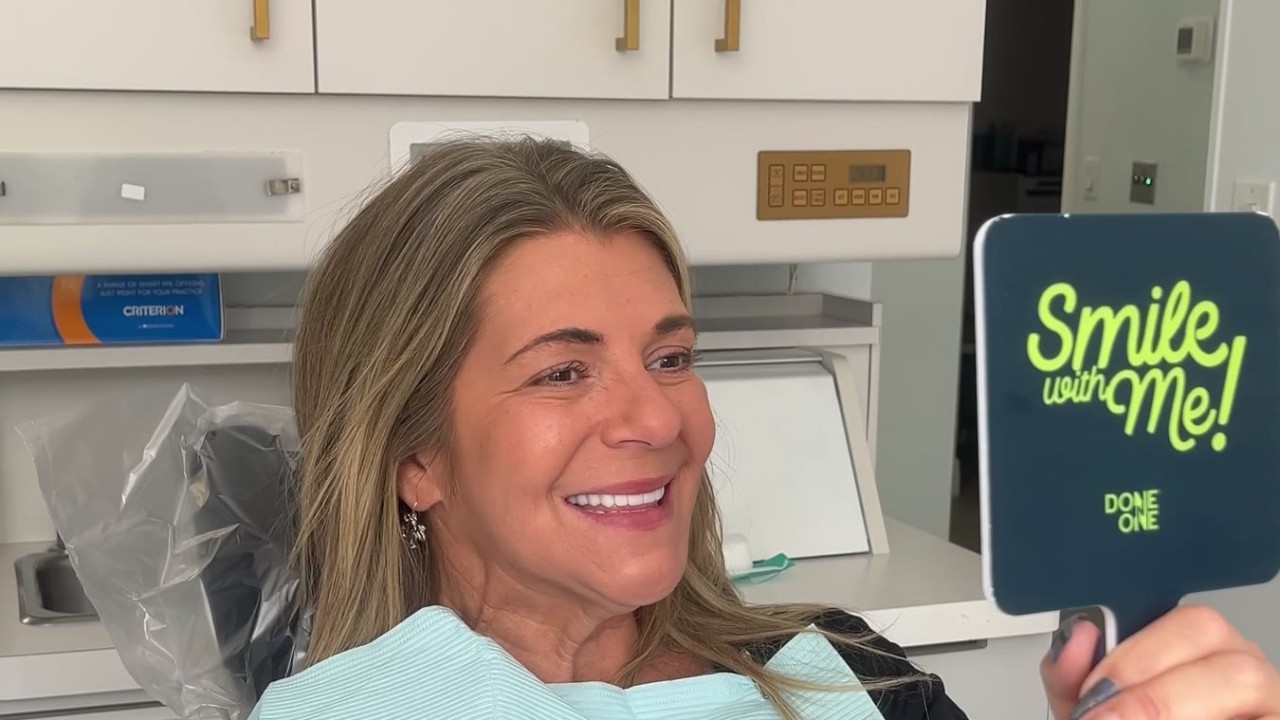
You take medicine by mouth. You stay comfortable and relaxed, and most people tell us afterward they remember very little of the appointment.
Your surgeon decides what's right for you at your consultation, based on your health history and the medicines you take. It isn't one fixed plan for everyone.
Why we don't offer IV or general anesthesia
It helps with the fear. Most people who ask to be put under had a bad experience before. Getting through this calmly and awake gives you a good one, and the fear gets smaller. That can't happen while you're unconscious.
It avoids risk you don't need. General anesthesia carries real risks, some of them serious. For dental surgery of this length, we don't think the trade is worth it.
It helps us do better work. When every tooth in an arch is coming out, an unconscious patient needs a bite block, and it slips, presses on the gums and gets in the way. When you can open for us, we see the whole arch, and that's what guides where the implants go. The work is gentler too, which means less bruising and swelling, quicker healing and a lower chance of infection. Shorter surgery lowers that risk as well.
Nobody rushes you. We don't work around an anesthesiologist's schedule. If you arrive and you're not ready, we wait.
If being under matters to you
Some people have been through a lot. If being fully under is the only way you can face this, that's fair, and there are good practices that offer it.
We'd rather be clear about our choice than pretend to be flexible about it.
I am always very anxious but they did a great job in making me feel comfortable, and would give me breaks to feel calm.
Our view
Selling general anesthesia is easy, because almost everyone says yes to being completely out. We don't offer it because we think you get a better result without it: better implant positions, less trauma, quicker healing and a shorter day.
No one who has finished treatment here has told us they wish they'd been unconscious for it.
Quick answers
Can I pay extra to be put under?
No. We don't offer it at any price.
Will I remember the surgery?
Most people remember very little. Usually just being asked to open, and not much else.
What if I am extremely anxious about dentistry?
Most of our patients feel the same way, and it's a big part of why we work like this. Getting through it calmly and awake helps the fear shrink. Being put under takes away the experience without making it any better.
Is it safe if I have medical conditions?
We review it case by case, and some conditions mean talking with your physician first. Bring up anything relevant at your consultation.
Hear it on the podcast
Read next
What are the first 72 hours after full-arch implant surgery like?
Your first fixed teeth go in the day after surgery. They're printed prototypes, so they won't be the color of your final teeth. Your jaw will be sore from holding your mouth open, you'll probably bite your cheek for a while, and your speech may sound odd for a day or two. Each day after that there's a short fitting. You tell us what feels wrong, we change it, and a new prototype is printed.
Answered by Dr. Daniel R. Noorthoek
Read the full answerWhy does Done In One take a week when other offices deliver final teeth in a day?
We could do it in a day. We spend a week to get it right. We were one of the first in the world to offer full-arch surgery to final zirconia teeth within 24 hours as a product to the public, and we still own every machine it takes. We moved to a week because a bite taken right after surgery is rarely right, adjusting finished zirconia teeth can weaken them, and most people can't tell what they want until they see the teeth in their own mouth.
Answered by Dr. Daniel R. Noorthoek
Read the full answerMy dentist said I need a sinus lift. Do I really need one for full-arch implants?
Almost certainly not. In our own records, fewer than 1% of full-arch patients have needed a sinus lift. In a full-arch case we angle the implants so they avoid the sinus altogether. If you were told you need one, that advice was most likely for a single implant, which is a different procedure with different needs.
Answered by Dr. Daniel R. Noorthoek
Read the full answer