The conversation
▶The best moments are marked. Tap one to hear it.
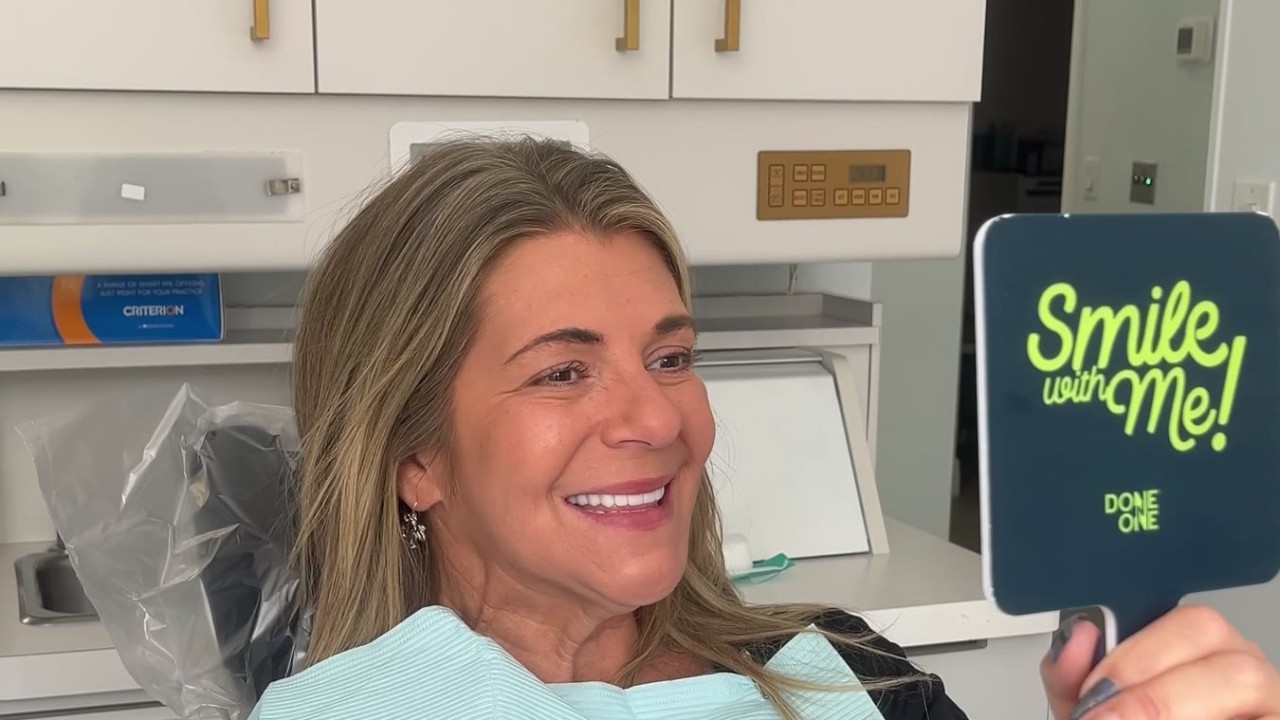
Dr. Daniel Noorthoek and Erica sit down with Robert Odom and Alex for a conversation that explores the patient journey from an angle most people never see—the very first phone call. What makes this episode unique is that both Robert and Alex are Done In One patients themselves.
Dr. Daniel Noorthoek and Erica sit down with Robert Odom and Alex for a conversation that explores the patient journey from an angle most people never see—the very first phone call. What makes this episode unique is that both Robert and Alex are Done In One patients themselves.
Key moments
Part 10:00
This is Beyond the Arches, where full-arch dentistry meets real talk. Let's get into it. Hello and welcome to Beyond the Arches podcast. My name is Dr. Daniel Noorthoek and I'm your host today. Joining us, we've got Erica. Hello, Erica. Hello. And two of our favorite people as well, Robert. Hello, Robert. And back all the way from Indiana, one of our remote workers, Alex. Hi. Hello, Alex. So I believe this is like one of the first times we've sat down with just sort of like this many co-workers and employees together at a table that kind of do the same thing. So we're going to get in today what Robert and Alex and Erica end up doing day to day, which is sort of the, that's the flow, I guess, because, Odom, you're more on the marketing end and the lead gen end. And then Alex, you nurture them into what will eventually become the adult. Yes. Watch them grow. Yeah. The seedlings to the, to the full-grown plants. No, something that just came up before we started recording this, which I thought was very interesting, is both Robert and Alex are patients of ours who are now employees. So they hold that card, which is unique and cool. Yeah. I had my procedure done in 2018, no, 2019. 2019. And you were not too far behind me, were you? 2022. 2022.
Okay. So four years. Man, time flies. Yeah. Time is flying. You guys bonded more and developed more of a friendship before there was any sort of employee relationship, if you will, which is kind of cool because you guys have that as a, as a background. Yeah. And why don't we kind of just go through like how you guys interact on a day to day, like how, how does this work and, you know, what, what, what's all involved? Yeah. So I think an easy way to look at it is Alex would be, you know, first point of contact. When people call in, we have a patient advocate department that Alex runs right now. So most likely you'll hear her voice and she is there to answer preliminary questions, schedule, consults, and just make the people that reach out to Dun & One feel heard and educate them, which I think she's very, very good at. It helps that she's been through the process.
It's always a little, I feel like I got a leg up on the people who haven't because I've had it done. Yeah. So it's always good to, you know, impart that wisdom on the people and people love hearing that. I mean, do you, do you same thing when, when I mentioned that the people go from, oh, in that case, I have 10 more questions. I didn't have before because they're talking to somebody who went through it. So I think it's a, I think it's smart to put someone on that receiving end that has experienced everything there is to experience. Yeah. It's, it's a totally different level of connection. I'm sure that you feel, I mean, you were with that company Frontier and Benesco, which, you know, you didn't really necessarily use that product. You probably, I would imagine connect more on a day-to-day basis with, you know, a lot of people that are in the business. So I think that's a people that you interact with now than you did before. Yeah. And especially because before having this done, I had so many other random procedures done that a lot of our patients have had. So yeah, we definitely connect. And what's cool. It's, it's hard to explain because from a, from an outsider's perspective or a listener's perspective, they may hear, oh, well, they're just, you know, they've kind of poached from their patient base.
And they're looking to kind of get that person in there to just get that in or, you know, have that leg up. And it actually completely happened randomly and just happened to be the situation in the time. And it really wasn't for the intention of you having the advantage of having had this procedure or a point of reference. But what we get out of it as a fallout is we get sort of a special passion for it because not only have you had this procedure, you've had this you've been through it, you've sort of made it a little bit of your career goal and incorporated that into your personality. So it kind of comes natural and that sort of them and vigor towards it is pretty cool. Yeah. That is always kind of a tricky thing though, because, you know, you get the patients that are, well, how did this go for you? And you say, well, life-changing obviously, but like, then you get the, well, you work there.
So of course you're going to say that. And so I always try to nip that in the bud with, look, you know, I'm just being, just being honest here. I know I should say everything's great, whatever, but I can genuinely, honestly tell you that I look at my life pre having this procedure and post having this procedure. Like it was that pivotal of a moment in my life. And I feel like all the good things that have come after that are in some way related to this, happening. So I just try to be really transparent with people and let them know that, you know, yes, I had a great experience and we see great experiences every day, but I'm not just saying that because I work here, you know, that's something you got to navigate sometimes.
Yeah. I think you guys do a very good slash excellent job at not making it the focus of the motive. So I could call, uh, Alex and I believe, um, not ever have any idea that that was a situation. You bring it out as needed when a patient is asking you very specific questions that you can kind of relate to. So it's not this pushy type thing. It's more, you don't use it as a crutch. If you used it as a crutch, I think it would come off as kind of scammy and bad. And for sure. And I don't know your like percentages, but I would say maybe one out of 10 people that I talked to actually finds out that I had this done. Cause it's just not something.
It comes up organically, but when it does, I'm, I'm happy that I have that knowledge to pull from. Yeah. I usually only bring it up, um, in like really good conversations where I can tell they're really anxious. Um, like a big, big thing that people are afraid of is not being fully, fully put to sleep. Um, so I always say, you know, naturally we don't blame them. Yeah. So, you know, I was that person. I was that person. I was that person. I was that person. I was that person.
That refused to have any teeth pulled without being put to sleep or anything. And, um, I had a really, really good experience with even just like one little pill. I didn't even take the full dosage. Um, so, you know, I always bring that up. Um, yeah. So I'd say it's not too, too often. Um, and you can kind of read people and how they're feeling. Like some people, they don't have a lot of time to talk on the phone, but people that, you know, they do have a lot of time to talk.
They have a ton of questions. Um, we usually get into that and then they'll have a lot more questions. If you had to guess what, what would be the percentage that you end up discussing that it's going to go up after these go out? Um, probably maybe about 30%. Yeah. It's a, it's a low amount. Yeah. It's something that I've always, cause I don't impart what I want out of it to either of you. Right. I'm a very hands-off try to be non micromanaging kind of person. Don't give Odom a directive that then hands on to Alex and, uh, something I've always very much like appreciated and respected is how well you guys do that. I love the fact that it's only 30% or one out of 10 or whatever the number is, whatever is appropriate is fine. But if I think about like the way that I would do it, I would probably lean in on it, on it as more of a crutch, you know? Um, but I really like how you guys handle it because it's not something that, ends up getting pushed. So it is a genuine comment when it does come out and it is a point of discussion. Yeah. So you say it comes up, uh, more often than not over sedation talk for me, when I had this procedure done, I did not have sedation. We were doing a live stream, right?
You remember that? Yeah. And, uh, so you were like, you know, are you good for full transparency? It wasn't like, we just like slapped them on and we're like doing a FaceTime, a Facebook live or TikTok live. It was a big, it was a, it was a professional. It was, it was for, it was a concept back in the day. There was a company that would come in, set up cameras, and they would also open a message board and their key opinion leaders or the people that they want wanted to do the surgery would be the offices that they went to. So they went into your comfortable space, they'd film it all, catch it all in real time. And then I was miked and, I can't remember if the assistant was miked, but we were all miked and they would submit questions almost like a webinar and say, why did he just do this? Or why does he use this material or clinician focused stuff? And, um, you were a part of, of that for the surgery. And I believe we did on them, we did a two part series. It was sort of your surgery live streamed. And then it switched over into the next day. We did the delivery live stream. And then we did the delivery live stream.
I believe. I think so. It was a two part thing on that website. And it's still up on YouTube. Yeah. I reference it here and there. Um, especially in the context of, I had bilateral sinus lift. So you get to actually see what a sinus lift entails. It's super cool for those that want, yeah. For those that want to see it. Right. Um, but I pulled from that, but that was one of the things was like, I guess I didn't, I didn't want to be too sedated and out of it. And you
Part 210:30
were able to talk. And if you watch the video, there's, you asked me a thousand times, are you doing okay? And I'm thumbs up in it. Maybe that's a little more camera friendly when you're not all the way out of it. Right. So I, so I don't really have the sedation thing, but where it comes up for me when talking to patients, and this is probably not going to go in the direction you think it's going to go, but is a lot of people ask about the pain afterwards. Right. So I always say, um, you know, if you've ever had an abscess tooth, that's like as bad as it gets, I think this is more manageable than that, but it does come down to individual experience and everybody's different and everybody has different pain thresholds. So, you know, I, I tend to say, look, for me personally, after having this done, I, the next day was in the fetal position. I was hurting. I was like, I can't go back. I'm just, I'm just going to live like this forever.
I can never go. If anybody gets within five feet of my mouth right now, I might die. So that's me. And maybe I'm a, you know, wussy or whatever, but that's, that's the honest truth. Well, you hit on the right point, which is everyone perceives it, perceives all of that stuff different. So you may have an incredible, maybe you need your hip replaced someday and you don't even feel it. Your prior surgeries don't necessarily relate the, you know, it's, it's pretty crazy. The study of pain is.
Crazy. It's wild. And then I say, you know, and that was my experience yet. I'm in the office every week. I see somebody coming in the day after ready to go chipper and they're all right for my new teeth. And I'm like, that is handling this way better than I did. It's just so variable, so dependent. So I, you know, try to make people aware of that. Like it's kind of a loaded question. What's the pain like afterwards? It totally depends on you. You know, we're gentle and we try to manage the pain as much as possible.
We can, but it's an individual thing at the end of the day. But that's when it comes up a lot for me. You know, your, um, I had forgotten that we hadn't sedated you. I'll forget why we really did. I mean, I guess it was just to be present and awake and that's my whatnot for the surgery. Yeah. But it wasn't an issue. Those surgeries were, I always had a lot of fun doing them because it felt really cool to have. This is when I was first, pretty much not for starting, but like, Yeah.
just kind of getting my real feet on the ground for full arch and such. And it always felt like really cool and having the attention and the cameras and the lights and stuff was neat. Yeah. People coming in and out of the surgery. And we've, I've had hundreds of different doctors and, uh, surgeons and stuff come through the office over the years. If you do listen to this, by the way, I'm pretty much open door and, uh, will teach anybody how I do it. And, you know, as long as the patient's okay with it, um, have no problem showing people my techniques, et cetera, done it a thousand times.
Right.
Part 313:36
But I feel very comfortable with that. And it's interesting because I have things that I do as my surgery, just like we would all feel maybe awkward if somebody just was to go over to your house right now, and go into your room. Like, is there anything bad there? No, you just feel really weird because they're in your space, right? It, it never feels that way when somebody comes and watches the surgery, right? So I'm not the only one, right? And so I'm, I'm a little bit Because I can kind of, like, stand in front of the, like, laundry basket, if you will.
Like, if we're going back to the in-the-house scenario. And, again, it's not like you're just trying to cover it up or anything. It's just, like, awkward in the personal space. There is nothing like being on a live stream surgery. There's no comparable experience. It's the most exposing, crazy, you know, just. There's no standing in front of a laundry basket. There's no standing in front of that laundry basket. Right. And it's very uncomfortable. I always had a good time with it.
I believe yours was the last surgery we really did with them. Yeah. We did probably, I would guess, 10 total. Maybe they weren't necessarily full arch, but they would be different topics. But I think yours was the last one. Yeah. And it was another reason I tend to share it is because you can watch that video from start to finish with. And all the implants placed, the teeth removed, bilateral sinus lifts. In real time. In real time.
And the video is 90 minutes long. Really? Yeah. So people say, like, well, you can't do the surgery and sinus lift and all that. And I'm like, here's the link. Press play and watch it. There's no cuts. It's live streamed. Yeah. It is a 90-minute surgery from start to finish. And here I am eight years later. There was no shortcuts. Or if there were, they worked out. We did. We did six in arch for you, too. We did 12.
Six on top, six on bottom. There were no cuts. And that was eight years ago. And that was eight years ago. We've only gotten better, stronger, faster, more confident. I don't know. It's a very cool video to watch. I don't know if the average person, if somebody's squeamish or whatever. But if you're really interested in this, it's very cool. Yeah. It's very cool. So moving on past the patient side. Mm-hmm. Let's talk more about y'all's day-to-day in the marketing.
So, Robert, you keep a bird's-eye view on everything and the deployment of the advertising and the different ways and methods that we've talked about in the past. And then there's obviously interaction with Alex because Alex is sort of the initial, we'll say, lead receiver, right? So let's just talk about the day-to-day. And sort of like what you guys go through in a day. Yeah. So first point of contact, again, is Alex. Second point of contact would be treatment coordination with Erica or Lily in the BOCA office and some other treatment coordinators in Tampa and Jacksonville.
I'm the point of no contact. I'm in the shadows. Yeah. Unless Alex is on vacation. Yeah. Unless Alex is here, then I'm helping manage the phone. So, yeah, I mean, as far as my part, I know we've talked about it on a few episodes before, but, you know, we try to tell the done-in-one story. That's our marketing, right? So we have a lot of competitors that take different angles and price is a big focus and, you know, this and that.
We really try to let patients tell most of our stories. You know, we try to do. We do a lot of testimonials and, you know, I always want to say these aren't paid people. We don't exchange favors for testimonials. These are just people that had a great experience and want to tell whoever will listen. And that's always the best kind of content to get. So we focus on that. Try to tell a good story.
Part 417:51
Try to be very educational. I feel like our website is very informative, so much so that you could almost get lost in it. Yeah. Yeah. Yeah. Yeah. And we're trying to just answer questions ahead of time. So we get a lot of feedback that all of that's very helpful. But sometimes you want to talk to a person and that's where Alex comes in. So then Alex will talk to that person and inform them. We're also very, you know, we're not pushy.
We're not trying to force anybody into anything. We're really here to help, to answer questions, to give the people the information that they're seeking. We don't lock this stuff behind a consult. Well, that's a good question for the doctor, you know, coming for the consult and we'll see what you're working with. We'll do some x-rays and then we can give you a price. Everything's very, very transparent. It makes my job pretty easy. And then, you know, if Alex is talking to someone and they, you know, want to move forward, that's when she will pass them over to treatment coordination.
They'll have the consultation with a doctor and get their questions answered. Yeah. And then, you know, they'll be able to learn more about the procedure, review their x-rays, et cetera. So that's kind of where TC comes in as the next point of contact. And, you know, I always think about conversations that we have. I mean, I had a 40 minute conversation the other day with a lady. She's the nicest lady ever. And I really felt for her and I'm like, I hope this lady becomes a patient because I'd love to meet her and just, I always talk about it.
But I always love hearing how. This procedure turns people's lives around like it did for me. It's always so cool to check up on people a year or two later and see how good they're doing. But you have these like, you know, really deep conversations and then you pass a patient over to treatment coordination and then they have these conversations or whatever. And I always want to reach back out to them and say, like, not only like, how'd your consultation go, but like, how'd your surgery go?
How's life going? So even being like the first point of contact. I tend to. To keep in touch with people, and that's where we have our our Glenn's and our Natasha's and Jay Jay and the list could just keep on going because you really. How is Jay? He commented today. Yeah, he's doing good. I guess Gwen's doing good. Cool. So, yeah, you know, very, very cool company to work for in that aspect because you really do feel like you make friends.
I saw that Brie left. Did you see that? I didn't get the chance yet. But I saw I saw it was sent. She left her review today and she said, you know, great dental office and everybody cares about you and all that good stuff. And that's great. And she's like, these really feel more like friends than, you know, dental workers or whatever. And I think that's what we're aiming for. Like, we're here at this very pivotal juncture in your life.
And we want you to feel like surrounded by friends and people that care and want to see the most successful outcome. Mm hmm. So I think we I think we pulled that off pretty well in all stages from her job to her job to my job. Do so this question is for Alex. So, Alex, do you feel because you're you're that beginning window and I'm sure that there are days where you wish that you never found us and you never had this job.
And I'm sure there's days that you just can't wait to wake up the next day. Mm hmm. And so but you have. The initial interaction. So I'm sure that there are patients that really make you enjoy and be glad that you're you were able to help them, et cetera, and feel that that pull of like, I really hope everything goes well. And I wonder how everything ends up. But then you kind of get left out because then you get left behind because you're not in the office.
And, you know, what's that going back to your question of you ever feel left out? So I actually I love going back and looking through our Google. Photos album of like all of our patients like before and after I go through them every day and I go through, you know, our notes and everything so I can see how things went. And any time a patient posts in the Facebook group or the reviews, I'm always watching and looking.
That's cool. I didn't know you went beyond the other side. Yeah, because I want to know how else you feel. So I every day I'm following along. I'm looking at things and just, you know, watching as they go through their journey. That's great. Very interesting. I didn't see. This is why we're having this conversation because I didn't know. That's cool. I never thought about it in that way either, because sometimes I equally feel as heartbroken if I do someone's consultation and then they do their surgery, like in the Tampa office or in the Jacksonville office.
I'm like, oh, I wonder how they're doing. And I'll do the same thing. And I'll actually look through their photos and sometimes like clinical notes just to make sure everybody's doing what they're supposed to be doing. It's going well. I never thought about it from your perspective. Yeah, I'm always following up, checking everything. I'm just seeing, you know, in the Facebook group is great for that, too, because she's very active in the Facebook group if anybody has an issue, she's always the first to, you know, catch it and reach out to them.
And, you know, it does feel like not not everybody wants to be friends with us, right? Some people want to come have this done and go on about their life, and that's totally fine, too. But it does feel like the people who do kind of make that connection end up in the Facebook group, and it's our little community there. So you can really keep. Keep in touch with people and see how everybody's doing in that group, which is super cool.
Yeah, it has this like nice little feedback loop for it. Yeah, that's fantastic. The when I'm thinking about like the way that the flow works and the relationships, there's, you know, you obviously probably have some people in mind. I'm sure there's like some special ones that like reach back out to you and kind of stay in touch. I'm sure. Yeah, there's some patients that have been patients for a while. And they're in the Facebook group and a lot of existing patients will call my line thinking they're calling the office and they'll say, oh, hey, like, how are you?
And we'll talk for a little bit and then, you know, I'll pass them over to Eric or Lilia to get what they need.
Part 524:13
When when that's it's interesting you say that because when we were first starting, I used to give my cell phone number out as like the emergency contact. And I didn't give that up. Because it wasn't because I don't want to be bothered with emergency calls. Well, one, we don't really get any anymore. But I didn't it's not because I didn't want to be bothered, but I used to have the same problem. People would randomly call me like two years later and be like, hey, I want to leave a message for the front desk because I want an appointment.
And at this point we had the book, a perio. And, you know, like, where is this? Like then I had to do a lot of work to kind of like figure out who it was and where they were talking. And. To try to explain to them what the office number actually was. And it wasn't my cell phone number because they always would get it confused, even though we would give it on a note. Yeah, I think a lot of patients just go online and they pull.
So then I usually, you know, say, hey, I'm going to put you through and then I'll usually text them the number they need to go to. Poor Alex's number is the most beat up number and done in one, because even when I meet somebody and they want something fixed, you know, like one single. Tooth pulled, I still give them your phone number because it's just the easiest one. It's the one that I know. It is everybody gets it.
Even the people in the other markets, Jacksonville, Tampa are sometimes calling that number. So, yeah, it helps keep us in the loop with everything. I feel like like you don't feel as left out because you're constantly like got your fingers in all parts of everything that's going on. So, yeah, I think it works out good. I'm always absolutely stunned. That the amount of leads that the three offices get and the way that just the systems or or whatnot, whatever it be that we've just sort of developed and built over time that has allowed us to still only have Alex as the person point of contact to begin with.
But the volume that you get through and the volume in the relationship at the same time simultaneously that you're able to develop with the individuals. But then combined. Against the backdrop of the volume, always like absolutely throws me for a loop because I think back to when we were first starting with Don and one and we were starting to get volume, we were were you a part of that when we were talking to different call centers and such before we had Mike, I think I came after that.
So just before you, then we were talking to different call centers and they were like, yeah, just fill out a front and back sheet and then they'll personal set you up. And that may be a more successful. Way to get people into the door and you may get more volume, but we kind of always were like, no, we really feel like there needs to be like a genuine human connection in the very beginning. That is somebody that has a point of reference and knows how things work, not just somebody that goes in at 8 p.m. and logs out at four from and pitches anywhere between selling silver bullion to, you know, done in one cases.
And at that time, the reason I go bring it. Full circle here. At that time, it seemed like there it was going to be an incredible weight on the done in one books to have just a single person that does their job. Then then you felt like you were going to have to have six or seven or eight people answering the phones. And it always stuns me how how many leads we get and how many cases we get versus the fact that we only have one Alex.
Yeah. That is why it's crazy. I don't know how everyone else does it, but I know that call centers are a thing. And I totally agree with you. I just don't see how anyone can be the person that the person on the other end needs to talk to and not be like in this and part of this and breathing this and living this and be a patient or even not a patient, but know how you perform and know how.
Yeah. Everything works like that's just so hard to pass on to some random person reading the script, you know? Yeah, it's it's always been one of our pressure points that we've always wanted. One of our agendas that we've always pushed is keeping that intact. Yeah, I think if if I probably had to guess, it's that there's an effective pass off between you and whatever treatment coordinator they're going to be with, whether it be Jacksonville or Tampa. Mm hmm.
There's probably a significant amount of weight that's lifted off of you and put on to somebody else and maybe because there's a better quality contact in the beginning, we don't have to go through as many leads necessarily. We don't waste our time on poor leads and therefore get more closing rate on that versus call centers. Yeah. So it's not just calling off a list until you find somebody. Yeah. It's a different approach. Different approach. Wasn't the right one for us.
It's definitely the right one for others. It's not a bad way because it's still that person still going to get to a doctor and still get treated and taken care of by somebody that I'm sure cares. But for us, it's always been important to do that that way. And just blows me blows my mind that it's the amount of volume. That it is that you handle. Mm hmm. Yeah. And wild. I will say it's not easy. And I applaud you every day that it is a full time job and then some and just all the systems that are in place and all the softwares and the CRMs and the practice management softwares.
It's it's so much to keep track of. Now, I'm sure if you do it every day, like I was going to say, I read them now. Yes. At first, I'm like, what am I even doing? It's a lot. Yeah. Like it. When I first went full time and I was like, I was struggling because I was like, I don't even know where to begin. And I was trying to find my rhythm and I was just really lost.
But now, like, I know HubSpot like to a T. I know, you know, the other systems. And I think that's a big thing, knowing all of that and getting the system down and, you know, having notes and just get quick. Is have, you know. You think about the average front desk person at a dental office, they don't have CRM experience, nor should they. They have other duties. But when you're dealing with the kind of volume that we have, like you have to have a CRM and you have to understand how that works and you have to understand how the automations work and you have to understand the right properties to fill out.
And it's just it's a it's a, you know, it's a people job and that you're connecting with people and helping educate them and answer their questions. But there's a little sliver of tech knowledge that is required as well to do a good job. Yeah. You can't really perform this kind of job without that assistance, for sure.
Part 631:36
And we've talked about AI as it relates to performing the dentistry and doing the designing and the doing the different calculations for printing stuff, et cetera. But we've never really talked about the incorporation of it into the back end. And for us, it's a very it's a it's a great proposition, we'll say, because what it will do for you as we start to incorporate different tools and in uses of AI will free you up to be more available, to be more of the person on the line or the or the person as a support.
So I think if you were to sort of take that category of just incorporating AI into our workspace. As it's going to inevitably happen quicker than we even think, if anything, your job is the least replaceable, but the most augmented by us incorporating those kind of tools, because it will make it will free you up from having to do all a lot of that scraping and that figuring out and checking. I was just telling Odom, so I do a weekly report and normally it would take me about 30 minutes.
To get through it all and sort through it. And I just figured out the other day using like I think it was chat GPT. I like basically I don't know exactly how I did it, but I inputted everything and it had the whole report done in like two minutes. Yeah, I thought it was the coolest thing in the world. For sure. It's bananas. It's a game changer. But it's that's a perfect example of that 30 minutes. Now, 28 is now able for you to either be more rested and prepared to talk to people.
Or more 28 more minutes of contact with an actual person, which is totally invaluable. That's the take home from this conversation is that's the most valuable part. So if we could take all of those minutes off of your table with the admin stuff and the reporting and the stuff that is required to make sure that everyone's doing a good job to end to end that the seamless experience of the scene, the experience is seamless all the way through.
If we could take all of that off your table, it'd be, you know, 35, 45 hours a week of just you being you, which is really cool. Yeah, yeah, totally. Augmentation. Yeah, I think there's a concern about AI taking jobs and all that, which is a legitimate concern. And there's some jobs that it absolutely will. But for us specifically, I can't speak for every industry, but for us, it is a tool. It is a tool to help assist us and allow us to do our jobs better.
So I welcome it. Absolutely. Yeah. We've had a little bit of a AI birth here and around done in one. So there's gonna be some really big, cool changes, I think, coming in the future. Yeah. Just being able to use tools to implement and help us do things better, more effective. And stronger and faster. So, yeah, I'm excited. Same. Erica, anything else? What else you got, Erica? Not too much on my end as far as this goes.
Part 735:07
I definitely appreciate the patient coordination that Alex and Robert do for us. You know, by the time the patient makes it to the consultation, the notes that they leave, the information that they give to myself and Lilia, it's so beneficial. I have little to no questions. They're maining almost and they still walk in the office or they still join the Zoom call and they're like, are you Alex? And I'm like, no, I'm sorry. She doesn't work out of the office.
But I know that if you ever are in, I know that patients would really appreciate like meeting you and just hearing this side of your story as well. Yeah. That's a real quick before we wrap things up that you just kind of woke up something in me is that you. This, you know, lead to. You to Alex is such a great flow that I rely on it or I don't do as many consults as I used to.
But anyone that's doing consults starts to rely on it. They don't realize it, but they rely on it because you're carrying half to three quarters of the load. And, you know, Erica adds to it with the sort of like the contact that she has to begin with. But like the real heavy load is there, but I'm sure she feels it, too. But occasionally there'll be a lead that will say, you know, goes through the cracks or goes around the outside being like maybe the person has the Boca phone number.
You know, a friend had the Boca phone number and they give it to them and they kind of get around the outside of the inner circle. And I would say that I would be able to tell that in out of 10 people, I could probably tell very clearly that. Eight of them out of those 10 people that didn't talk to Alex and go through the normal channel. I could probably have told you eight out of eight out of the 10 that could say with pretty good confidence they hadn't spoken to Alex.
Yeah. And, you know, I'm sure that you can feel that the same way. Yeah. A hundred percent. Literally rely on it. A thousand percent. And not only that, but similarly to like today's consultation we had, we've spoken about this in the last podcast, but we had a refresh. Someone who's interested in doing a refresh. So that. By Alex. By Alex telling us that I kind of gave us the opportunity to for myself and Dr. Lacks to show you the panel that was sent over.
Hey, doc, do you want to do anything differently in the treatment planning? This way we can also relate our message properly to the patient at the time of the consultation. It wasn't. It's not going to be a callback later. It's not going to be a hold on till the next day. It's we'll know before because you prepped us enough to realize that and we know what we need to do now. Yeah, it's awesome. Yeah. One last thing I want to say to to anybody listening out there.
I got a call yesterday. I had attempted to call her, you know, send a text message. Hey, we received your online inquiry. Let us know how we can help you out. And she ended up calling me back. This was after we left the happy hour last night. And I answered, hey, you know, dental implants is Robert. She's like, hey, this is so and so calling you back. And I said, hey, yeah, great. Thanks for calling back. You know, so how can we help you out?
And she was like, you know what? Never mind. And I was like, never mind. And she's like, yeah, I'm sorry. I'm so sorry. Never mind. And she just hung up. And I wanted to like, I don't want to call her back because she just hung up. But I wanted to like send a text, but I don't want to bother. But I wanted to be like, hey, it's OK if you just want to talk. If you have something you need, like that's what we're here for.
And I say all this to say, like, if you're listening out there and this is something that you're interested in, something that you feel like you might. You might need. We we get calls from people that hang up on us and we get calls from people that call us insane for what this procedure costs. And we get cussed at and we get yelled at. And a lot of patients are great and a lot of people are awesome and we love them.
But you have other people that it's not so much. So we invite you to give us a call. Let us know what's going on. Even if this is something you're not really sure about. Like, this is free education from people who have had this done. People who live and breathe this every day. Like, if you got questions and you're seeing conflicting answers on the Internet, give us a call. This is another opinion. And we can tell you from our experience, like, don't don't hesitate to to reach out.
That's literally what we're here for. There you go. That's basically how you end every consultation. Yeah, yeah, true. What you say. No pressure. It's, you know, thanks for the. The conversation. And this is right. We'll see you soon. When you have a person that you get a hold of or they call you like, how happy are you to actually be talking to someone? So happy, so happy. After going through like when you call like 30 people in a row, nobody answers you finally.
Like, it's almost like shocking. Like, hello, like actually talking to a person is a is a huge win. And I'm so excited. So, like, I encourage everybody out there to call in. Let's chat. Yeah. Yeah. We don't care if you need just direction or need help or you need an opinion or you're going to get this done in a bazillion years like we've we have lots of patients that come back four or five years later after years in a single conversation.
So absolutely encouraged.
Part 840:40
And I appreciate all of you coming today to make time out of your schedule to sort of show this side of done in one. It's a very cool side of done in one that. You know, at first glance, maybe it's not that cool, like, oh, yeah, you get leads, you spend money on marketing, you get leads, you send them to somebody and then that goes to the office. But there's some bigger picture stuff that goes on with it.
So it's always fun to kind of provide that sort of insight to people that may be curious. So, again, wonderful to have you, Alex. Thank you. We'll see you next year for your cleaning, maybe for Christmas party. Robert, of course, always a great time to have you. Thank you. And Erica, thanks for co-hosting this with me. Thank you. And again, if you're curious, give us a phone call. We're here to help and support you in any way we can.
And in the meantime, thanks for listening. Thanks.