The conversation
▶The best moments are marked. Tap one to hear it.
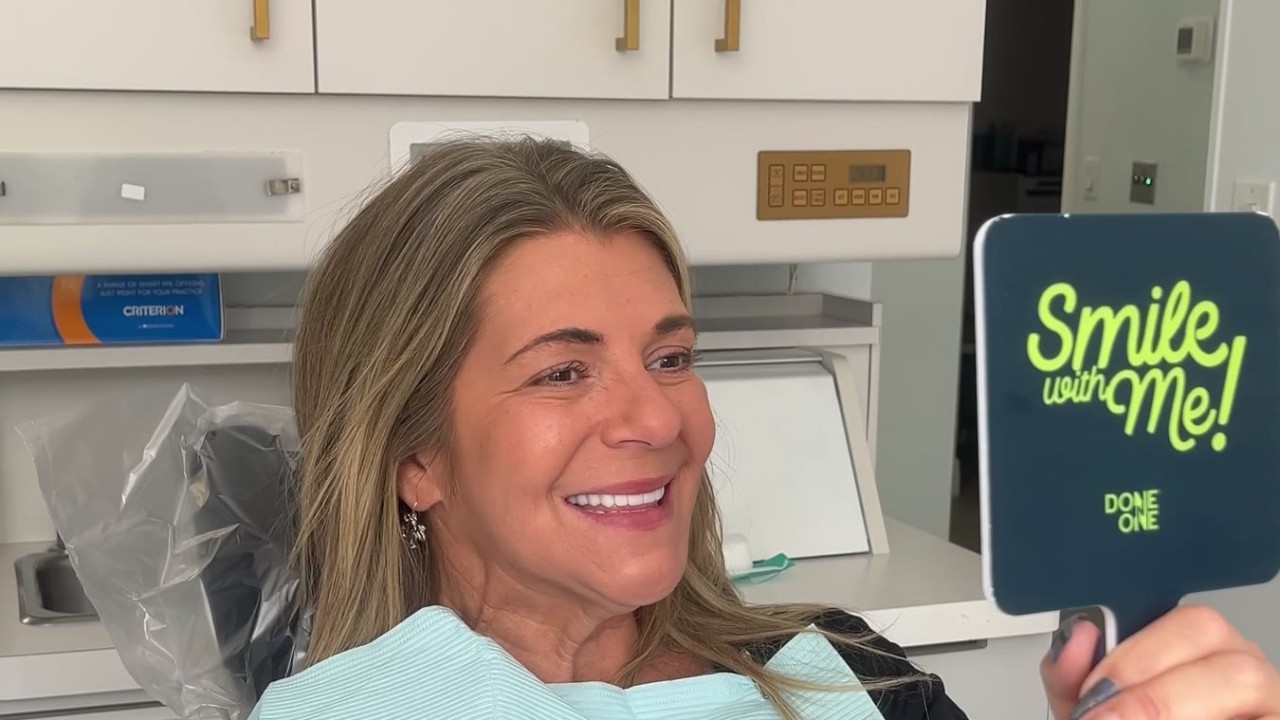
Dr. Daniel Noorthoek and Erica sit down with Abdell, a software engineer originally from Puerto Rico, for a deep-dive patient conversation that spans far beyond dentistry. Abdell shares his journey of living with ongoing dental challenges since childhood, navigating years of incremental fixes, and ultimately reaching a breaking point after his temporary prosthesis broke—prompting him to begin a global search for a permanent solution.
Read Abdell’s story'Is this going to be my life? Root canal here, root canal there, a little crown there.'Dr. Daniel Noorthoek and Erica sit down with Abdell, a software engineer originally from Puerto Rico, for a deep-dive patient conversation that spans far beyond dentistry. Abdell shares his journey of living with ongoing dental challenges since childhood, navigating years of incremental fixes, and ultimately reaching a breaking point after his temporary prosthesis broke—prompting him to begin a global search for a permanent solution.
Key moments
Part 10:00
This is Beyond the Arches, where full-arch dentistry meets real talk. Let's get into it. Hello and welcome back to Beyond the Arches. My name is Erica and today we are joined by Dr. Daniel Noorthoek. Hello. And our patient, Abdul. Hey. So, just wanted to go ahead and get started with this, basically what we're expecting out of today, just to set expectations, I guess. Yes. Just patient experience. Abdul has a really awesome career and he actually came to Dr. Dan with a really fun idea today.
I'm sure we'll get into that a little bit more, but first we'll learn a little bit about him. So, Abdul, where are you from? Thank you, Erica, and thank you, doctor. I appreciate both. Absolutely. Thanks for joining us. Yeah. Very much. So, the short story is born and raised in Puerto Rico, 1981 to 2013. Nice. So, surfing, basketball, I live with my mom, my father, good stuff. Where in Puerto Rico did you live? Great question. I imagine you guys are familiar with the Bacardi factory.
Uh-huh. So, I live five minutes. Okay. From the Bacardi factory. Okay. Nice. Wow. So, that gives you an idea. And I live close to the water and I can see the cruise ships and the old San Juan from a distance. Uh-huh. Very romantic growing up looking at that distance. Oh, my God. So, Erica, have you been to Puerto Rico? I have never been to Puerto Rico. That's very beautiful. I've only been one time. To old San Juan.
Wow. Yeah. Nice. Sorry, carry on. Yep. And then in 2013, I moved to Miami for a job offer. I translated, you know, for a technology job. And I've been here in Miami ever since. Awesome. And what in technology at the time were you in that brought you to Miami and why Miami and all of that? Software engineering has been my discipline. We've been in technology since 1999. So, I'm still in software engineering. I love it. I serve the people first, you know, and we tie the mission of the company and the objectives that we have high level with the professional development, education, and, you know, well-being of our employees.
So, if we take care of our employees, they're going to do great. That's the bottom line in alignment with the mission. So, that's what I've been focusing on since 2013 in Miami. Okay. Did you work for a company? Yes. Okay. So, you started a company service on your own or how did this all work? Great question. So, I had a company in Puerto Rico that I had like six clients. And back then, early 2000s, we did website development and, you know, custom software for them.
Okay. Contracts management for marketing agencies and scuba diving and, you know, different clients. So, it was custom. It went well. When I moved to Puerto Rico, I left that part. And then now, you know, I've been focusing on corporate development. But six months ago, I've been focusing on AI technologies and, you know, thinking as a patient, how can we maximize the technologies for the benefit of the patient? So, that's very interesting.
Part 23:11
Absolutely. Before we get into that, talk to us about how you came into our life. A side note, as we were talking today, he had brought in his folder from the original, you know, consultations and all of that. And I noticed on his signature for his consent to surgery, it said 9-27, 9, what was it, September 27 or something like that, 2024. If you had asked me for $100, when did he have surgery? Definitely would have said in 2025.
Yeah, yeah. Like, unbelievable how fast time travels. Yeah, yeah. Thank you, guys. But, so, how did you come to us in the fall of 24, as it were? Okay, so the long story short is, I've been having dental problems since sixth grade. I've been through dentists, orthodontists, prostodontists, periodontists, over time, up and down, like most people out there. Implant here, implant there, let's do a, you know, cavity repair here, let's do an extraction there, over the years.
At some point, if you are smart, and you do some basic statistical evaluation and projection, you realize, is this going to be my life jumping up and down? Root canal here, root canal there, little crown there, there should be a more permanent fix somewhere, so that's what triggered my research activity, and then I went far and wide. Was it a specific dental experience that you had that was like, okay, I'm going to, I'm a smart man, I can figure this out, or was it a clue in from the dentist you were seeing at the time, or it was just, it came to you in the middle of the night?
Great, great question. So I had, at the time, a chair-side prosthesis. This is a temporary prosthesis that most dentists make that is not intended for long-term at all. That's what I had, and it broke, because I spent like five years with it, and at that point, I was eating something soft, and it broke on a Saturday. I felt my body turn like, you know, heat, like stress, for a moment. I embraced that moment, and then I knew what I had to do.
I'm not going to go up and down like, you know, many people that are listening to this. I've gone through, I need something more permanent. Luckily, I started my research back before a little bit, so I knew where to go. I already had you guys in my crosshairs, because I wasn't afraid to come forward. So I was living in the shadows, but I had your name and everything after, you know, going all over the place. You just touched on something, and the way you said it was awesome, and we talk about this quite a bit.
You were hiding in the shadows, and you were afraid to come forward, right? And that's... That's a very, very common feeling that we see in any patient, no matter what the scenario is. They almost all have a hesitation or a pullback of, I can't do this. I can't let anybody know. You know, it's like taking your car after an accident into the dealership. You feel bad that you hurt their Chevy or whatever it may be. But, you know, as you found out, we don't care too much.
But that holds a lot. That holds a lot of people back, the way you said it was pretty awesome. So, okay, so you came into the light. Yep, I came into the light. So my research, to summarize, I check all over the world. Like, let's step back and do the research academically. What are the options? I went to Beverly Hills, Chicago, New York, all over the place, including overseas. And I saw the options, I saw prices, high level.
And I ended up, by no coincidence or intention, in Boca. Done in one. Yeah. Because it had the best reviews, the best patient success. I look at the pictures carefully. You know, the outcomes. And then the background of the doctors. And the focus. So many places they do this procedure. But they do so many other procedures. And this is really a special place because they do, you know, we do here only one thing very well. So that was amazing.
And what's, when you were doing the evaluation, what was the thing that would frequently turn you off the most or make you think about another office? And we're talking, let's say, let's exclude done in one because we know that you ended up with us. What was the number one thing that an office would do that you would clue you into? Maybe I want to be interested in here. And maybe also give us a couple of examples of something that you didn't like.
Absolutely. So let's start with the pros. When I see Google reviews, I see the website in detail and I see the cases, the symmetry, you know, the quality. Because most before and after pictures, if you're not looking carefully, you can miss a lot. But when I compared, I realized, you know, done in one certainly has the best, you know, before and after. That was a grounding element for me and the Google reviews as well. And the years that the doctor and the team have been doing this, this is not a new thing for you guys.
You guys have come a long way. He thinks of it as a positive. I'm sitting here like, it's too many years. We have, we actually just had this conversation, I think, Monday of this week.
Part 38:35
Someone came in and they were looking at the TV that we have in our waiting room. And they were looking at the, if you haven't been in our done in one waiting room in Boca Raton, we play, Dr. Dan has filmed a couple of commercials, videos, things like that, that we play in our waiting room for patients, you know, potential patients, consultations and stuff coming in to kind of see it. And they were asking if it was, if are these actual patients that you have done and you have seen?
And I was explaining, yes. And it's all of our photos, all of our videos, everything that done in one has their name on. They are actual patients there. We have never, right? One of my main absolute pain points is stock photos drive me batty. Yeah. I don't care how good it looks. No stock photos. There's a lot of that in the industry, but you guys are special in that sense. I noticed that too. Yeah. Well, you know, it's hard to, one, stock photos always have this cheesy fake feel anyway.
And for two, a lot of them will choose, you know, you'll be, it'll be on the doctors or whatever practices page for all on four. And yeah, most people can't tell the difference, but I look at it and I go, that's not an all on four. Like, what are you doing? You know? Yeah. So authenticity and just. Feeling it's more of a gut feeling than it is any reason why you shouldn't use stock. But I personally, I think that we would rather not have a photo there and just have it be a blank page than to, than to use a stock photo.
So I'm, I'm curious when you made the decision to go with us, how quick, how quickly did you move on it? I moved pretty quickly because I had a broken prosthesis as you guys remember. And I didn't have the luxury to think about it for a week or two. So I just had to execute on my proven research that I have done at that point. What was the biggest thing that, uh, your, that changed in your life after getting this done?
And this is true for any hybrid, you know, this has nothing to do with our results, but what's the number one thing that you were able to get back in life? I think there are two layers of outcomes here. One is this is a procedure that you enjoy every single day of your life. After. So I am essentially living a new life like I never knew before. And this goes eating and smiling, social interaction, the psychology of how you feel internally.
So many, this is better than a car, than a home, than a boat, anything else, because you're living this investment. And this is the most important investment that you can make. Wow. I've never, I've never heard that term either. That saying like you are living, it's a living investment. That was pretty deep. That's kind of enjoying it right now. Yeah. Right. And if you had a boat or if you have a boat, you're not enjoying that right now.
To your point. Yep. And he's taking money out where this, you could argue in the corporate environment, social dynamics and other areas. You definitely, you know, presence is important. What, um, it's a question that we ask, um, every patient, what was the number one things that got you through the soft diet? Like in terms of your meals? Well, how did you. Survive that side, that side of it. And then what was your meal that you had when you came back out of it and got the clearance to eat whatever you wanted?
Wonderful. So two things, one is the structure that you guys provided, you know, you, you guys provided clarity and I never, for a moment had question, Oh, what should I eat? Or I don't know, am I out of bounds? You guys were very clear and simple. So I lived by that simple structure that you guys provided. And second, when I look back at my. My background, history, softening, do I want to go back and suffer or do I want to commit and go forward all the way all in?
So I felt emotionally, internally, all in fully committed. Like I have to do this, whatever it takes. And we're going to take tackle this problem once and for all the right way, rather than root canal today, extraction two years, kind of like, yeah, I lost the crown.
Part 412:45
But what did you eat when you were in the soft diet? It was mostly soups and, you know, mashed potato. A lot of those. So, you know, I had a lot of butternut squash, tomato soup. I mean, there's a lot that you can enjoy. And interestingly enough, because my situation before the procedure, I didn't have good teeth. So already I was eating soft. Generally speaking, we hear that way more than you think. Yeah. So it wasn't a big adaptation for me.
What's the Puerto Rican dish, mofongo? Mofongo. I had it yesterday. Yeah. It's mashed plantains. Did you eat that much when you were on the soft diet? Not really. Because I don't usually eat mofongo. There's not many places. Puerto Rican is mostly Cuban. And that's fine. Is there a Puerto Rican version of mofongo? Mofongo is the Puerto Rican version. Dominicans also do it as well. And my main dish is like rice and beans, white rice, red beans, and some protein.
I mean, you can give me rice and beans only with no protein. I'm happy because that's in my DNA. So that's a little bit about me. Erica, have you ever had mofongo? No, I haven't heard of that until now. They do. I mean, I don't know. I've only been the one time and ate it plenty of times there. But basically, it's the smashed plantains. It's almost like a mashed potato base of sorts. And then they'll put like a protein on it quite frequently.
What else do you guys put on it? You can put anything that you want. The limits are only yourself. Well, it sounds amazing. You can put cotton candy if you want. But no, I've never seen anybody. Nobody knew that. But usually fish, shrimp, chicken, you know, things like that. When we were there, this was, I would guess, seven years ago, maybe just before COVID or somewhere around there. Like I said, it was the only time I've ever been.
And it felt like that dish was like at every single restaurant. Is that a fair characteristic? Pretty much. That's a very accurate representation of the facts, if I may say so myself. Yes. Do you ever return to Puerto Rico? Like go to Puerto Rico? For visiting family? My mom still lives there and my brother. I have my best friend there still as well. And I have other family members, aunt and, you know, cousin, nephews in there. So I like to go once a year.
And I miss it very much. But, you know, Miami is the closest thing that you have to Puerto Rico in the U.S. So that's why I'm here, because it was the closest thing. What, um, oh, I was going to ask you. Oh, when you go, did you go during a certain time? Yeah. What time of year is a favorite time of year that you like to go to Puerto Rico? I can go any time of the year because Puerto Rico has no seasons.
It's hot all the way through. Which is music. Yeah. Not to everyone, but music to my ears. I agree. I love it. Being a Michigan boy, born and raised, I'm not a seasons dude. I'm a one season. I'm a Puerto Rican season. Yes. I knew there was something special about you. You clarify. I've always been that way. I always tell people that when I was a kid, if well before I knew what I wanted to do, um, when I was asked what I wanted to do, I said, move to Florida.
That was, I was going to live in the summer. I pulled my shorts out well before you were supposed to, while there was still snow on the ground. I still wear shorts, almost every excuse I possibly can. So I've always been a, um, warm weather, warm clothes kind of guy. Thank you for making that decision. Yeah. So, um, now that you are done and everything is finished, did you have any issues along the way? Did you have, you know, sometimes we have patients that come on that have had a failure and we discussed that.
Did you have any issues? Like, um, did we have to change the soft tissue, the gum tissue on your prosthesis? So you've been pretty much just set it and forget it. I've been pretty much solid and I'm, I feel very solid every single day. I don't have any worries.
Part 516:51
Are you on the lifetime warranty? I am. And, um, for you as a patient, did you see the value in that from the very beginning? Yeah, I saw the value because the commitment, you know, this investment, you have to protect it. Like anything in life that is worth protecting. And, you know, what am I going to do? Not go to the dentist again for like 10 years and hide in the background in the closet or something? No.
The right thing is to follow the protocol. And when you do the calculation in short, it is financially better for the patient for me to have the lifetime warranty rather than, no, I don't want it. Let me pay ad hoc. Yeah. Um, and there, there's going to be patients like you who you want that peace of mind, right? And let's just say you haven't had any issues yet. Let's just say hypothetically, you won't have any. Um, that's great for the program as well, because that's.
You not, you do get that peace of mind and you do get the cleaning once a year. But what I love about it is it, it's just like insurance that any of us get on a car. We don't buy it so that we do then crash the car and don't have to cover the major expenses. Your hope is kind of that you just pay that and it goes to the group so that if that happens, there's an issue or a help there.
We're not an, it's not an insurance. It's not an insurance company. It's just a warranty program, but it functions very much like that psychologically. Like. I see you being now in partnership of sorts with another person and another and another and another. And the bigger that that pot grows, the better it is for the whole group, because now there's no financial arrangements that you and I have to make beyond what was already made. So that removes that barrier and that friction when we're interacting every single time, because it's a matter of, OK, this is what I need to do.
This is what you need to be here for. This is how we're going to do it. And that a lot of times that what happens in that moment in the old process where we used to be, that would become the friction. The friction is in the money, not in how you want to handle it. And why not just remove it? Why not have everybody help each other? It's like I've said before, it's not a huge profit area of the practice, but it's a huge benefit to the practice to be able to.
To pay for taking care of those cases and those patients as needed. A hundred percent. And if I may expand on that, one of the things that I love the most about you guys is that you simplify the process significantly without undercutting the quality at all. You guys are very, very, very high quality, the best you can get in the industry right now. But the process is simple. So when I look at the investment and the process, knowing that everything is included, not only the lifetime warranty.
But the initial procedure is simple. Everything is covered. If there is an additional implant, don't worry about it. It's covered. A little bit of bone grafting, if it's needed, it's covered. Yeah. So you don't have to be nickel and diming yourself in the process. It's simplified significantly. Yeah, absolutely. That's always been our MO is just keep it simple. Why, why introduce friction? Why try to, you know, I don't want to feel like I tried to squeeze an extra thousand out of you.
We've made a deal. It's fine.
Part 620:22
Let's talk about some fun stuff now, which is your passion, technology. So now, as we've seen the AI wave start to happen and hate to be the one that's using the buzzword of AI and but it's starting to creep more into our lives. It's affecting marketing strategies and it's affecting in good and bad ways. It's starting to kind of invade and be more pervasive throughout all of our lives. And as we sort of see this become a tool, a hindrance, a benefit, all kind of everything that you would see in any sort of development, you've seen, you've seen AI and you've been watching it.
So what is it before you talk about what we're discussing? Tell me about like when, as you've been in technology and you've seen things come around, where, where does the passion come from or what are you seeing in a, the AI? That makes you jump out of bed quicker today than it did 10 years ago. Wonderful. So there are, let me set this in two stages. The first one is the ethics behind everything. This is not a new wave.
We've been through this before agricultural revolution, the industrial revolution from horse to car, you know, airplanes. So this is another wave where we have to drive that from an ethical perspective. Virtuous perspective first, and then we select the technology that fits that ethics and virtue mission that we have. And, you know, one of the things that doctor and I were talking earlier is the website that you guys have, that the pictures that you guys have are authentic.
There's a lot of places out there that they use fake stock photos and, you know, wrong pictures for the wrong procedures and things like that. You guys are very authentic. So it's not just about technology. It's about doing it the right, humane, real. Yeah. You know, oriented mission way. That is a big thing. Now, what excites me about AI in particular is the knowledge that is more easily available. I can give you a couple of examples. You have like a lawyer-esque type of advice, accountant-esque.
You have different disciplines that can give you advice over time, depending on your needs. Now that doesn't necessarily at this point replace the humans. Correct. I can get all of the legal advice I want. From anywhere. But ultimately, when I said the legal foundation and the documents and the red lines and everything has to be with a human. And the same is true for everything. Accounting, tax everywhere. However, it's an accelerant. It is. And on that basis, if you use it properly, align with the mission and vision like you guys have done, things will be fine because you're leading from ethics and virtue first and humanity first and then looking which technology fits into that humanity and vision that is different than somebody else.
Using everything that is available and then the humanity is lost in the process. And you would say, so what excites you is just the ability of humans to use this as, say, a car instead of a horse. Right. Whenever it's appropriate. I'm not saying get rid of the horse or you have to use a car or you have to use this.
Part 723:42
I'm not prescribing, but it's another tool in our tool set. And we have many tools right now. Absolutely. The Internet has been a great tool. For us for a while and we haven't collapsed by having more access before the Internet, we have limited music selection, limited information about the news, limited when the Internet came to be all, you know, the world's going to come crashing down, but here we are, and I suspect AI is going to be the same.
I'm hoping that it's a little bit what it simplifies things from a perspective of here's a good example. My wife, Beth, every morning. She wakes up and she checks her email and she goes through it for like an hour and it's not anything that's good. It's not like anything important. It's just that's how long it takes her to clean up the garbage that comes through, maybe one out of every and we all have the same issue. She's diligent about it.
I just ignore it. But I watch her do that every single day. That is a gigantic waste of her human capital and resources. So the ability to. Have a tool that can feed you the important information and leave the bad out is where I see it being like this really cool tool on the flip side, that same tool is what is going to on the other side be what increases spam because people can find ways to get more serverless and more contact and such.
So I think it's cool because we see right now as we're seeing it. Sort of emerge and develop, you have them kind of fighting each other of sorts, and we haven't seen if it just going to if it's going to overly spam us and we just say, oh, that doesn't work. Or if or if the good outweighs the bad. I love that because you're identifying a tension that humanity has suffered or have to endure even to this day.
A knife can be a chef productive tool or it can cause harm. Yeah. A car, any technology can do either or right. Good or bad. Absolutely. So this is no different. It's up to us. Absolutely. So let's move on from your role in AI and what gets you up in the morning with it. So he came to me today and discussed the tool that he's been working on. And there's lots of, you know, agentic chatbot kind of AI pitches.
But what I loved about where you came from is. Yeah. And I'm going to botch this. So you're going to clean it up behind me is essentially he came to me with like a solution for one of the biggest things, which which isn't the obvious. The obvious is throw this on the front of your Web site. And as people come in, you can have that conversation. And what I loved about it was you identified something that really only in my admin have we discussed it, which is having.
Better ensuring that better information comes across to the patient at the time of after we'll say the money is in and you're working with consents and all of the drab, terrible paperwork. And that right there is a big I won't say thing that we're missing. So we've always and Eric will tell you this is true. I we spend a lot of money on printers and printer ink because there. Is I'll be dead before there is a consent form that's been copied black and white skewed to the side with a with a post-it note on it that I'd worked in enough practices where they had that and just drove me bananas.
Like it's already boring content. You're really not going to get anyone to look at it when it's paper copy or photocopied. So Erica can attest like that's a another. I have a lot of weird quirks. Stock photos, photocopying. Consent forms. But what I love about it is it becomes real and become something that is spoon fed to the patient in a easy manner that you then we then can sort of in the back end verify that that patient saw that, which is amazing.
And with the power of AI, what's also cool can do it in whatever language. That is really nice. I've had people ask if we have our consents in different languages. Boom. So. That was a really cool little thing. And I was very, I won't say surprised or shocked, but that little nuance, that little gap really needs to get filled. And it's one that's just. It's not glaring to a lot of people. It's when you think about it is very similar to what you guys have done, because what you guys offer is very specific as well.
You know, most options out there is a prolonging fix here. And then in a couple of years. Fixed there. And in a couple of years. Fixed there. What you guys have is very niche and vertical and integrated and solid, but it's very specific. You know, you guys don't do orthodontics or we do other stuff. Mm-Hmm. This is the focus that you do and you do it very well by focusing. So there is something to it. Mm-Hmm. Absolutely.
Um, where did that idea come from? Was it, um, looking back on your time of seeing the folder, you, you mentioned that you saw the folders you're working on this project, but, um, was it. Seeing the folder and thinking, you know, I was a little bit confused about the risks I was taking on. That wasn't totally clear. They gave it to me, but it, you know, I think that this could help have had made my experience a little bit smoother.
Was it like, was it a reflection? A lot of reflection. So I have made the folder of Donning one, the gray binder with good stuff. That's always been in my desk, uh, close to me. And as I w I'm working with AI, music generation. Audio generation, video generation, image generation, and I'm integrating and I'm doing my YouTube channels. I'm realizing like, is there a possibility that my experience as a patient could have been elevated with these newer technologies that are coming very recently?
They were not available in the sense that we have them today when I got the surgery and they're evolving by the week, by the day. Yeah. By the day, by the minute. So like Steve Jobs said, innovation usually comes at the intersection. Okay. Disciplines. So when you bring one discipline strong and then you blend it with another, you can come with creative, new, uh, focusing, you know, cover gaps, which is cool. You have, um, ignoring, not ignoring, but, uh, reinventing the status quo, innovation, removing that status quo and putting the new one in.
Um, I'm, I'm, it's cool that you saw that and found that little. It's been just something I've had in the back of my mind as a side project that I've wanted to do for a long time because in, in many ways I think of it like a, a docusign. Mm-hmm. Erica and the treatment coordinators that we have across the, the locations, they do a great job signing patients up and making sure that the consents are in. And actually it's funny.
We were just having this conversation this morning. Yeah, we had this conversation this morning and it's funny. because I don't even think that Abdel had his surgery at the time of our DocuSign. So it was literally probably paper consents too. This is kind of a newer edition, but I told Dr. Dan this morning how much I appreciate the fact that we onboarded DocuSign and how much easier it makes my life be because I don't have to sit there and scan paperwork.
I don't have to make sure, you know, patient at home, oh, he lost his paperwork. Can he come in and get more? Do I have to email it to him? Does he have a printer? You know, all these things that kind of go into it. Whereas now we can just shoot them the DocuSign and it's one, two, three, and I have it. Yeah, so like the value of that is one, a ton of headache for you and trying to chase it down, wasted energy that's completely pointless.
And then we're human, we might miss one or two, et cetera. But to figure that out also wastes human capital. And then the solution is DocuSign for some stuff. You know it's where it is, you know that it was done, and you know it was done by the patient. Or at least by somebody representing themselves as the patient.
Part 832:21
And so that's what I love about this idea is to being able to sort of spread it out and know that that information was received there and how and when and how long of it. Amazing. I love that. And now that I'm hearing that, you know what? I'm going to have the procedure again so that I can experience it. You're the first person to ever say that. We won't make you do that. We can simulate it. Well, Abdel, we've really enjoyed having you on today and love your perspective.
And, you know, kudos to you for kind of finding that little niche. We're going to find make the connections and find you a way to kind of sneak that little tool in and see if we can work that out together. But again, we really appreciated you as a patient. And, you know, it's nice to have a patient that's been here for, you know, coming up, up on two years, pretty close to two years, worry-free, issue-free. Worry-free, happy.
I don't regret anything. Just two closing things from my end. First, thank you, doctor, for your years of devotion, your family, everybody who supported you to be able to do what you're doing today. My pleasure. It's a lot of work. The least I could do. Erica and team, thank you, all of you. You guys have been awesome. And I've been to a couple of dental offices myself, so I'm qualified to say what I'm saying. It's our pleasure.
Well, we appreciate you as a patient. Your new smile is just as welcome as your old smile was. And if you're a patient listening to this, the same applies for you. We don't care or judge what your teeth look like. We want you to step out into the light, get some help, get some teeth fixed, and we'd like to be the ones that help you do it. So, you know, thank you for your time. I'm sure you've helped some patients out, make some decisions and, you know, navigate the water.
So, we appreciate your time. Thank you. Thank you. Thank you. Thank you.