The conversation
▶The best moments are marked. Tap one to hear it.
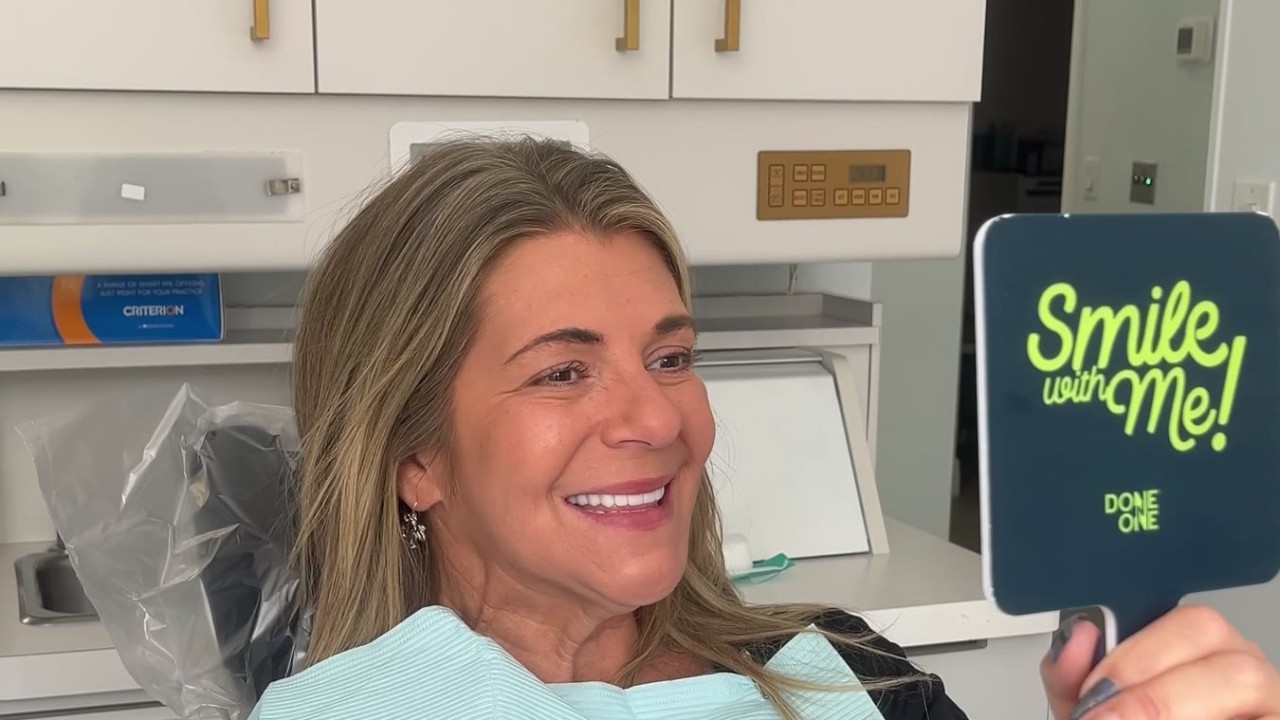
In this episode of Beyond the Arches, Dr. Daniel Noorthoek is joined by restorative dentist Dr. Sarah Laks for an in-depth, behind-the-scenes look at what it takes to design and deliver a full-arch prosthetic smile.
This episode answers How do you decide what my new teeth will look like?
In this episode of Beyond the Arches, Dr. Daniel Noorthoek is joined by restorative dentist Dr. Sarah Laks for an in-depth, behind-the-scenes look at what it takes to design and deliver a full-arch prosthetic smile.
Key moments
Questions answered
Part 10:00
This is Beyond the Arches, where full-arch dentistry meets real talk. Let's get into it. Hello and welcome to another episode of Beyond the Arches. I'm your host, Dr. Daniel Noorthoek. With me today, I have our prosthetic restorative dentist, Dr. Sarah Laks. Welcome, Dr. Laks. Thank you so much. Welcome back, I should say. Good to be back. Today, we're going to be talking about prosthetics, full-arch prosthetics. We're going to be talking about smile design, what goes into the smile, how you come up with your decisions, what you make, and a little bit of behind the scenes of what that looks like, you know, what goes into it behind, you know, what a patient works through and what those things look like, you know, sort of after hours, if you will, how we give instructions and those kind of things. So, to start with, let's kind of start with the first one.
Let's start a little bit simple and we'll say, let's start talking about smile, right? Your job is very important. It's one of the most important or really the most important because it's what people see. It's what people experience. It's what people feel, right? If all goes well with the surgery, someone that does what I do or, you know, or what I do should just kind of fade into the background, shouldn't do anything other than be functional. There, right?
Right. Shouldn't hurt, shouldn't feel good. I mean, it should just be nothing. Yeah. But the teeth are constantly there. And so, there's some things you have to overcome and there's things that you can get to shape correctly so that speech is a part of it, et cetera. So, walk me through when you start with a patient, sort of walk us through what kind of steps that you go through first. Right. And then we'll kind of... And then we'll kind of break it down into smile and teeth and function and bite and all of those things.
Yeah. It's a pretty complex, like, world, you know, when it comes to prosthetics and just restoring function and aesthetics and all of that. But like you said before, implants are a huge part of this whole process. But the restorative portion of all this is, I think, in the patient's mind, like 95% of the whole experience. Yeah, the surgery should go smoothly, quickly, hopefully pain-free. But what happens afterwards is, like, the major part of all this. What's the biggest or most exciting visit that you typically see with a patient after surgery? Is it the first chance that they have at looking at teeth? Is it the finished product and being able to see that? Or is it somewhere in between visits where, in our particular process, where they're doing a couple sets so that they get to see them?
Is it a matter of, like, when they first see them and they're kind of coming to fruition, right? Where in that process is... It's a little bit different for everyone. But I think for the most part, the final reveal is when we get the most emotion, you know, that feedback. Is that because the... Do you think that is because it's the end of the journey for them? Yeah, it's like a weight lifted off their shoulders. It's like, wow, I made it.
This is real. You know, it's not just a plastic prototype, which are really great. But when they finally feel that final, you know, set of teeth in the nice, smooth material, and it just feels like... They just feel back to themselves, really. What part of the process for you on your side is the most difficult to overcome? Is it something intangible, like the patient's significant other that wants it a particular way, overcoming that? Is it speech? Is it look? Is it shape? Is it bite? What's the hardest part for you to overcome?
I would say dealing with their emotions, really, throughout the process. You know, kind of letting them know that we're in this together. And although it's not perfect right now, maybe today, the day after the surgery, we're going to get there eventually together. So I think repeating that throughout the process and just calming down. Yeah. Just their mental, like, attitude. You know, you have to trust the process and just relaying that. I think sometimes that's the hardest. Because, you know, you're in pain after the surgery, and the first set of teeth, it's not 100% just right yet.
And so keeping that in mind, you kind of have to just calm your nerves a little bit and trust that we're going to get there in a couple days. It's only a couple days away. But just getting through those couple days, you know, it could be a roller coaster. And you're pretty good at that, because you've got, I would say, it's probably because you have a bunch of siblings. And so you're used to kind of being tested. Like, you're very go with the flow and very comfortable with it. And thinking back to the times, hundreds of times I've done the tooth side of it as well, it is hard to try to communicate with a patient who is in pain, who just went through this big procedure, that everything's going to be okay. And, you know, they might be on a 10, and you're sitting down here at a three, and you can't figure out why you're having, why you're struggling to communicate properly with them.
Keeping in mind that they're in pain can be very difficult to overcome and constantly be thinking about. Right. It can be easy to forget, like, it was a, you know, pretty big surgery. They're still in recovery. They're, they're in it. They're in the thick of it. Yeah. Looking back on my, on my career, if, and that doesn't even have to be full arch, you know, just a regular single implant that a patient was having a hard time with the pain or whatnot from, you think, my goodness, Mrs. Smith and I are never going to get along. It's never going to happen.
Next thing you know, that pain breaks and they're your best friend. So keeping in mind that in a few days, they'll be back to being your friend is, and communication during that process is, is important. What about physically? Okay. So you're, you're getting the patient in for our particular surgery. System. You're getting a set of teeth up front. What are the steps? What are you looking for in a smile? What, what are sort of like the things that the, the bridges that you're crossing over? What, what are you looking at and what do you kind of try to put it in order of like what you're looking
Part 26:46
at and what you're trying to control? Sort of how does that look different in the first set of prototypes versus the say third set of prototypes? What, what changes in your dynamic? So. So there's two factors. There's functionability and then there's aesthetics. So obviously the main important thing is we want them to be able to eat anything they want to eat. You know, we want them to be able to bite into their crunchy apples and all of that. And we want them to speak well, clearly. Yes. So there's that there's juggling the, um, sorry, my throat is a little, it's okay.
There's juggling the, the prosthetic portion of everything, functionability, but there's also the aesthetic portion. So that, I think that's also a tough thing to really get into. But trying to manage it sort of like try to manage both of those at the same time could be difficult. So what are you trying to accomplish first? Like what's number one off your list? Number one is getting the teeth where they need to be. So we want to make sure that the bite, you know, their occlusion is ideal. And then, then we can, we can focus on the aesthetics of everything. So once everything is in place, we can then focus on how the teeth look right. And do you find that that's where does most of the effort come? Is it in the tweaking for the aesthetics? And we'll talk about aesthetics here in a second, but is it the tweaking there or is it the getting the, the, the teeth into a position where they can bite and chew and feel comfortable? It's both. It's positionally getting the teeth where they need to be so that yes, they can eat, they can chew, they can speak well, but it's also shaping the teeth. You know, the anatomy of a tooth, everyone is a little bit different. So we really have to be like hands-on with that part. And then aesthetics are a huge portion to this, you know, as well. So a lot of patients come in wanting something totally different, but they still want to look like themselves. And so let's, let's jump on that real quick since you just said that.
Explain to the listener why we don't go through digital mock-ups or selection of teeth for our particular process. Why don't we go through that first? Why is that not something that we discussed beforehand? Right. So I know it seems like a great idea, right? When you look at a set of teeth, it looks awesome on commercials and, you know, a magazine, it could look beautiful. It could look great on that, you know, page on that screen. But once you put it in your mouth, it looks extremely different. So just right off the bat, we want to set our expectations. Yes, patients can come in with inspiration, with ideas of how they want to look, how the, you know, we want to shape the teeth, but it's all about the try-in process. It's about fine-tuning it for them, you know? So we dive into that a lot and we spend time comparing different shapes, different sizes, you know, making sure that we're communicating clearly, you know, that the message is getting across what they want and, you know, if we can achieve that. So.
And I always, it was always frustrating because when you're trying to, let's just say for a conversion, a lot of times it's sort of a standard, very run-of-the-mill kind of type of tooth that everyone kind of picks. So you, you don't get too far out of the middle. You don't get too far out of the, out of the way or too far off. But it was always sort of frustrating because once you show somebody an example of what they think that they want to look like or in any shape or form, we used to take the facial scans and we used to take scans of their, their mouth and we used to prototype it and we used to show it in front of them. And we used to use that as sort of a selling point. And that if you go to a meeting, that's the way that they're going to tell you that, oh, that's the way you close a patient. Sure. Fine. That may help.
Help with selling. But in terms of actually like performing on the final results, it's very difficult because now you've introduced a thought of what somebody was going to, what they were going to look like. Right. And it's not that you can't achieve that. It's just, you've already, you've just now kind of muddied the waters more than you need to. Exactly. And I always felt like putting them under the gun too, when they're kind of used to, for the most part, they're used to it. Yeah.
They're used to not being, or enjoying their smile, putting them under the gun and saying, which ones do you want now? Choose. Right. You have to choose right now. Exactly.
Part 311:37
Why would anyone want to do that? Right. But I get the appeal, you know, oh, you get to pick it out ahead of time. Yeah. The problem is that reality and ideal don't always mix together properly. Sometimes it's better, reality is even better than what the fake would come out. Yeah, exactly. Beforehand. And sometimes, and this may sound crazy, but sometimes symmetry, perfect symmetry and a perfect smile doesn't turn out so great. Yes. There's not a lot of personality in that. So sometimes we can veer off, you know, and start creating different shapes and kind of humanize it a little bit. I think that the easiest way for maybe people that are listening to understand would be there's book smart and then there's street smart, right? Right. There's book smart for teeth. And of course we follow the rules and we're not doing anything bananas or crazy. Yeah, there's the golden ratio, you know, that we follow as a baseline. Right. Explain what the golden ratio is since you said that.
The golden ratio is, it's a, it's nature's idea of perfect balance. So it's a set of numbers. It's like an equation and if followed, it's like one to 1.6. So if followed, you can achieve a perfect balance. So if followed, you can achieve a perfect balance. So if followed, you can achieve symmetrical balanced anything so in dentistry it's a set of teeth how they look and right it's a ratio of how teeth get progressively smaller visually how proportioned they are in terms of the height versus the width right yeah um and it's it's a great rule to follow it's it's standard across right pretty much all of nature nature seashells and you know paintings even even financial scales actually but the um so there's the golden scale there is the book smart side and then there's the street smart spot street smart side and there's a balance that will if if misconstrued you know there's too much street smarts there's too much fly by the seat of your pants that'll be a mess and then there's too much by the seat of your pants that'll be a mess the books so that's that's where you come into play is you're sort of the referee between book smart and street smart that's a perfect way of putting it yeah we have to make sure that yeah clinically everything is where it needs to be but from the artistic standpoint we can have fun with it we can really kind of go crazy and try out different things and keeping that golden ratio as a baseline but then exploring different options and and in being a referee how much of that is you having to pull the patient back to reality of oh but we can't move this tooth here because it's what's holding your lip out so that it doesn't look like you're missing teeth or like how much of that balance is there how much is how much of your day-to-day job is reining that patient back into reality like how much of it is them being too artistic with it or trying to be too creative or too idealistic in their own head and kind of reining them back into reality is it a lot or it's not a lot yeah surprisingly just because they know that okay yeah these teeth need to be here and then everything else we can work with and mess around with but usually it's pretty easy to get that idea across not a lot of times do we veer off so much that it's going to affect what we need clinically so we're still in that kind of limit we're still in that kind of limit and we're still in that kind of limit and still safe absolutely doesn't come up a lot really do you find that uh patients are very moldable and receptive in the middle of this very because at that point you know we're changing so much it's a whole change obviously some people are are different and it's harder to get through but a lot of people are really in it and they love the idea of being able to try out different things and it is a process and yeah we'll get there eventually and they know that that we're eventually going to get to that final design that they're in love with but um that journey together is is really cool it's very special because we're we're in it together i think that's what makes it easier for people very much so we got their back they know it's going to work out in the end so they can kind of relax during that process and that's another part that that we did talk about how people can sort of change through surgery you know in terms of being in pain and so they're kind of just a little bit more on edge than they normally would be and and such but one thing we didn't really talk much about is you know personality plays a lot into selection of the teeth and in the prosthetic portion right if you are solely a i believe in the book in the book only the patient gets left by the wayside and there is no personality difference right you don't even see that right but what's fun about doing the teeth in a way where you're constructing them for them and it could be done traditional way or the way that we particularly do it something that is fun is you do get a good variety i think or i feel from from my experience you do get a good variety of the people that want to rely on the book and they will really want to play books book smart if you will right i don't even like the idea that you're you know they don't want to even touch anything or artistic and then there's the other side and figuring out who is who and how to find that perfect balance and solution for them and maybe three quarters and one quarter right but finding that balance and that solution is is part of the spice of being a restorative dentist and finding finding that happy balance once you've found that happy balance they would then have happy patient exactly it's kind of like music like a musician right there's a song there's the notes there's the rhythm you have to follow that to make it you know sound like the song you're playing but then what happens like in between the notes and that character and that pizzazz and the veering off and the riffs that's what moves people sure so it's balancing that to draw off of that think of how many different variations of the star spangled banner there are right and they're all valid and exactly some are better than others but yeah but everyone's going to have their own opinion right yeah and i think that's another thing that you have to play against is you have to also you're a little bit playing fend off the outside influences as well right the brother's cousin's uncle that's a dentist who said that that should never be that way or um the person that has the sister-in-law that was a dental assistant for 36 years they're going to try to weigh in too so you kind of have to play appease everyone and fend that off right yeah there's a lot of cooks in the kitchen sometimes sometimes for sure always but it's just managing everybody's expectations and you know really just communicating clearly throughout the process is i think the most crucial thing um trying to be on the same page every single day that they're with us um but yeah it's just dealing with a lot of personalities and different opinions and like you said playing quarterback just kind of managing but we we get there it's just a lot to to handle sometimes usually it's pretty smooth yeah what what you just said reminded me of building a house or or a building of some sort you know that process as long as the foundation is there and you're building a house or you know as long as everyone agrees what structure you're building and sort of what the plans are the different flooring can change the the different shower can change but as long as the foundation as long as my side is kind of done properly the foundation then building the house on top sort of becomes personal flavor it becomes architectural influences it becomes designer influence builder influence so picking your obviously founder and architect you know foundation builder and your architect is important but so is picking your designer right finding something that you find cosmetically appealing right when you look at their pictures and you have 15 friends that have gone to the house and you're like oh i'm going to build a house and i'm going to build a house for them and you don't love the pictures of the teeth that are there you may not be cut out for that interior designer you know you may not be good for that that dentistry you may not fit that mold that right you know something has to speak to you something has to be in the gut that that
Part 420:36
goes well and it's funny because you know i do a lot of the consultations and even when patients say that you know what i'm not so particular give me you know anything and i'll be happy more than happy i just want to eat even those people usually have a lot to say on the final i would probably argue that invariably it's flipped okay the people that say that they're not picky are the most picky and the people that say that they're totally picky usually are way less than you can possibly imagine yeah it's always been flipped for me okay which is why in the console they don't really it's not that i don't pay attention to them but it doesn't matter if they're not picky they're not picky they're not picky they're not picky they're not it doesn't matter yeah because we're going to go through the process we're going to get in there anyway right it's just a funny little point that i picked up explain to me in sort of listener terms how what what is happening in between the visits of teeth and why is that um why should i feel comfortable because it's it's very easy to relay the way that we do it in terms of prototypes and and get the feeling that we're just kind of shooting through the dark right well the bite was wrong and they got to fix it the next day so they're just kind of fumbling around until they find one explain to me as if i'm a patient why i should feel good about the multiple prototypes which is going to lead us into the process behind the scenes but let's not get there yet let's just yeah i'm patient why why should i feel like multiple prototypes is an advantage to me and you're not just fumbling around through the dark right and from a patient view it may seem like i don't blame them right which is why i bring it up exactly but um it's an interesting you know topic you doing the surgery and you you know usually taking the initial bite puts us in already such a good situation from the get-go and so from there we're really just fine-tuning everything so there's like a thousand things that go on behind the scenes once the patient leaves we're sending all of that information to our lab which that in and of itself is a huge discussion you know communicating clearly with the lab which our lab is amazing um you know they're trying to duplicate what we see you know in the office so relaying that and having them you know translate that and bringing it to life is amazing but you know there are a thousand different things that go on once the patient leaves the office and so it's it's more of an art and less of a science sometimes everyone's anatomy is different everyone's jaw you know positioning is different how they function how their jaw moves um it's speech also dialing in the speech again sometimes the you know exact ratio that the book says doesn't really work so it's like all right now what do we do now we have to veer off and try something else until we get it right so there is a big part of it's not trial and error but it's um being willing to try something else you know something else that you really didn't think of seeing if that works because it usually does just a little bit different than what maybe you're told you know in
Part 524:00
school or what you see in the books yeah i like to think of it as the first initial series of things that we're doing are first my a i just alerted that it's listening for some reason they're always listening it's the apple i don't even know that i didn't even that i had to engage i always think of it as the first you have to get the foundation right right like the first thing that a policeman does when they show up on the scene of a crime or a crash right a car accident you sort of find out the facts what cars were involved what what person saw it what are their contact info you know like the basics and once those basics are done then they can go find the footage to go kind of record was everyone's memory right they can kind of talk to other people and they can talk to the business owners they can then construct that scene but it all relies on the exact like fundamental basics what cars were involved right and so the first several things that we're doing do not involve the patient because they're the fundamental basics that we need absolute fundamental knowledge on right we need need absolute accuracy and something that i think is very easy to get lost in translation is that we're getting that foundational information that's resolute and bound and done by the best machines the problem is that it seems very artistic after that right right and really what we're doing what we're saying is no no we have what cars were involved and we know exactly where they are we're just trying to figure out who hit who right and and what store owners have footage of this so we can construct it reconstruct the scene yeah dive into more not to make it a accident the scene of an accident but yeah it is a bad analogy but that's the the the fundamental basic number one get good information exactly after you have that fundamental basic information you can get as wild with it as you want you know within the confines of not letting a patient cause their own harm yeah we can make the teeth green if we want to if we have the right data to start right yeah and we can show a patient what green teeth look like right it's no skin off of our back i don't that wouldn't be preferable but as long as that information is there will always be there within reason and it's nice because we know we can always get what we want so it's it takes a lot of stress off our back really my back knowing that all right this is what we have let's get that foundation set and ready and then we can have fun with it and we usually get there pretty quickly so you know maybe after the second prototype so that yeah you know day three of the week we're already there we have that foundation set everything is where it needs to be and now let's you know have some fun with it right yeah like the the data that we're getting day one of surgery is right where it needs to be good day number two is shuffling that data so that it all corresponds to itself and sort of those fundamental basics and then day number three is like what we're talking about you know prototype number two is where you can start to get fun and artistic and more involve that patient we even get into it before everything is in place just because it's fun and the patient loves talking about it and it's nice to be you know up front and communicate right from the get-go about what they want things to look like not only feel and function so we do you know dabble in that even after the first prototype so but it's all about that balance it's you know focusing on the main thing first and then veering off yep and to to bring in the conventional way because you know i hate that we don't do anything conventional anymore because it really kind of alienates that group and i want people to watch this that are going to go to somewhere else right i want them to get be able to get information and somehow increase the knowledge base or somehow help some dentist somewhere because the the patient that listens to this didn't know anything about it before they heard about it they found us they went to that person that's i'm this is not a done-on-one advertisement so let's bring in some of the traditional way the conventional way so it's still you're still trying to get to the same path right we have chosen to get our data our resolute data day number one and build off of that and use that as sort of a healing platform right like a diving board that we're jumping off of that's our healing platform is having really good data right in the conventional way you're gluing things together so you don't have that absolute accuracy to start with but because it's temporary and because it's meant to be thrown away eventually you can a little bit do your playing at that point right and let the implants heal and then if you have a problem you can come back and do it again right and can build off of that platform right and so we're all kind of doing the same thing we're just doing it at different steps exactly and after you're finished healing the steps that are involved are very similar to the steps that you're going to do right they're making sure that the bite is is dialed in and nailed in it's getting the data right and you can get very good accurate data through traditional means and what i mean by traditional is non-digital non-computing based it's more based on your traditional sort of like impressions and things like that you can get decent data that way it's a little bit more tedious and a little bit uh more step-by-step involved to get there a little bit more work on the dentist part and a little bit more work on the patient's part but you can still get good data and then just like we're talking once you have that good data you can start to fill in the holes right the problem with that can be you know and i don't actually i think that there's been a bunch of steps in the mainstream conventional way if you will where labs have kind of gone leaps and bounds a little bit ahead of where they have been when we were doing the traditional and so what you're going to get if you work for xyz hybrid dentistry is you're going to get a plastic printed prototype as well and then your tweaks are based on similar movements that we make they'll just make it in a little bit less of um social jargon if you will right and they are going to try in serial prototypes as well or maybe make the the tweaks when i was doing these teeth like this and the labs were outfitted and i was doing these teeth like this and i was doing these teeth for doing it the conventional way we would be first we would take a take the good information and then we would take that good information we'd make a set of wax rims and we would take that wax rim and we would try it in the patient and make sure that their lips were supported properly after that was done we would send it to the lab and then they would set denture teeth in them correct when denture teeth would when they would come back in the denture teeth they would be a fair representation of what they were here's the problem with the denture teeth they would be a problem though when they were in the patient's mouth too long it would heat up the wax and would distort and they would get smashed all over the place it was very difficult to to keep keep up with but if you could manage that you would be able to position them in the right place and then they could make you the final set but that's where all of those visits came was sort of getting that good information we tell every patient this too in our consults but we would be managing getting the good information after the implants had healed right and that may make sense for some people of why that is a better safer way to do it um but i can tell you from doing both equally that getting the good information allows us to have a more predictable outcome therefore less failures therefore less problems therefore why wouldn't you make the finished product right away and that's been sort of my platform to push along but we're all doing the same thing we're getting good foundational data tweaking in the teeth to where the patient wants them and getting them a nice set of teeth and we're all doing the same thing we're getting good foundational data finished product teeth yeah exactly and i also say this in every consult both ways right you get that same solution same final product but it's how you get there what route do you take so both solid options it's just the experience you know getting there and you know doing it digitally doing it you know the way we do it it's just being a little bit more proactive i think about things it's you know we use this analogy a lot it's like you know putting your cat uh your arm in a cast you know when it's healing you know why do we put it in a cast because we want to guide and you know control the healing process protect what we just you know put inside that bone and you know let the tissue really heal perfectly where we want it to heal so it's just thinking ahead of the game but again you can deal with all those steps later on it's just the outcome may be a little bit more difficult to get to you don't have a ton of exposure to conversion dentures but this morning we took some off you took four sets or you know four arches off yeah and from a from a different office and it probably makes more sense today than it ever has before about how different the healing experience is going to be under those versus what what we're doing when we're controlling it yeah
Part 634:03
when i i looked at it you know this morning being hands-on with it you really you realize how much of a difference being more more than hands-on almost like nose-on being nose-on with it oh yeah it's you know it's just like hygiene wise terrible you know the gums are so angry and you can just it's i hate to say it's it's terrible it's it's all in who's handling it and how painstakingly they've pushed the agenda of what they want done with it you know if you don't cover anything about how you keep it clean and stuff and and haven't managed it properly and haven't lined it properly then it can be a disaster yeah but i mean correct me if i'm wrong you have more experience with this but even the best made temporary set of teeth acrylic it's just it's stickier you know it's more it's more porous black buildup yeah it's more porous it's not it's not built as well by any means right so even a super you know regimented you know really on it patient it's not going to be a hundred percent remember i'm trying to stay process neutral here right there is a huge difference what i picked up you know it's yeah it's a big difference how does dr lax know that everything is correct for a patient how do you know when you nailed it how do you know when you got it right what's the number one thing you're looking for is it patient excitement is it the feel of the way that the screw goes in it like what is it that that lets dr lax know that that you've nailed the thing that you've nailed the result yeah it's it's interesting because it really is just like a moment during that try-in where we place the teeth in and it's kind of like an aha moment in a way it's like oh wow i just this feels right can't really describe it like in words really and the patient's just you know oh yeah it just feels like this one is right and that's how we really know that we're good to go so it's it's like an intangible thing it's just like oh they feel like themselves again and across the board we see that with every patient it just feels right and that's when we know we got it goldilocks yeah it's the goldilocks zone and i would say that drawing off of that really you would say that that little instant you can see and just sense from a patient that that's right exactly yeah yeah and it's nice we can get there pretty quickly so once again that final set it's even just it's a really great experience for them it's a huge change why don't you share your heart like the aspect that's the hardest for you to get right or what do you find the most challenging and then i'll share mine if it's not the same the most challenging would really be to understand what their goals are so communicating that clearly so sometimes i'll get in there and you know go in with my handpiece and reshape a tooth to what i think they're telling me they want and we'll get there eventually but sometimes it takes a couple times bite is one thing that you know it's again trial and error the bite can look perfect to me and to the scan can look ideal and the patient feels like it's off so things can be a little bit you know misleading sometimes so it's just getting getting it right after a few tweaks and adjustments and it's interesting in no part of this conversation have we really talked about speech because i would argue it kind of just comes along with the process you know it used to be you know i've told you this before it used to be almost the first thing you would mention listen your speech may not be right we're going to minimize it as much as we can i'm going to try to manipulate things as much as you can i would say that the bite or the the speech being affected is almost it still comes out here and there and it is something we have to work through but it's almost kind of dissipated more and more as the process has sort of been ironed out but i think it's it's the advances in digital dentistry and being able to manipulate things off-site rather than just kind of dealing with where they were physically right um but i would agree with you uh mine was going to be bite as well bite is very challenging everyone has a different thought process right you've been trained different than i have i showed you that picture of the occlusal scheme diagram i was like oh i remember this from dental school and you're like i've never seen that before in my life we can take you know we can invest in in digital stuff that gives us ideas of where the bite is the most pressure we can take scans with our scanners and see where it bites we can use the paper like there's so many tools that are available but all agreeing on what feels good and what doesn't feel good it really comes down to the patient but that's sort of the hardest to ascertain because sometimes you and i can't see it even with all of the readings and the technology and i think what's going to be the most important thing is that we're going to be able to understand what's going to be the easiest for somebody if they're watching this and they're just kind of shopping around or trying to decide if they want to do a hybrid something that's probably easy to relate is most people have had a filling or had a sealant in their life or a crown or something changed about their bite and i'm sure almost invariable everyone listening possible out there will be able to relate with the fact that yeah i was telling the dentist it was off and he was he or she was like no it's not off it looks fine right and that's that can be part of the most difficult part of the the interaction um you always overcome it you know just like with a filling you kind of always end up getting there um but that becomes it's a process less than a science it's a science first fundamentals you follow but the other part that's intangible is so intangible it's almost like the most difficult thing to nail or know that you nailed exactly and and sometimes it's hard for the patient to relay that to me right they don't have the words yeah they're like i don't know what i'm feeling it just feels off wrong yeah and so we'll go in there and we'll look and we'll get our hands on it and we'll make an adjustment we'll say does this feel better no it still doesn't feel right to me it looks you know completely fine so we keep going but it's all about you know trusting that process and you know communicating clearly so we're on the same page and we'll get there so it takes it takes a few times to get there but it's all about you know trusting that process yeah let's talk a little bit about sort of high level um i come in i'm in my first set of teeth what's going to happen past my visit not from like a you know scanner and all of that stuff but where what are you communicating to the lab that makes it so that my teeth are going to be in a better or better um perfect position to be able to do that so i'm going to talk a little bit about that tomorrow what what are you asking them to do what are what's the behind the scenes look what's the what's the work that dr lax does with with your team to get that improved yeah so it's really giving over detailed instructions and this is with any dental office and lab right it's giving the lab who is like a huge crucial factor in all of this the information that we want so we want changes made we detailed those changes and send that over to the lab and they start you know 3d printing in our case um a new set of teeth with those details and changes and tweaks that we went through the day before and um and then they translate that and they make um the new set most of the time we're manipulating i think people would be a little bit surprised that both the complexity and the of the process of getting that information over you know it requires good pictures good communication same vocabulary uh same scan files all like all of these things that go into it is pretty complex from that side of things but i think they would equally be surprised at the simplicity right right when when dr laxer i send a prescription over to the lab of requesting some changes
Part 742:40
generally we're going to be talking in a language that is just simple rotation so if anybody's ever seen uh anyone manipulate or rotate a file on a computer you know that's a 3d object that's what we're asking we're asking them to rotate essentially right left up down um you could call it a yaw a pitch you know roll um but essentially those terms but sometimes it's easier just sometimes it is yeah simple but those are the things that we're asking them to do so we're asking them to do those are it's just it's very simple moves that are categorically important for everybody what do what do we take we take six points i think i forget the name of like the there's a system of lab interpret you know there's a there's an actual system that you can subscribe to and it's the six rotations that's what we do but it's forward and back and it's side to side and there's anatomical markers that we follow um which is generally when we're making those rotations and movements we're moving them into the anatomically right position and then from there obviously is where we get uh into the particulars of anatomy but i think that if if i think that the listeners would be surprised to find out how relatively simple those movements are they're not anything that's like an algorithm right right there's the golden ratio is kind of built into the standard of you're going to make teeth that's already there right sarah lax doesn't bust out her um her gauge right her uh bully gauge or or some sort of measurement device and measure every single one because that's already built into the standard of teeth that's what you are as a lab and so our movements are relatively simple and that is something that's nice because it allows for a better communication and a better result but i think i think it's it's a it's a it's a it's a just like what i wanted to impress on everyone is that it's complex in how you get it there it requires good computers and good yada yada yada yeah there is a level of complexity but once you've figured out that complexity like the actual movements what's actually happening that's pretty simple pretty straightforward very simple the technology yeah complex and maybe took a lot to you know get it but once you have it it helps it should help you i wasn't trying to like your own horn horn and being complex and technologically advanced there's more that the that side of it would be where i would find that probably patients would be in awe of the complexity of it like being deeper than they think than they thought it was right how it actually works but what we're actually moving i think the movements i think they would be just as surprised at how relatively simplistic it is exactly and i mean that's what we want we want the patient to be able to do it and we want the patient to be able to do it and we want the patient to feel like it is simple and straightforward we never want the patient to feel like we're stressed about their case so it is really nice to have to be able to get to you know the design that we want fairly easily compared to you know other ways we get to focus on the patient more and just deal with them and you know kind of have fun with it and in this the lab is definitely the sort of most underrated of the process right i mean what i do is sort of like on my own you know i just it's what i do it's what a surgeon does what you do
Part 846:16
requires a lot of interpersonal communication it requires with the patient it requires with your assistant uh with me to discuss whether or not the the screw channels and everything are in the right place it requires discussion with the lab are you guys consistently getting it where you need so your role more than any is a lot of communication right for sure the majority of what you do what makes sarah good versus bad kind of all comes to communication and working things out between being a middleman to organize this orchestra yeah it is like an orchestra it's a lot of moving parts so you know even with like perfectly placed implants we can have like an undesirable outcome if the prosthetics aren't right and so a lot goes into making sure that all the parts are moving correctly to get that final product that we want so communication with the lab is like key and um again like kind of simplifying things not over complicating it i think is also crucial so that instruction that we give the detailed instruction it's easy for our lab to understand because we're talking the same language um and so that's very important in this whole process absolutely so we flushed out a bunch here i think that um you know like we said this is a big this is a process that we're going to be working on and we're going to be working on it and i think it's very important to have a process that requires a lot of communication and working with together um even despite the circumstances that patient may be uncomfortable and you know it's it's a lot more straightforward in some ways than a patient would expect and it's a lot more difficult than than some patients would expect i'm going to put you on the spot here as we kind of wrap everything up what's the best compliment a patient can give you without just saying like oh dr lax you're the best like what what's the best compliment a patient can give you what was what makes you go home and feel good at night with with a comment it's actually the opposite it's hey no one realized that these are fake teeth that there's zirconia you know people don't know they're just oh you look great something's different that is the best compliment when it doesn't jump it at you it's not in your face and the person just feels like themselves and they go out there and it's you know how they introduce themselves to the world and it's how they feel and their confidence not being self-confident and they're not being self-confident about oh people are going to know that they're fake that in and of itself is is huge so that i would say is number one absolutely that is the ultimate compliment for sure doesn't happen all every time there's so many things that go in to this crazy little niche of dentistry that make it so it's impossible to have that happen every time there's always going to be somebody that feels something different or they you know wasn't what they expected or somehow their expectations weren't set up for them and they're not going to be able to do it perfectly and those we have to work through separately but absolutely the absolute ultimate sign that you and i did our jobs or the the the absolute best feeling is going home when a person has said i feel like me this is me yeah you know that same moment we were describing when like what's the moment you know you've hit a home run it's the same thing it's they you feel and you feel the excitement you feel the energy in them oh my god this is me done see you later and i know you say it a lot but it's like that gut feeling it's like intangible you can't really describe it it's just that feeling it's the vibe it's whatever it is but it's just the knowing that it's there right absolutely for sure it that reminds me of when my wife and i were shopping for a house we went through a bazillion homes and we walked into the one and there wasn't even we didn't even i don't think we even made eye contact we just said draw it up that's it to our realtor done bye yeah gone see you later right you know right at least i've never read a text he tried you know our realtor was trying every single house he could find and that might not have been on his list and when we walked in it was done and that's unfortunately the again intangible part of dentistry but we do our best to get there and i know you do a really good job with it as do many people but we just wanted to kind of get a behind the scenes look of how do teeth get made in terms of how do i make my teeth make sure that the bite is right and how do you diagnose and how do you kind of select for me and is there science behind it all of that so we just wanted to give a little window into that and so uh we appreciate your time out of that busy schedule of yours thanks and i'm sure we'll have you again soon and uh again thanks you the uh listeners and viewers for for hanging around and paying attention to us if you have any other questions anything that came to mind uh we'd love to cover them i'm sure we're going to be covering them soon um like subscribe and and uh we'll see you next week