Serving Patients Nationwide: Travel Packages Available | Book Your Consultation
29 DEC 2025
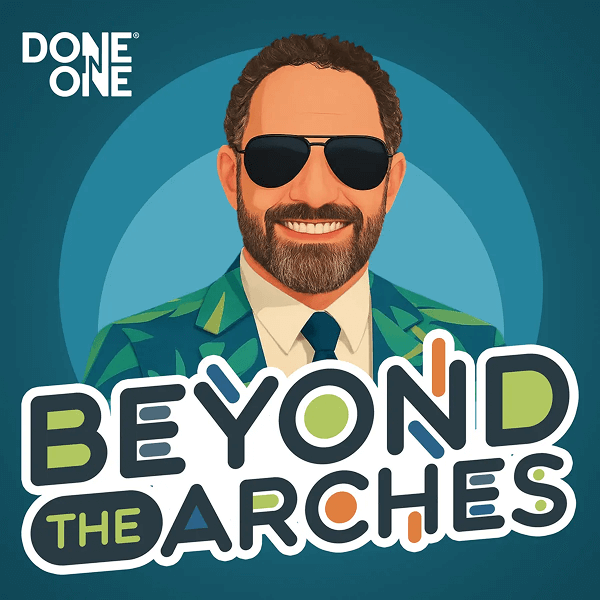
Dr. Daniel Noorthoek welcomes two special guests: his wife Beth and their golden retriever, Sadie. Beth shares how her lifelong love of horses began in childhood, then breaks down dressage in plain English—a highly technical, formal equestrian discipline often described as "dancing with your horse," performed as memorized tests under strict rules. The conversation shifts into the couple's life together: how they adopted Sadie through Big Dog Ranch Rescue (including the chaotic "first two minutes home" canal incident), how Beth's dental industry background is how they met, and how she's watched Done In One evolve operationally and culturally. They close by talking about Dr. Dan’s hands-on maker mindset (woodworking, repairs, CNC/3D printing) and how that craftsmanship loops back into dentistry and lab work.
You'll learn:
Hello and welcome to another episode of Beyond the Arches. I'm your host, Dr. Daniel Noorthoek, and today we have two very special guests, the ladies of my life, of our home. I've got our dog, Sadie, Golden Retriever, two and a half years old. Correct. And also I have my lovely wife Beth. Welcome Beth. Hello. How are you today? Super. Thank you for having
Hello and welcome to another episode of Beyond the Arches. I'm your host, Dr. Daniel Noorthoek, and today we have two very special guests, the ladies of my life, of our home. I've got our dog, Sadie, Golden Retriever, two and a half years old. Correct. And also I have my lovely wife Beth.
Welcome Beth.
Hello.
How are you today?
Super. Thank you for having me. Thank you for having us.
Yeah. Well, Sadie's welcome every time. You're welcome every time.
So today we're going to talk—Beth is interested in horses. And so today we're going to title it horsepower and toothpower or something along those lines. So, we'll just kind of—the intention of today is just to get to know you, get some stories, get some background, some feedback, that kind of thing. And I hope people get to know you better through it, too.
Probably. I mean, probably will happen.
Absolutely. So, why don't we start with maybe your story? Kind of like where you grew up and how—I already mentioned that you're into horses. So, how did you get into them—that story?
Well, so, I guess the pretty standard answer to that question is I'm from Kentucky. So I started riding when I was four. I actually sort of got into it in a funny way. My family took my sister and I on a vacation and we went horseback riding. It was one of the activities at this place we went to in Virginia, the Greenbrier, very well-known Southern resort vacation spot. My father was going there for a medical meeting. We tagged along, went on this horse trail ride. I apparently just fell in love. I do absolutely remember it. I was maybe three and a half, four.
The horse's name was Red because he was a little chestnut pony. And it came time, the trail ride finished, and I apparently would not get off. I don't remember this part. I remember riding the horse. I remember having my picture taken, all of that. But I don't remember refusing to get off, but I apparently refused to get off.
So the way my mom got me off was that when we returned home to Kentucky, she would sign me up for horseback riding lessons. So apparently the story goes that the second we pulled in the driveway, I was like, 'Okay, we're here. When's my first horseback riding lesson?'
I think all along my riding career as a beginner, which I think is what you ask every time we stop the car in general anyway.
Yeah, it might be.
You know, but yes, definitely horse obsessed. And I think much probably like you growing up, my parents sort of always made the comment that they went along with it hoping it was a phase and it just never—
Yeah. Still a phase.
Was never a phase. It's a thing.
So, I struggle with this a lot as well. So can you maybe describe for the viewers—well first, what in your words is the discipline that you do specifically and the best way to sort of describe that to people that don't know what that is, and then on top of that describe to us what it does for you in terms of the feedback and what you enjoy about it.
Because you know when I look at it I know that I've heard you say before—or somebody said to you or something like that—but when I close my eyes, I'm on a horse, or when a person closes their eyes, that's where they go to. And when I close my eyes, I go to sleep. So, what inspires you there? What is your emotional connection to it? Why do you think you're drawn to it? For people that don't understand that, help us understand.
Okay, well, so to answer the first part of that question, I ride the discipline of dressage, which most people think they've never heard of, but you probably have seen it. It's the most formal of all the equestrian disciplines. It's also the most technical of all the equestrian disciplines.
You know, there's western riding and then under the English umbrella, there are several different disciplines, and the two most common are hunter-jumper and dressage. And the best way to describe dressage to the layperson is that it's like dancing with your horse.
So we do three different gaits—walk, trot, canter—but within those gaits there are many different trots. There's the collected trot, the medium trot, the extended trot, the piaffe, and the passage. And then we move those gaits sideways, and at the canter we pirouette and we do flying changes.
So it's a very difficult technical sport ridden on warmbloods, primarily warmbloods, which is a very big, strong, athletic horse that's very physical for the horse and the rider. So, they're very well suited to perform those movements. They're absolutely stunning. They're absolutely beautiful. It takes years and years to develop a horse all the way up through the levels of dressage, which there are many.
And one thing that I didn't understand and now have learned an appreciation for—I think when you say horse dancing or something of that sort, it kind of makes everyone think, well, it's learned a routine and the person's just along for the ride, but it's really a partnership and it's really you controlling essentially what happens. And so it is very demanding and it is very cognitive because there's a set series of things that you're supposed to do within a certain test, they call them.
But that was something that I learned—that was probably one of the biggest things that I learned—as far along as you could possibly imagine. I think I learned that after you got Viennese, and so I mean I was probably 35 years old when I found that out, and I already owned part of a horse. So I think that's hard for people to understand—that it is very physically demanding, cognitively demanding, you're doing something, it's not just a horse dancing around.
Yeah, that's very accurate.
So when you're competing specifically, you are riding a test from memory. They're typically about six and a half minutes long. And they become more and more technical. They start at training level, first, second, third, fourth, Prix St. Georges, Intermediaire I, Intermediaire II, Grand Prix. And there's a few things in between. That's just kind of the basic rundown.
So at Grand Prix, that test is just move after move after move. The rider is for sure driving, but the horse, especially a really good horse that has done it a lot and is competing—I don't want to say for a living literally, but there are horses and rider pairs that basically, that this is their career.
The horse very well likely knows the test. He likely knows exactly what's coming up next and may help a rider out or get in the way.
Or exactly, get in the way or anticipate.
Exactly. Well, you're spot on. So, yes, but you're riding from memory and you are managing so many things at once. You're managing the pattern. You're managing the fact that you're being watched maybe by sometimes hundreds or thousands of people.
While you're doing this, you're in there by yourself. It's a very formal sport. You're wearing tall boots and a tailcoat and white breeches and white gloves. The horse is braided and dressed to the nines. The whole thing has taken hours to prepare for just to get down the centerline.
As we say, every test begins where you enter down the centerline of the arena. You halt and salute to the judge. So it's a very formal sport and the judge salutes back to you and then you proceed on. You may not speak at all to your horse or make any noise.
Hey, it's how we run our house.
Exactly. Competitors, spectators may also not speak during the ride and have to be more than 10 meters away. There's just a lot of rules to it.
And then it is very tight lines, very limited ability to—different than like if you're watching barrel racing, you know, because they're cutting loose. And of course, they definitely have a lot of technical aspects to their sport, too. But, you know, our sport is just much more formal than I would say fun. It is fun to those of us that love it, but I think it's very hard for a lot of people to watch it if they don't understand what's going on because of how technical it is. It's taken me a long time to kind of understand what's going on and what's good and what's bad.
Yeah. And so, going back to what makes it a draw for you—do you think a person is born a horse person or is that learned? Give us some insight.
I mean, I feel like I was probably born one, but even still, there is so much to learn. And horses are gorgeous and there's something about them. I think I've read before where people who spend time around horses—and dogs too—their heart rates are slower just because there's just something about being around them that is just so—I almost can't even describe it.
But I was definitely instantly in love. But horses also absolutely have to be respected because I mean they're 1,200–1,300 pound animals and they can get super spicy and fresh. They can also be super naughty and you can get really hurt if you don't know what you're doing. So, and that's a little bit of a similarity too where when I go to work, we're working on a patient—they could be very naughty or they could be very well behaved.
But it's less of an unknown when I'm around a horse.
One of the reasons why I feel very uneasy around them—one, I'm not very trained for it obviously, but I also sort of feel uneasy around them because they're such a large force that's so uncontrollable and that unpredictability is what makes me shy away from it. So, there is a similarity where you can't control the horse 100% and you can't control a patient 100%. But to me, it's a higher degree when it comes to a horse. And that's what really freaks me out about them. That's why I'm not a horse person.
I would say that's very true because, you know, horses, just like people, have a lot of personality types and there's also a lot of different intelligence levels from horse to horse. My coach has a horse that they joke can read and write because he's so smart, and I believe that our competition horse Salvador is also very bright. He knows exactly what he's doing at all times. He's very cheeky. He knows exactly what's going on.
But they're not all that way, and even though my horse and my coach's horse can be very smart, they can also be very unpredictable. They're at the end of the day animals. So you have to be ready for anything. They're, you know, especially when they're off property—when you've taken your horse to a competition or taken them to another farm, so they're not in their comfortable area.
Correct.
So they could even be spicy at home, too. Usually that's going to be the place where they're most relaxed and they're going to be the most predictable. But our competition horse Salvador loves to go to shows and I always have joked that if he was a person, he would be Pitbull.
Yeah.
Because he thinks he's the sexiest man in the room. He thinks he's the fanciest man in the room. I'm never going to tell him any different. But he comes off the trailer and he's like, 'Is everyone watching? Should I turn around and re-enter again? Look alive, people. I'm here.' Which just cracks me up about him.
But, well, Sadie is the sexiest lady in the room.
She is. Yes, very much so. And also very much the best barn, farm, horse dog I could have ever dreamed of. Why don't you tell everyone the story of when we got Sadie and how and when we first got her home.
Oh my goodness. So, one of my other passions outside of horses is rescuing dogs. And I am involved in the largest dog rescue in the United States, Big Dog Ranch Rescue. And our own home is the second largest. You would love to think that—and I wish it were true—but we are probably not too far off.
But anyway, I've been involved with Big Dog Ranch Rescue for I don't know, maybe five years now. And like I said, when I began, we were the largest no-kill shelter in the Southeast. We are now the largest no-kill shelter in North America.
And we have at our Loxahatchee location up to 800 dogs at a time. We now have multiple campuses. And my role with them is I help out with our charity events. I help bring attention to them to help sell tickets. I help get items for our silent auction. I help go set up for the events. I help with planning. You know, we have meetings throughout leading up to the events. So I'm participating in those meetings.
So you and I were at one of these events. It was April two years ago.
Yep.
And it was called Celebrity Chefs. It's actually here very close to here. We're talking to you from Boca Raton, but it was in Delray Beach. Really cool event.
And we were actually at the time getting ready to buy our horse farm. And so I was like, you know, I wasn't bidding on anything at the silent auction because we were getting ready to make the down payment on our horse farm out in Wellington. So, you know, we had the purse strings kind of drawn. Rightfully so. That was a big purchase for us coming.
And so one of the things that we do is we pick, you know, three or four dogs during our events. We have a silent auction and a live auction at pretty much every charity event at Big Dog Ranch, and we bring in an auctioneer and one of the last items always is a pick of the litter dog. Our founder Laurie Simmons will go into the puppy part and she'll pick just some of the cutest puppies that she thinks people would really just love to take home.
And Sadie was one of them that year. And you saw her the minute we walked into the event because they'll have the dogs sort of walking around with volunteers. And of course, she was like, you know, the size of a shoebox at the time. She was six, maybe six or seven weeks old. She wasn't eight weeks, I remember.
She was just almost eight.
Oh, was she? Okay. I thought she was six. She was born on like February 13th, and the 19th is her birthday.
Yeah, you're right. She was—and then this was in the end of April. So, okay, she was like maybe seven weeks old.
So you saw her right away and you kept saying 'Beth, oh my god, babe, look at that dog. Oh my God, babe, look at that golden retriever puppy.' And I was just trying to say hi to friends and I was like, 'Yeah, yeah, yeah. She's cute. Okay.' You know, we've got two at home, so it wasn't on my radar really at all.
But then when it came to the part where they did the live auction, they put her face up on the big screen and I remember looking at it thinking, 'Oh my god, that dog is to die for. She is so cute.'
Well, I was taken by how she was able to be transferred. She was passed between attendee to attendee and it was loud and it was nothing off her back—
I was enamored by her demeanor.
Yeah. She just was taking it all in, NBD.
So once the bidding started, I sort of half-jokingly—you were sort of sitting behind me at the time because we had all shifted our chairs to watch this. And so I glanced over my shoulder and I said, joking, half-joking, I said, 'Can I bid on her?' and I was very shocked when you said yes.
Yeah. Well, it was—that was the only dog in the world we would have brought home. And I think you sort of just hoped I would bid once or twice and then we'd stop and someone else would take her. But I think I bid on her once or twice and no one outbid us.
Yeah. So, we legitimately, sorry people of the world, we stole the best dog of all time. We got her for next to nothing, which was unbelievable. But she's literally a 12 out of 10 in dogs. But tell them the story of the first time coming home.
Yeah. So then we go home and we introduce her to our other two dogs and we take them outside so they're sort of in a neutral territory. And I think I had cooked so I was in the kitchen. I was cleaning up some stuff.
And I guess I should also mention because we'd been to this event, so we're literally dressed to the nines. Yeah. I'm in this strapless pink pencil dress and you were in a blazer and nice leather loafers and nice pants. So we were really dressed up. I'm in full makeup.
And so I'm basically out back introducing our two other dogs Cole and Boon to Sadie and we live on a canal. And we might have been home for maybe two minutes at this point, if that. You're doing something in the kitchen and I'm—and she's kind of following the boys around and it's going well but it's dark outside. And next thing I know she walks over kind of towards the edge of the canal, but I'm literally standing right there next to her.
I'm not really sure exactly how it happened. Too much wine was potentially involved, but she fell into the canal within two and a half minutes of being home and meeting her brothers. And I had an absolute come-apart. I'm screaming for you. I'm taking my heels off, unzipping my dress. I'm literally going to go in the canal after her.
And out of the corner of my eye, I see you in full—in your full outfit. I had taken my jacket off—full speed running going, 'I got her.' And you ran and jumped in the canal in the dark and fished her out. And that was how life with Sadie started.
That was the only—I guess I've been in the canal twice now. One was accidental when I was pressure washing the deck.
Yes.
And the second time was for Sadie, which was worth it. But I did ruin those shoes. There was a ton of barnacles on the edge as I was trying to get her up to you. But that was pretty wild. When we got her home and I finally heard you screaming my name and you're stripping down, I knew we had to jump into action immediately, you know. So I ran out there.
You were definitely on it.
I remember this little—like you said, she was the size of maybe a shoebox, probably less. She was a little fluffball. Her hair was just this white blonde. She's a platinum blonde retriever, too, which just makes her that much more delicious. But she was this fluff. We called her a fluff.
For those watching the video on YouTube, we'll make sure that we put an excessive amount of photos and videos of her.
And what's cool—the reason why, well, there's many reasons why I had you bring her in—but she is sort of the unofficial mascot of Done In One. She came in many times to hang out in the office and greet people and hang out with patients occasionally. If I have the day off or I don't have a lot of stuff going on, I'll come in and check in and bring her around. The employees and everybody love her.
So yeah, she could easily—she is a professionally trained dog. She is service trained, but she could also easily get therapy certifications because of her temperament. Her temperament is just—it just still blows my mind.
She lives more of our life combined than we do because she goes to the barn with you. She comes to the dental office with me. She's kind of got—she's the all-around girl. She's the one we should be interviewing probably. And she'd probably love nothing more if we could get her to not be so chill. She's just full-on napping here now.
So, looking back—you've been around for all of the changes of Done In One, including all the early mornings to Jacksonville in the very beginning and the late nights back from Jacksonville. But you have a little bit of a background as well in dentistry and we met because of dentistry.
Yeah.
So why don't you say a couple things about sort of what you used to do in dentistry and sort of how you've seen Done In One change and evolve over the last—I mean the biggest evolution has happened over the last two or three years but the previous seven to 10 before that was even crazier. So, why don't you say a couple words on just how you've seen things change and how you were involved in dentistry?
Well, going back to your first question, we met because of dentistry. So I had a career prior to horses as a pharmaceutical and then medical device rep. And the majority of my time as a medical device rep was in the dental industry, in the dental space. So when we met I had been with another dental company but was getting ready to start working for another one that I was so excited about working for.
They were family-owned and just really nice people and really cool products, and it wasn't just one thing. In my former job I had only sold biologics—so for people who don't know, that's bone grafting material, collagen membranes, materials that are used during surgery for grafting and space maintenance, things of that nature. So I had a lot of background in that and I was super excited about this company because they sold everything. You know, sutures and instrumentation and equipment—you name it.
It was this giant 200-page catalog—you could basically stock your entire dental office just only buying from this company. And I just loved how much—it was so appealing to me that I was going to get to learn all just from soup to nuts with them. And they were just really nice people and they have a great reputation in the industry.
So I was working my very first meeting. You know, dentists—nobody loves a meeting more than a dentist.
Except me.
Except you. This is so true. There are these meetings that go on all weekend long all across the country. And part of the way that these meetings are put on is they invite companies to sponsor them. And the companies come and their representatives attend and they have tables displaying their products. And during breaks, the dentists can come out and sort of shop, so to speak, or learn what is new and, you know, visit with their reps and so forth.
And it is a really great time to get to know your customer base a little bit better because obviously when you're visiting them in their offices, you know, they're working. So it can be tricky trying to connect. So you were actually attending this meeting as a resident, a second-year resident, and I was new in the job and was kind of really trying to put my best foot forward. And you sort of kept coming over to our booth trying to talk to me but I was sort of like, 'Okay, go away. I'm working here, you know.'
I was working too.
Yes. But later on we connected at this hole-in-the-wall hotel bar. I was with a bunch of other reps and a few other doctors and you were with the implant company that you were working with at the time. And you guys had been to Medieval Times.
Yes. Crown and all, knight in shining armor.
My knight in shining armor came in with the paper crown on his head and a beer stein in his hand and came over and was talking to me. And I remember a lot of things about that night but one thing was the new iPhone was getting ready to come out, which would always launch in the middle of the night. And we started talking about if we were going to—it was going to come out that night—were you going to get up at 2:00 in the morning and order the new iPhone? And we were both like, 'Oh, hell yeah. That's happening.' And then we sort of exchanged numbers and then you just never stopped texting me from that day on.
I don't know about all that, but, you know, it's been a good ride. It's been a good ride. I went to a lot of those meetings and I always describe it to people because a lot of these you have to pay for and I was a poor resident and so I couldn't afford to go to them. But I had to be around you, in order to spend time with you I had to be around you. And so I always describe it as I was the kid that the parent, you know, gets off a little bit early from school but then ends up at work with the parent waiting for the parent to get done with work.
I was like that kid for a long time just kind of aimlessly hanging out with the other reps, kind of in my space, kind of in dentistry. And it was actually fun because I didn't have any obligation to go to the course and hadn't spent anything to do it, but got to sort of play with the new toys when everyone else was in the auditorium getting their lecture. I could go around and play with the machinery and think up new ideas and kind of get that. So that was really fun. It was really fun for a long time.
I mean I don't want to speak for you and say for both of us, but I think it was cool because we sort of helped each other for a while. I would introduce you to people and you would introduce me to some of your friends that ended up buying from me, and did for years.
But then you would also help me, like some of the instrumentation obviously can be really technical.
Sure.
And I would a lot of times get questions from doctors wanting more detail than I was always able to give, especially if something was really new. You would always help. Do you remember one time when you called me and you said this doctor is using this and this and this all combined and it doesn't seem like that's going to work. 'Will that work? Do you remember this story?'
I don't know if I remember being so shocked, but all right.
'Drop everything and get out.' No, he should not do that.
Yeah. But it was fun. And we had a mutual connection with it and it wasn't too tight, you know, it wasn't like we worked together. It was very chill. We were both very careful with it but we also had fun with it, sort of introducing around. And you would always help me understand things that were new when I was trying to learn a new product. So it was fun. It was really fun for a good long time.
Yeah, it was.
And I will be transparent and say I only manipulated my position once—being that I was getting married to the rep. The only time I manipulated my power, if you will, was when there was a hurricane and nobody could get sterile saline for running through the implant motor and everyone was having to cancel surgical patients because this hurricane had wiped out the sterile saline. And so pallets would come in. And I will say very forwardly that I did manipulate my position to get as many of those bags as I could as they came in because otherwise it meant no production. So I did use it one time.
Well, you rightfully so. And I think that company very much recognized what an asset you were to have us in your corner and you were really good to them and bringing people to the table.
So what I also enjoyed about you having that particular job is there wasn't any—the things that you would purchase as a surgeon from your company was all—I'm not going to say commoditized, but there was a lot of commodity value to it, meaning it could be gotten anywhere else, any other place, but it wasn't what made the surgery what the surgery was, right? And so my decisions for my own patients never had to feel manipulated because you sold XYZ implant and I used that just because you were my wife.
And so it was kind of nice from that perspective because I was able to sort of remain altruistic to the brands that I was loyal to, being the quality that I wanted and what I wanted for performance.
That's very true. You actually used the main bone product that I was selling. You used it already prior to meeting me. You were already using that. So it wasn't—and it was just a really solid product. Yeah, it sells itself and it just kind of comes down to price for a lot of dentists.
Yeah. The bone bank—for people, I'm going to jump in and say that because we haven't talked much about bone grafting—but the bone banks, as people see these documentaries come out on HBO and such. We watched that show, The Mortician, which wasn't about that necessarily, but there's lots of grave robber stories and many of the tissue banks either have a very gray background or they've gotten actually in trouble and somehow recovered from it.
And so the company that we've always used for our bone graft is one that I've toured and has a pretty sterling reputation and a great staff and is very well known. I've purchased it in many different ways, forms and fashions because it sort of comes from the source and then gets relabeled as, say, an implant company selling it.
But that particular tissue bank has been one that I've always really held on to and followed because to me they've done sort of one of the best jobs out in the industry—in an industry that can be very shady and sort of not forthcoming where they're sourcing things and such. This one is just sterling as can be, and the staff there.
And I was lucky enough when I went to Virginia to go on a tour of that particular bone tissue bank and was so impressed by it. And then happened to meet you who sold it, and then met the vice president—I forget his name—but vice president of that company I believe at the time. And so that just sort of helped solidify it. And so to this day I still seek it out. Our implant manufacturer essentially relabels that brand for themselves. So we've stuck with it—I used it before you. I used it when you had that job and then also since as well.
Yep.
That's to me important. That's something that—when you're messing with biologics and people's money and their investment—it's always been a high priority that, not that we spend the most and get the quote unquote highest quality, but maybe the most ethical or where I would—what I would put in myself or something that I believe in more than just the bottom dollar.
You know, one of the biggest stories I can think of as that relates is one time when I was in school still, I was working—moonlighting, they call it—on a Wednesday evening and the owner of a practice handed me—I needed some bone graft material. So I asked them to get it and the owner came back and handed me a sterilized pouch of what amounts to bone powder inside of this sterilized pouch.
And I looked at him and said, 'What do you want me to do here? There's no documentation. It's not fresh. You ran it through an autoclave. That's not how you clean bone.' Anyway, I was so turned off by that. You see that a lot in the industry where a lot of practitioners are okay with sort of splitting bottles. So they'll open too much or they'll buy in bulk, which is cheaper, and then they'll separate it under a clean environment.
And one thing I've never shorted ever, ever, ever is I never split bone graft materials. When we open it, that patient, I paid for it to go in that patient. That's it.
And you also always ordered enough that you guys were never having an 'oh no' moment in your office. I can't tell you as a rep how many times I was robbing Peter to pay Paul, going to one office to another because people were always just buying under, only ordering for what was on the schedule. And then lo and behold a surgical tech would overlook a surgery or somebody would get added on last minute but they didn't have the products. And it was always so stressful trying to help offices like that out.
And it's just so much easier. One thing I always appreciated about you as a customer is you just always bulk ordered. It was just, you know, you were always going to have your shelves stocked. So no matter what, if you were in the middle of a surgery and you needed more, it wasn't going to be a problem. Or if there was an emergency surgery, you had the materials. It was never going to be some stressful scenario for you and your staff.
I've always been very fortunate in the jobs that I've had and the positions that I've had and the patient base that I've started with to be able to always be in that position to order enough.
And you did it though. You did it though when you really weren't—I mean, you always—that's sort of, I don't even know where you got that from, but even when you came out and we weren't making that much, you did it then. I mean, I guess back then we had a partner in Jacksonville, so that definitely made things easier.
In the volume model, I've always believed you have to have a bunch and it has to be good and you provide that value to the patient. And if you're good at it and you're efficient at it, then you'll see enough numbers to cover everything.
And a lot of dentists look at the volume model and scoff at it, you know? 'Oh, you're not charging enough or you clearly don't value yourself enough.' Look, this is a very expensive procedure. The cost of a brand new fully loaded Camry or a low-end Lexus even. This is very expensive no matter how you break it apart. And to be able to offer a really high-quality product with some efficiency has always been an intention of mine.
I don't want to do two or three, clear out my whole schedule and risk not ordering enough or not having enough experience to go through things. To me, it never made any sense to not be at a volume model, especially when it comes to this type of procedure. But it is looked down upon as, you know—socially I'm a pariah of dentistry because I don't see things the same way. I want to make some money, don't need to make a ton, and I'll make it up through volume and I won't compromise my quality to do it.
Right. That's always been a big belief of yours.
Yeah. So, how have you seen me change through the years? Like what's the biggest difference—Dan today versus Dan, say, seven years ago in terms of mindset, life?
Gosh, that is a big question and I might need a whole other podcast just to address it.
Goodness, that's not a good sign.
No, in all the right ways. You very quickly identified this as something that you were going to be good at and that you were going to find a way to make more efficient and more predictable along the way. And you just dove headfirst into finding ways to make this procedure better and better at every turn.
So I've watched you dial down literally every aspect of this surgery from your team to the equipment that you use to your lab. We now own our own lab which is a big part of that, to having the right designers to just—I mean getting really into it, digitally. You have just literally perfected every aspect of the surgery to where now when you first started you could maybe do one or two a day and now I don't really know that I want to be obnoxious and say how many you can do in a day because it's probably more than what a lot of people will even do in a month. But you're able to get in and get out.
We'll conservatively peg it at eight because I'm lazy now.
Yeah. But also a lot of dentists would hear eight and they'd say, 'Well, he's cutting his corners. He's not doing—that's voodoo dentistry.' You know, it's not volume. But it's also great for the patients, too, because first of all, you're so skilled at it, but you're also getting in and out so much quicker. So it's so much less traumatic for them. You know, they're not just dying on a vine in someone's chair all day long bleeding that whole time while you have them open.
You have figured out exactly where everything needs to be to accommodate for, you know, this amount of swelling and everything. I mean, you guys have just done thousands and thousands of these cases to where I mean, you and your team literally—it's just been really fascinating to watch.
But I think too, one thing that is really interesting about you—historically dentists are not known for being business savvy and you have really taken a huge interest in the business side of running your practice. And you are—I don't want to say shockingly, but—you are impressively, I guess is better to say, very good at the business side as well as being a surgeon. And that's not at all the norm.
Most dentists don't know how to do anything business-wise, business management, and they really struggle on that side of practice ownership. But you actually excel in both sides. And you have also to that point curated an unbelievable team. And any patient—and please don't take my word for it, read their reviews and talk to any patient that has ever sat in your chair—the team is absolutely incredible.
And because I know them personally—I've been here since day one and I've known them all since their first day—but the team is absolutely incredible. There is no better team than the Done In One team. And that's because of the tone that you set with them. I don't even want to say the standard that you set because that's not how you run it. You run it like, 'We're all in this together. This is Done In One—it's ours.'
You don't roll in there like 'I'm Dr. Dan and I said XYZ.' Done In One is all of yours and it is where it is because of each of their roles in it. And I don't—I hope I'm not sounding cheesy explaining this, but it's fascinating.
I've learned to not shy away from the pride that comes with—I'm very clear and I've said it before, but I'm very clear that probably my best skill even better than dentistry is building a team and building a team my way.
I mean, I'm not going to go into, you know, Lids.com and go revamp them and build them their team, but building the culture, getting the buy-ins, showing the employees the value of the extra time with the patient and the extra simplicity and the straightforwardness. You know, the more of these we do, the easier it gets, the easier it gets for every employee, the more predictable it gets for every employee. And that isn't just a great thing for patients, it also gets your buy-in with your staff as well.
And they see me changing over chairs and doing things just like they would. And so it's fun to have a business that really feels like it's not always completely on my shoulders. It can be given over to. I can trust my employees with running it. I mean, I could for sure disappear tomorrow and I have no doubt that Done In One would run just as efficiently once the surgery was all taken care of. And that's very rewarding as a person that's put my heart and soul into it for sure.
And you're very young.
So, last thing we'll talk about before we go. Is there anything that would be unexpected about me outside of dentistry? Something that people wouldn't know?
Yes, I like skiing. It's on our website. Yes, I like dogs. She's here with us. But what is something that your average person doesn't know that I love or that you love about me outside of teeth and Done In One?
This is so easy to answer. And it's why I do very much believe that you are the skilled surgeon that you are. It's actually kind of got two parts, but one thing that people might not know about you is that you are insanely talented with your hands. Your dad—you grew up with your dad and your grandfather doing woodworking, carpentry projects, working on cars. You can essentially fix anything. You've fixed jewelry for me. You've fixed horse equipment for me that you don't know anything about. You've fixed my laptop before. You've repaired our vehicles, anything in our house. We had problems with our dryer the other day and you very—
That was a dirty job.
You very quickly—you should send that photo and have companies know that they really were giving us a hard time about getting it fixed, but you got the job done.
So I think part of why you're—your eye-hand coordination, your hand skills even outside of the surgical chair are insane. And I think you look at a CT—I've seen you do it. One of the great parts about having been a medical device rep was I actually got to be in the operatory with you on many occasions so I've seen you do this procedure multiple times. But that really carries over I think for you and your dentistry.
You've actually converted one of our garages in our home to basically a manufacturing plant where he has a CNC router, he has multiple 3D printers, he has a handsaw. You are constantly making—if there's something you want but you can't find it, you just make it. Same with our friends and our family. If somebody's telling you about something, they need a solution to something, they can't find it, you'll just print it and make it.
You're helping our best friend—he's an optometrist, Dr. Aaron Evans here in Boca Raton. I'm sure at some point we'll have him on.
Yeah, absolutely. I'd like to come for that one because he's a riot.
But you're helping him with something with his registers, right?
He's doing a new project and it needs a tablet holder and the tablet holder at the bare minimum on top of the tablet was going to cost about $180 per unit and it was a very ugly unit. And so he asked me if I could design it. And so I've been working on 3D designing and prototyping and manufacturing—well, getting him the specs to get the equipment so that his people can do it as well. But I've been working on prototyping that.
So yeah, I love working with my hands. It's something that was taught to me from as long as I can remember, as early as five. I would always be nailing a nail into a board or using a saw or was working with my dad to work on the house, doing brake jobs, et cetera.
But I think that maybe one of the biggest differences—skills came out of passion and craft making. My mom always had me in crafts. I knew how to sew when I was six or seven. I've always been with a very artistic, artisanal, crafty kind of bunch.
And you know, some of my normal—a normal Thanksgiving for me was finding an aunt or uncle's door that was squeaking and then getting three family members and we would be fixing it for half of the day, right? That was a normal Thanksgiving.
And so my hand skills, but my working with my hands came first. Dentistry and love for science kind of came second. And so bringing it in that direction has been a big benefit to me.
But what's really fun is now that we've gotten up to speed and we have better staff and I don't have to be at the office as much anymore, I can now go in reverse. Now I get to use my hands as a benefit from dentistry and get to use these new pieces of equipment and stuff. And it's been really fun, too, because in the last year or two, I've really sunk my teeth into designing to 3D print or designing to CNC on my own computer.
And I'm not good at it. There's guys that do it for a living. I couldn't make enough to buy a ham sandwich with it. But I can—I have enough knowledge that it also not only is it fun for me to create and make at home on my own time something that I think is really fun, but I also can extrapolate that because we design on the computer and we manufacture at the lab. And so now I've got sort of a better basis to help and insert myself into what we're doing at the lab for the teeth and stuff.
So it's very cyclical—what I do on my free time is sort of what I do for my profession. But it's kind of fun now because the cycle, now I'm able to do my more fun stuff as a result of the work, which is cool.
For sure. Well, Beth, I appreciate you coming in and bringing Sadie. She hasn't been too much of a personality today.
No, but we'll have to talk with her when we get home about being a little more—being too well behaved. But I appreciate you coming and giving us some insight. And I'm sure I'll see you again soon.
Well, I should hope so. And as I like to call myself, the first lady of full arch, I'm always at your service for these podcast events. This was a ton of fun.
Well, everyone, we appreciate you. As always, this is all opinions. It's by no means meant to be anything that is followed strictly or be professional medical advice necessarily. This is for you to get to know myself personally, what Done In One is, what is the full arch procedure, all of that. And so I think that the more that we can get people in here that are involved in the crew, the life, the backgrounds, that's the intention of this podcast.
So we appreciate you listening, Beth. Again, we appreciate you coming in. Like, subscribe, all that stuff. We'll see you again soon.
Follow Beyond The Arches on your favorite podcast platform
Keep In Touch!
Powered by Daart © Copyright ©2024 Done In One®. All rights reserved.
Done In One Implant Centers are independently owned and operated within a network of dental practices managed by licensed dentists. The American Dental Association does not recognize any specialty field specifically for dental implant treatment. Done In One providers are proficient in both implant placement and restorative dentistry and may consist of general dentists, prosthodontists, oral surgeons, and periodontists. The Done In One procedure refers to a procedure consisting of extractions (if needed), bone reduction, implant placement, and a permanent (zirconia) implant-supported prosthesis placed on either arch (upper or lower) or both. Done In One specializes in the immediate occlusal-loading protocol, which is defined as an implant-supported restoration in occlusal contact within two (2) weeks of the implant insertion. The Done In One procedure can be offered to qualified patients based on a full examination, radiographs, and initial workup. Not all patients will qualify. In most cases, qualified patients that do not need additional sinus augmentation can have the Done In One procedure completed and typically receive a final zirconia prosthesis within one week after extractions. Patients will receive a provisional prosthesis within 24 hours after surgery that will allow them functionality until their final zirconia prosthesis is fabricated. Results and timeframes of the delivery of a final prosthesis will vary on a case-by-case basis. Done In One exclusively utilizes an implant system that is appropriately registered, listed, and has a 510(k) clearance from the FDA. After many years of clinical studies and evaluations, the success rate of modern dental implants installed by qualified clinicians has been estimated at over 90% after 10 years. With proper hygiene and routine maintenance, the Done In One procedure can provide patients with dental implants that can last decades and potentially a lifetime. The average lifespan of the prostheses will vary depending on patient wear but is covered under a standard warranty for the first two (2) years from the date of surgery, as long as annual recare requirements are met. An optional extended, indefinite warranty is available and can be paid monthly or annually.
Studies show that patients treated with implant-supported prostheses judge their overall psychological health as improved by 80%—due to increased longevity, improved function, and increased bone preservation—over the wearing of traditional dentures. Studies also conclude that the replacement of decaying teeth that are prone to infection with an implant-supported prosthesis will typically result in the improvement of a patient’s overall physical health. Results may vary.
Loans are subject to eligibility, underwriting, and approval, including credit approval. Eligibility is determined through a pre-qualify application (“soft pull”) with no impact to the applicant’s credit score; not all individuals will qualify. Only upon accepting an offer and agreeing to the credit authorization disclosure will a hard inquiry (“hard pull”) be initiated and a FICO score potentially be affected.
Loan amounts vary between $750 and $40,000, depending on creditworthiness, and require no down payment. The offered APR will vary between 3.99% and 35.99% based upon creditworthiness, loan amounts, and term length. Approved borrowers can choose between a longer Installment Loan (12-144 months) or a shorter Interest Promotion (6-12 months), with no interest paid if the loan is settled within the promotional window chosen.
DIO Managment Group, LLC, is a registered seller of travel as required by Chapter 559, Florida Statutes. Ref. No. ST45536
For more information about financing or travel options, contact a Done In One representative.
Privacy Policy
See full Privacy Policy page
Effective Date: 01/01/2024
Last Updated: 10/01/2024
Introduction
Welcome to Done In One (“we,” “us,” “our”). We are committed to protecting your privacy and ensuring that your personal information is handled in a safe and responsible manner. This Privacy Policy outlines how we collect, use, and protect your information when you visit our website, www.getdoneinone.com, or use our services.
We may collect and process the following types of personal information:
Personal Identification Information: Name, address, email address, phone number, and other contact details.
Medical Information: Details related to your dental history, current dental condition, and treatment preferences.
Financial Information: Payment details, including credit card information or other payment methods, when you pay for our services.
Technical Information: IP address, browser type, and information about your visit to our website, such as the pages viewed and the time spent on each page.
The information we collect is used for the following purposes:
Service Delivery: To provide, manage, and improve our dental services, including scheduling appointments, conducting examinations, and performing dental procedures.
Patient Care: To tailor our services to your specific dental needs and ensure the best possible outcomes.
Payment Processing: To process payments for our services, including billing and collections.
Marketing and Communication: To communicate with you about our services, including reminders for upcoming appointments, promotional offers, and newsletters.
Legal Compliance: To comply with applicable laws and regulations, including maintaining patient records as required by law.
We may share your information in the following circumstances:
Within Our Network: Done In One Implant Centers are independently owned and operated within a network of dental practices managed by licensed dentists. We may share your information with other providers within our network to ensure you receive consistent care.
With Service Providers: We may disclose your information to third-party service providers who assist us in delivering our services, such as payment processors and IT service providers. These service providers are required to protect your information and only use it for the purposes for which it was provided.
Legal Requirements: We may disclose your information if required by law or in response to legal processes, such as court orders or subpoenas.
We will not share your opt-in to an SMS campaign with any third party for purposes unrelated to providing you with the services of that campaign. We may share your Personal Data, including your SMS opt-in or consent status, with third parties that help us provide our messaging services, including but not limited to platform providers, phone companies, and any other vendors who assist us in the delivery of text messages. All of the above categories exclude text messaging originator opt-in data and consent; this information will not be shared with any third parties.
We use cookies and similar tracking technologies to enhance your experience on our website. Cookies are small data files that are placed on your device when you visit our website. These cookies help us understand how you use our website and improve your user experience. You can choose to disable cookies through your browser settings, but this may affect the functionality of our website.
We take the security of your personal information seriously and implement appropriate technical and organizational measures to protect it against unauthorized access, disclosure, alteration, or destruction.
You have the following rights regarding your personal information:
Access: You can request a copy of the personal information we hold about you.
Correction: You can request that we correct any inaccurate or incomplete information.
Deletion: You can request that we delete your personal information, subject to certain legal restrictions.
Objection: You can object to the processing of your personal information in certain circumstances.
Data Portability: You can request that we transfer your personal information to another service provider.
Loans for dental procedures are subject to eligibility, underwriting, and approval, including credit approval. Eligibility is determined through a pre-qualification application (“soft pull”) with no impact on your credit score; not all individuals will qualify. Upon accepting an offer and agreeing to the credit authorization disclosure, a hard inquiry (“hard pull”) will be initiated, which may affect your FICO score.
We may update this Privacy Policy from time to time. When we do, we will post the updated policy on our website and update the “Effective Date” at the top of this page. We encourage you to review this policy periodically to stay informed about how we are protecting your information.
If you have any questions about this Privacy Policy or our privacy practices, please contact us at:
Email: smile@getdoneinone.com
Phone: 561-468-8812
Address: 6401 Congress Avenue, Suite 150, Boca Raton, FL 33487
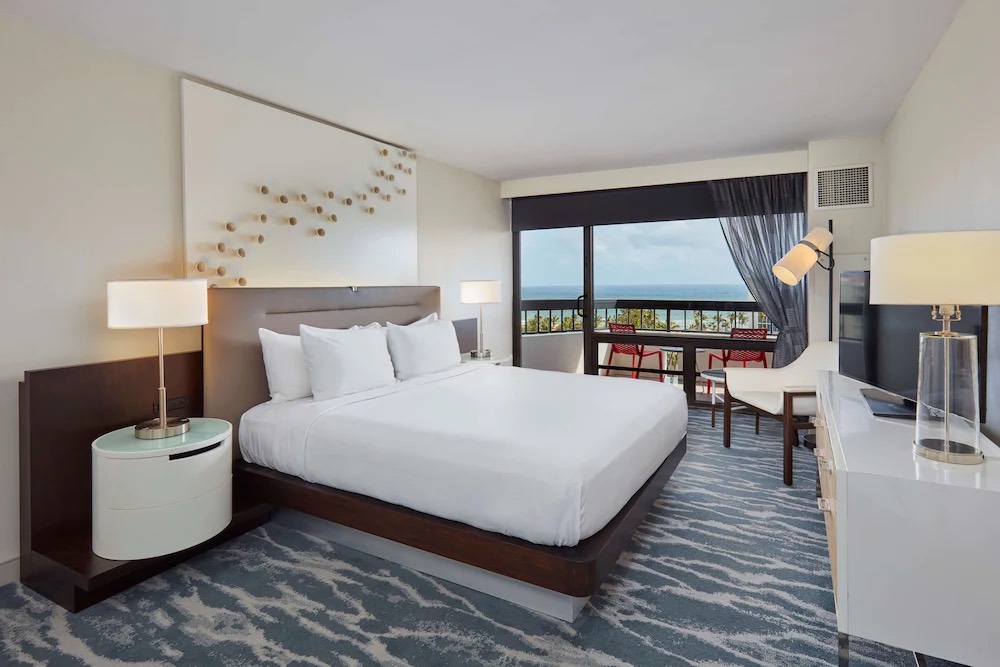
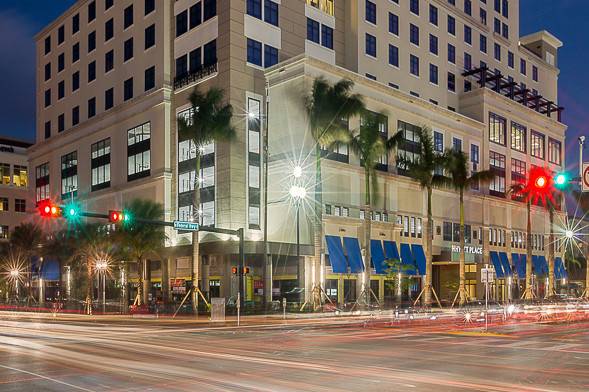
For local patients within 30 miles, with no need for airfare or hotel arrangements, our Travel Coordinators will handle all your transportation needs for an entire week!
Luxury Vehicles
Comfortable travel to and from every appointment.
Pharmacy Convenience
Hassle-free coordination with the pharmacy of your choice.
Recovery Collection ($300 Value)
A curated kit with everything you need, including a water flosser, ice packs, rinses, supplements, and more.
As our esteemed guest, you’ll experience personalized care and attention from the moment your journey begins. We take care of all the details, ensuring a seamless and luxurious experience from start to finish.
Please answer the following questions to determine if you may qualify for financing of the Done In One procedure.

Find out if you qualify for Done In One in less than 2 min.”


