Serving Patients Nationwide: Travel Packages Available | Book Your Consultation
31 OCT 2025
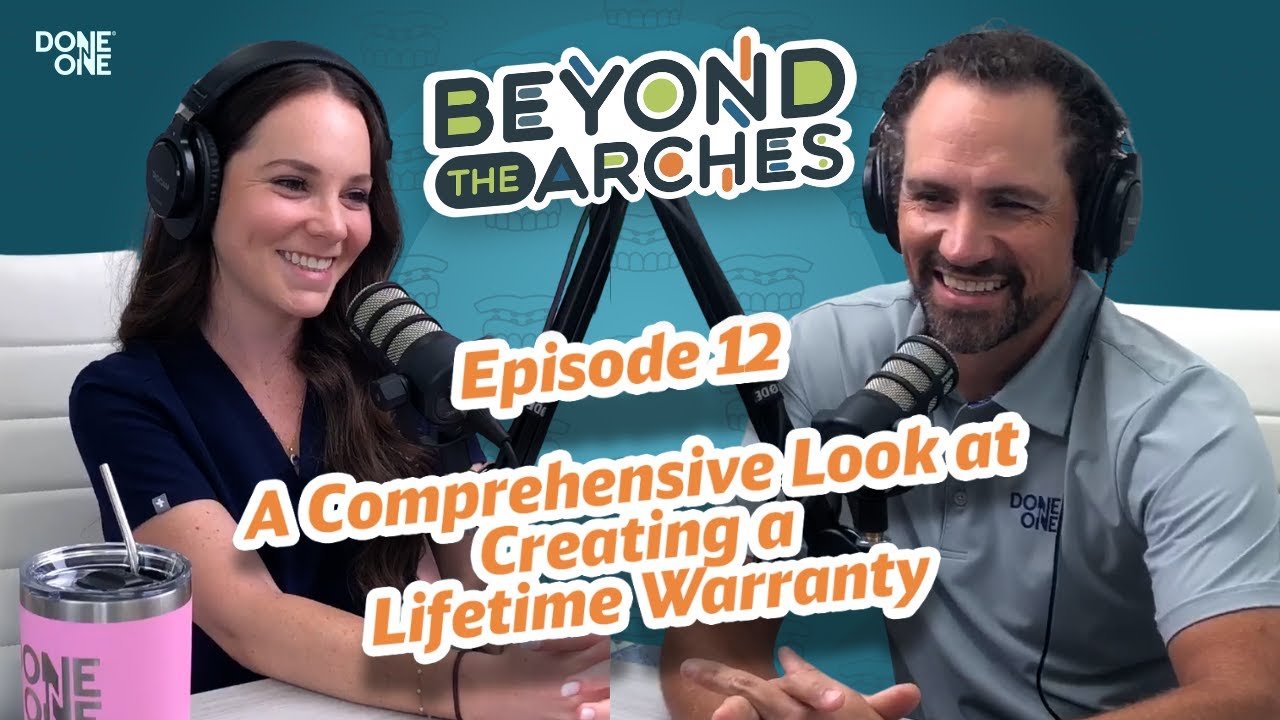
Dr. Daniel Noorthoek sits down with golf professional Vin Ciarlone to explore how golf coaching principles mirror the patient experience in dentistry—especially around “fitting,” clear communication, and building confidence. Through stories from Vin’s career (from teaching golf schools to playing iconic courses and competing in long drive events), they unpack why great coaching requires adapting language to different skill levels, why environment and staff professionalism shape how people feel, and how reducing embarrassment helps people perform—whether that’s on the first tee or in a dental chair. The conversation closes on the shared truth behind improvement in both fields: practice, repetition, and doing the right work consistently.
What you’ll learn
Dr. Daniel Noorthoek: Hello and welcome to another episode of Beyond the Arches. I'm your host, Dr. Daniel Noorthoek, and with me today, we have a special guest, a special treat. We have Vin—I don't really know how to say your last name because I mess it up every time. You know how to spell it? I guess in English it would be Ciarlone. Vin Ciarlone: In Italian, it's "Chaloney."
Dr. Daniel Noorthoek: Hello and welcome to another episode of Beyond the Arches. I'm your host, Dr. Daniel Noorthoek, and with me today, we have a special guest, a special treat. We have Vin—I don't really know how to say your last name because I mess it up every time. You know how to spell it? I guess in English it would be Ciarlone.
Vin Ciarlone: In Italian, it's "Chaloney."
Dr. Daniel Noorthoek: Ciarlone. Okay. Well, we have Vin. Vinnie, that's good enough. Vinnie is near and dear to my heart because not only is he a patient—not a full arch, but a regular patient—but he is also my golf coach and friend at the golf course. We've gone through a bunch of stuff talking in terms of dentistry, but you've also coached and worked with me through golf. Believe it or not, we're going to be able to pull this all back into dentistry and how it relates to patients. So, what I'd like to start with is a background on Vin. Vin, when you were young and starry-eyed with your career, why don't you give us a story of just kind of who you are and how you came to be Vin.
Vin Ciarlone: Okay. Born in upstate New York, the Capital District: Albany, Troy, and Schenectady. I played sports like any other young guy from when I was six years old all the way until college. I thought I could play Major League Baseball and found out real quick that there are some players out there.
Dr. Daniel Noorthoek: When did you start golf? Was baseball first?
Vin Ciarlone: Baseball was first. When I found out that I wasn't a baseball player, I decided to try golf. I started around age 23, and by 24 I got in as a golf professional.
Dr. Daniel Noorthoek: 23 years old is when you started golf? You picked it up quick.
Vin Ciarlone: Well, the athletes, you know—especially hockey players, which are probably the best non-golf golfers. Baseball players are very good. There are some great football players. Even at our club, we have some great players that are probably baseball, football, and basketball. So after 23, I got in as an assistant golf professional and did a year in upstate New York and then moved to the Poconos of Pennsylvania. Eventually, I started work with a corporation known as Caesars out of Las Vegas, Tahoe, and Atlantic City. I did probably about 18 years with them. I went out and taught with John Jacobs for five years traveling the country and learned how to teach.
Dr. Daniel Noorthoek: When you say traveling the country and teaching with him, what would your day look like when that was happening?
Vin Ciarlone: An example would be in the winters we were down at the Bonaventure Resort in Fort Lauderdale, and in the summers at the Seaview where the girls just played, outside of Atlantic City. We taught the golf schools.
Dr. Daniel Noorthoek: Would they be clinics at different clubs or the same one over and over with the same people?
Vin Ciarlone: It ranged from 15 to 20 people depending—five players for one instructor. We would be at that place for a week. We’d stay there all through the summer unless they needed another teacher at another place. I was always flying in and out of Atlantic City or driving up to Philly and flying out to Portland, Maine, down to Hilton Head, and going all over. Then in the winters, I’d come down to Bonaventure, work mostly out of there, and go to Marco Island, Orlando, and other sites.
Dr. Daniel Noorthoek: You were all over the place. East Coast. And what did you teach?
Vin Ciarlone: Sarcasm. No, I'm not very good at that. Well, the philosophy of John Jacobs was GASP: Grip, Aim, Stance, and Posture. If you could teach those four things to somebody in five days, most of the time they were pretty happy.
Dr. Daniel Noorthoek: Were you working with extreme amateurs—people like myself who put an exorbitant amount of time into the game but don't get any better—or more pro-level?
Vin Ciarlone: With everybody. And to correct you real quick, you are improving a lot. You have improved from when I first started with you. You're really doing much better.
Dr. Daniel Noorthoek: It's a dedication, though. A big dedication. Now, when you were doing that, did you find that teaching helped you some, or was it more just instruction and you didn't get much time to work on your own game?
Vin Ciarlone: Well, we were doing like a 9:00 to 4:00. You're assigned five players for the week. If there are four instructors, you have 20 players. You did lunch and then you did dinner together at the resort that you were at.
Dr. Daniel Noorthoek: Oh, so these camps were like an all-day kind of thing? Five-day camps? It's almost like a ski school where you're attached to your instructor for those five days.
Vin Ciarlone: Your full swing instructor was your main instructor, but then you went to different sites like short game—chipping, putting, and sand. They tried to give you a whole area of their expertise to get you a little bit better. There were some players that got a lot better. There were some that didn't grasp it; the non-athletic golfer was just having a hard time, but they got their good share of time. At the end of our classes around 2:00 or 3:00, we went and played nine holes with them for on-course management.
Dr. Daniel Noorthoek: Management—where your bad shots go, how to recover from them, and not trying to stick it through that tiny gap in the trees. Things that we worked on.
Vin Ciarlone: Exactly what I was just thinking of. Not to mention names, but we had a situation where a guy duck-hooked it over into the trees. He’s looking through that little two-inch hole and he pulls out a two-iron. I go, "What are you doing?" He says, "Oh, I’m going to hit it through that spot there right onto the green." I went, "With all due respect, you just missed a 55-yard fairway and you want to hit it through two inches?" Chip it back out to the fairway, take your penalty, hit it on the green, and go from there.
Dr. Daniel Noorthoek: That is the natural draw to golf. Whether you are a dentist or a plumber or an electrician, we say it constantly in this podcast: we're all human. We all enjoy the human struggle to some degree. Golf tests your resiliency against yourself. You don't always end up in great spots. Tiger Woods can't even look at himself and say that everything went the way he wanted for a full round. But managing it and fighting back from it can be rewarding.
Vin Ciarlone: Well, it's the only sport that you're on your own. Totally independent. In baseball, you've got eight other guys out there trying to help you. Basketball, you’ve got four. Football, you’ve got another ten. In golf, it's you against all that grass and the little ball.
Dr. Daniel Noorthoek: Exactly. The iron, the weather, the grass, the sand—there's a lot that goes into it. Tell me, before we move on to relating it to teaching and coaching patients, you told me a story a long time ago about going to California and getting some irons. You were in a competition or something that I always found fascinating. You flew in a prop plane?
Vin Ciarlone: We went out probably two or three times a year over the winter months. We went to Pebble Beach and played Pebble, Spyglass Hill, and Spanish Bay.
Dr. Daniel Noorthoek: I've been privileged enough to play there one time and it was incredible.
Vin Ciarlone: The best I've ever had is staying in room 101 at Pebble, which is right behind the 18th green, looking out at Stillwater Cove. I could have easily just walked and not even picked up a golf club.
Dr. Daniel Noorthoek: Actually, the reason why we went was for a 40th birthday party of my best friend. His father, who was the reason why he plays golf, came with us but he doesn't play anymore. This was during COVID, so they kind of got away with murder; you could kind of do anything you wanted because there wasn't anything else to do in the resort. He was able to ride and walk along with us the entire time. Some of the views were stunning. It was epic. He took one shot on the par-3 seventh hole—105 yards. He took one shot and probably put it to 15 feet. He goes, "Used to play the game, boys." That was the only thing he said and the only shot he took. That was quite the memory. When you would play there two or three times a year, would you get to play all three each time?
Vin Ciarlone: I had a very good friend that was like the tournament organizer from a place in the Poconos called Shawnee on Delaware. He sort of took care of me in practice rounds. A lot of guys had to play Spyglass or Spanish Bay, but I always played Pebble.
Dr. Daniel Noorthoek: Is that your favorite of the three?
Vin Ciarlone: I think it's a favorite of any golf course I've ever played. If anybody has been there and they've played six, seven, eight, nine, and ten—that string of holes is just beyond words.
Dr. Daniel Noorthoek: I think my wife even enjoyed it when we were there. Again, because of COVID, no spa was open, so they went and shopped in the beginning. On Pebble Beach day, they met us on hole 16 or 17. The parents, the kids, our wives—all the women got to take tee shots off of 18. Probably shouldn't be telling this, somebody's going to call us, but it was cool. I have a picture of all of us walking down 18, which was unique because it wasn't just the golfers. But didn't you tell me that when you went there, they had irons for you?
Vin Ciarlone: I went into San Francisco and took that 40-seater down to Monterey. That plane landed very fast and when it stopped, that was the "happy sky" from it! But I had flown out to play Torrey Pines. Just north of San Diego is Carlsbad where TaylorMade and all the major companies are. TaylorMade is the one I went to and got fitted for my own set of irons and woods.
Dr. Daniel Noorthoek: Actually, you just sparked an idea. When you say "fitting"—probably not for the average person—but how important is fitting being a teaching guy?
Vin Ciarlone: Extremely. We all know that the shaft is the most important thing in a fitting.
Vin Ciarlone: From a ladies' shaft to a senior shaft, to regular, medium, stiff, and extra-stiff—it is a big factor. And where it flexes. Now we have graphite.
Dr. Daniel Noorthoek: For people listening that don't necessarily play golf, what we're talking about is what attaches to the head of the club—the shaft. It seems like just metal or graphite, but I find that a lot of people I play with don't even realize how big of a deal that is. There are different flex points. It can be in the middle, towards the bottom, or in two different places. That all relates to your swing and how to keep the ball on track.
Vin Ciarlone: They now have steel fiber, which is a mixture of graphite and steel. But it is important to be able to appreciate and see that. When you go through a fitting, it takes a couple of hours. You can't just go to a regular place. Most companies have club fitters that go to your site. You book a time. A couple of things we didn't talk about besides the shaft and the grip—because you can go with a regular thin grip, a midsize, or extra-large—is the club itself. In the irons, you have a cavity back, which is routed out in the back to make the sweet spot bigger, as opposed to a blade, which is solid right across. Blades are very difficult to hit; the hitting area is very small compared to a cavity back.
Dr. Daniel Noorthoek: You have to get every advantage you can in the game of life. I was thinking about the fitting—we spend a lot of time fitting teeth. There is a lot that goes into it that you can't even see. At the end of the day, people think, "Well, it's just 12 or 14 teeth." But there are a lot of steps and expertise in getting those correct. When you go to a place like Club Champion, they have billions of combinations. Those are custom-fitted to you, but they are also not extremely custom; they aren't just made for Vin, they are made for anyone similar to Vin based on a handicap system.
Dr. Daniel Noorthoek: Our teeth are totally custom one-offs, but there are features that are common to a lot of people. We start with a "one size fits all" of sorts and then fit it through a process. The reason why we take five to seven days for a person to select teeth is we want to make sure that "shaft," if you will, or that bridge is going to fit their mouth for good chewing and biting. We want it to perform the way they need it to because everyone's bite is different.
Moving on, you spent a lot of time teaching. In many ways, I see myself as a teacher. One main job is to meet somebody and teach them everything I know about dentistry within a compact 40-minute visit. Was there anything you took away from teaching that was the most effective?
Vin Ciarlone: That's a great point. There are different levels of play. How I would approach a very good athlete and how he understands it might not be something that the average or lower-ranked player knows about. So you have to walk into it and change your verbiage. You're teaching both people the same thing, but you're using different language. If I were to go to a beginning golfer and talk about vertical axis and centrifugal force, he would look at me and go, "Yeah, thanks for the science lesson, but do I have to pay you for that? I don't understand what you said." But I can go to a two-handicap and he would understand all of that after five or ten swings.
Dr. Daniel Noorthoek: It's very similar. When I'm doing a consult, I have to gauge where this person's level of understanding is. I can't be talking about high-level dentistry things when they really just want to hear whether or not the teeth are going to go in. Because our process is a high-dollar, high-stakes game, it is very important that you deliver the most clear message possible. Sometimes a person comes in and they don't care about the specifics or anything negative that can happen. I am responsible for that person's "level of play," so I have to double-down, change my verbiage, and really sit down and make them listen to a portion of it so they understand our approach to the process.
Vin Ciarlone: I think it's amazing what you've accomplished with "Done in One." I've been so impressed. Your staff is the most professional and well-trained.
Dr. Daniel Noorthoek: We've always really pushed on the communication part—really connecting with people. It’s not about metrics. The engine that runs Done in One is finding good people, whether or not they have the knowledge immediately.
Vin Ciarlone: Just to give you an example, the girls behind the desk—I'm not sure they need to know about the dental end of it—but they're so professional with the phone and how they treat you. It makes you feel so comfortable. Let's face it: how many people want to go to a dentist and open their mouth? Zero. Might be negative numbers! But they make you feel so comfortable. The girls behind the desk are the best. The rest of the staff worked with my teeth and were just—I think they need a raise.
Dr. Daniel Noorthoek: Of course they do! They always deserve a raise; whether or not we can afford it is the issue. But to bring it back to golf: recently, in the last eight years, there’s been a huge improvement at Seagate. That came from personnel changing and improving, the experience improving, and the facilities improving. I draw a lot of the way I run things off of experiences. A country club experience is what I'm looking for because I want that feel. If I walk into a club I’ve never been to and they treat you like a 10-out-of-10 and not just some riff-raff, it completely changes the experience. The quality of the course doesn't even necessarily matter if you feel like a million bucks when you walk in.
A lot of our patients have dealt with big self-confidence issues. One thing that’s nice for us doing full replacement is it doesn't take a genius to say those teeth need to be replaced. I always say it’s like cheating because we don't have to make the patient feel bad. If I go to a regular dentist and open my mouth, they can find something on an X-ray and make me feel bad about it. People associate dentistry with feeling bad about work that was messed up. Our patients know their teeth are messed up. We don't have to make them feel bad because guess what? You need them replaced. I don't care why.
Vin Ciarlone: I also think the title "Done in One"—as soon as I heard that, I went, "Really? Wow." I originally walked up to you and said, "What the heck is Done in One?" because how are you going to replace 24 teeth in one day?
Dr. Daniel Noorthoek: For a hybrid, you’re usually replacing first molar to first molar, which is 12 teeth per arch—so 24 for a top and bottom set. When you walk out after being told what it is, you feel a lot more relaxed. It’s like cheating; it allows us to level with the patient and not feel bad about their lack of self-confidence. Creating that community is the entire intention.
Vin Ciarlone: You made a great point about the golf shop. I’ve walked into shops in the past where they didn't know what I did for a living and felt like they didn't even care if I was there. At Seagate, Sunny Grasso and now Frank Laga have made it so the staff makes you feel great. Everything has changed. When I joined, it was a nickel to join; now it's a bazillion nickels! But the change is unbelievable and it all goes to personnel. They made it so that you feel welcome and my visitors feel welcome.
Dr. Daniel Noorthoek: You can have an office that feels and operates like a municipal course—just everything haphazard, cranking as many people in as you can. Or you can play on one that is better conditioned, with professional, higher-paid staff that make you feel warm. That difference is very similar to dentistry. I don't want to be a municipal practice just cranking people through. I want everyone to feel like there's a little bit going on, but it's not overwhelming. All you have to do is treat people nice. I'm sure for you, after all these years, you have friends that go way back just from being a nice guy.
Vin Ciarlone: Since 1977. That’s 48 years.
Dr. Daniel Noorthoek: That's more years than I've been on this planet! Being a teacher forces you to sort of accept all walks of life. Patience is a big factor.
Vin Ciarlone: There are times where you get frustrated and say to yourself, "Am I teaching him the right thing if he's not grasping it?" If I showed you my books at home, I have notes on every person I've given lessons to. When we sit down for the next lesson, I can say, "Here's what we went over: trying to get our club back to where our arms are pointing in between our elbows." There are so many things you try to get accomplished so they feel comfortable.
Dr. Daniel Noorthoek: Getting a person to be relaxed so you can teach them is one of the most important parts.
Vin Ciarlone: A lot of people are nervous when they first start out because they don't want people watching them and feeling embarrassed. If you get them to at least advance the ball forward, that makes them feel easier on the course.
Dr. Daniel Noorthoek: We all know that nervousness of hitting the ball in front of people you've never played with. To pull it back to our patients: what you find eventually in golf is that no one cares how far you hit it. They aren't judging you. It’s the same here—patients are nervous to begin with, but once they see no one is looking at how far that ball goes or how embarrassing those teeth might be, they relax. Once they see we aren't judging them, they see they can take this the whole way.
Vin Ciarlone: Even the best players in the world are nervous on that first tee on Thursday morning. Tiger Woods would have 20,000 people following him. I can remember the years I qualified for the National Long Drive and I’d come out of the tunnel at the Atlanta Athletic Club with 5,000 people on the tee. If you've ever seen a candle melt real fast, that's how I felt. You just don't realize how nervous you get.
Dr. Daniel Noorthoek: 5,000 people is a lot. Most people are nervous hitting in front of three.
Vin Ciarlone: Well, the first three swings weren't very good! But I qualified down here at Turnberry Isle. In the winters with Caesars, they had a facility known as the California Club in North Miami Beach. Five miles over, they had a director of golf named Julius Boros, who was famous back in the days of Sam Snead and Ben Hogan. His son Nick was a good friend of mine. Julius saw that I hit it 311 off the tee back in the days of persimmon woods—no metal woods. He bought four woods for $100; now they're $600 a piece. He saw my name on the sheet and you could hear him on the walkie-talkie: "Vinnie, is that you?" Going up to Atlanta for the week of the Golf Classic—on the tee was Fuzzy Zoeller, Tom Watson, you name it. And then me. I’m sitting there thinking, "What am I doing here?"
Dr. Daniel Noorthoek: What was the length of drive that ended up winning?
Vin Ciarlone: 341 yards with a wood shaft. I didn't do well there, but I did it. I had a story.
Dr. Daniel Noorthoek: To wrap this up, as a teaching guy, what is your number one secret to improving your game? Is it the ball? The shaft?
Vin Ciarlone: Practice, practice, and practice.
Dr. Daniel Noorthoek: I knew you were going to say that!
Vin Ciarlone: Practice the right thing. It’s a difficult game. You're standing on unlevel lies, high grass, low grass, ball stuck in a bunker.
Dr. Daniel Noorthoek: There’s a video of a guy on a driving range—which is usually perfect conditions—and he dragged half of a tree in front of his ball to "practice the way you play." That pretty much sums it all up. Well, it's been good talking to you, Vin. I'm sure you didn't think we were going to relate this to dentistry.
Vin Ciarlone: If our country club is number one, your facility, "Done in One," might be one of the top five in the country.
Dr. Daniel Noorthoek: I appreciate that, Vin. It takes blood, sweat, and tears. Truly, practicing is the way to get better in surgery, too. The more opportunity you get, the better you’ll be. There is a high-volume model in dentistry that some surgeons look down on, but it never made sense to me why you would only want to do a surgery ten times a year at a high fee. You can't become an expert that way. If I only have ten balls per year to hit, it’s different than the guy who grinds on the range every day. We have a high-volume model with no compromise on quality because we want the repetition so that nothing is foreign. I don’t want a trophy that says I charge the most per tooth; I want to use the facility and the balls on the range.
There are dentists sitting around with nothing to do, wondering why people aren't paying $60,000 for a set of teeth. If you charge a more reasonable fee and grind harder, you hit thousands and thousands of balls. That’s probably why I get along with the game of golf so well.
Vin Ciarlone: Well, you put an awful lot of hours in from school to now. You're in that office every time I get there.
Dr. Daniel Noorthoek: By hook or by crook! Thank you, Vin. I appreciate you. For those watching: like, subscribe, smash the button. This podcast is just opinions and intended to be informal. I'm just trying to draw parallels and relate to patients. If you're a golfer, there are plenty of analogies. There is no reason to be concerned about being judged. We are happy to take care of you. We'll see you on the next episode. Thank you for coming in.
Vin Ciarlone: My pleasure.
Dr. Daniel Noorthoek: Thank you. Thanks, everybody.
Follow Beyond The Arches on your favorite podcast platform
Done In One Implant Centers are independently owned and operated within a network of dental practices managed by licensed dentists. The American Dental Association does not recognize any specialty field specifically for dental implant treatment. Done In One providers are proficient in both implant placement and restorative dentistry and may consist of general dentists, prosthodontists, oral surgeons, and periodontists. The Done In One procedure refers to a procedure consisting of extractions (if needed), bone reduction, implant placement, and a permanent (zirconia) implant-supported prosthesis placed on either arch (upper or lower) or both. Done In One specializes in the immediate occlusal-loading protocol, which is defined as an implant-supported restoration in occlusal contact within two (2) weeks of the implant insertion. The Done In One procedure can be offered to qualified patients based on a full examination, radiographs, and initial workup. Not all patients will qualify. In most cases, qualified patients that do not need additional sinus augmentation can have the Done In One procedure completed and typically receive a final zirconia prosthesis within one week after extractions. Patients will receive a provisional prosthesis within 24 hours after surgery that will allow them functionality until their final zirconia prosthesis is fabricated. Results and timeframes of the delivery of a final prosthesis will vary on a case-by-case basis. Done In One exclusively utilizes an implant system that is appropriately registered, listed, and has a 510(k) clearance from the FDA. After many years of clinical studies and evaluations, the success rate of modern dental implants installed by qualified clinicians has been estimated at over 90% after 10 years. With proper hygiene and routine maintenance, the Done In One procedure can provide patients with dental implants that can last decades and potentially a lifetime. The average lifespan of the prostheses will vary depending on patient wear but is covered under a standard warranty for the first two (2) years from the date of surgery, as long as annual recare requirements are met. An optional extended, indefinite warranty is available and can be paid monthly or annually.
Studies show that patients treated with implant-supported prostheses judge their overall psychological health as improved by 80%—due to increased longevity, improved function, and increased bone preservation—over the wearing of traditional dentures. Studies also conclude that the replacement of decaying teeth that are prone to infection with an implant-supported prosthesis will typically result in the improvement of a patient’s overall physical health. Results may vary.
Loans are subject to eligibility, underwriting, and approval, including credit approval. Eligibility is determined through a pre-qualify application (“soft pull”) with no impact to the applicant’s credit score; not all individuals will qualify. Only upon accepting an offer and agreeing to the credit authorization disclosure will a hard inquiry (“hard pull”) be initiated and a FICO score potentially be affected.
Loan amounts vary between $750 and $40,000, depending on creditworthiness, and require no down payment. The offered APR will vary between 3.99% and 35.99% based upon creditworthiness, loan amounts, and term length. Approved borrowers can choose between a longer Installment Loan (12-144 months) or a shorter Interest Promotion (6-12 months), with no interest paid if the loan is settled within the promotional window chosen.
DIO Managment Group, LLC, is a registered seller of travel as required by Chapter 559, Florida Statutes. Ref. No. ST45536
For more information about financing or travel options, contact a Done In One representative.
Privacy Policy
See full Privacy Policy page
Effective Date: 01/01/2024
Last Updated: 10/01/2024
Introduction
Welcome to Done In One (“we,” “us,” “our”). We are committed to protecting your privacy and ensuring that your personal information is handled in a safe and responsible manner. This Privacy Policy outlines how we collect, use, and protect your information when you visit our website, www.getdoneinone.com, or use our services.
We may collect and process the following types of personal information:
Personal Identification Information: Name, address, email address, phone number, and other contact details.
Medical Information: Details related to your dental history, current dental condition, and treatment preferences.
Financial Information: Payment details, including credit card information or other payment methods, when you pay for our services.
Technical Information: IP address, browser type, and information about your visit to our website, such as the pages viewed and the time spent on each page.
The information we collect is used for the following purposes:
Service Delivery: To provide, manage, and improve our dental services, including scheduling appointments, conducting examinations, and performing dental procedures.
Patient Care: To tailor our services to your specific dental needs and ensure the best possible outcomes.
Payment Processing: To process payments for our services, including billing and collections.
Marketing and Communication: To communicate with you about our services, including reminders for upcoming appointments, promotional offers, and newsletters.
Legal Compliance: To comply with applicable laws and regulations, including maintaining patient records as required by law.
We may share your information in the following circumstances:
Within Our Network: Done In One Implant Centers are independently owned and operated within a network of dental practices managed by licensed dentists. We may share your information with other providers within our network to ensure you receive consistent care.
With Service Providers: We may disclose your information to third-party service providers who assist us in delivering our services, such as payment processors and IT service providers. These service providers are required to protect your information and only use it for the purposes for which it was provided.
Legal Requirements: We may disclose your information if required by law or in response to legal processes, such as court orders or subpoenas.
We will not share your opt-in to an SMS campaign with any third party for purposes unrelated to providing you with the services of that campaign. We may share your Personal Data, including your SMS opt-in or consent status, with third parties that help us provide our messaging services, including but not limited to platform providers, phone companies, and any other vendors who assist us in the delivery of text messages. All of the above categories exclude text messaging originator opt-in data and consent; this information will not be shared with any third parties.
We use cookies and similar tracking technologies to enhance your experience on our website. Cookies are small data files that are placed on your device when you visit our website. These cookies help us understand how you use our website and improve your user experience. You can choose to disable cookies through your browser settings, but this may affect the functionality of our website.
We take the security of your personal information seriously and implement appropriate technical and organizational measures to protect it against unauthorized access, disclosure, alteration, or destruction.
You have the following rights regarding your personal information:
Access: You can request a copy of the personal information we hold about you.
Correction: You can request that we correct any inaccurate or incomplete information.
Deletion: You can request that we delete your personal information, subject to certain legal restrictions.
Objection: You can object to the processing of your personal information in certain circumstances.
Data Portability: You can request that we transfer your personal information to another service provider.
Loans for dental procedures are subject to eligibility, underwriting, and approval, including credit approval. Eligibility is determined through a pre-qualification application (“soft pull”) with no impact on your credit score; not all individuals will qualify. Upon accepting an offer and agreeing to the credit authorization disclosure, a hard inquiry (“hard pull”) will be initiated, which may affect your FICO score.
We may update this Privacy Policy from time to time. When we do, we will post the updated policy on our website and update the “Effective Date” at the top of this page. We encourage you to review this policy periodically to stay informed about how we are protecting your information.
If you have any questions about this Privacy Policy or our privacy practices, please contact us at:
Email: smile@getdoneinone.com
Phone: 561-468-8812
Address: 6401 Congress Avenue, Suite 150, Boca Raton, FL 33487
For local patients within 30 miles, with no need for airfare or hotel arrangements, our Travel Coordinators will handle all your transportation needs for an entire week!
Luxury Vehicles
Comfortable travel to and from every appointment.
Pharmacy Convenience
Hassle-free coordination with the pharmacy of your choice.
Recovery Collection ($300 Value)
A curated kit with everything you need, including a water flosser, ice packs, rinses, supplements, and more.
As our esteemed guest, you’ll experience personalized care and attention from the moment your journey begins. We take care of all the details, ensuring a seamless and luxurious experience from start to finish.
Please answer the following questions to determine if you may qualify for financing of the Done In One procedure.



Find out if you qualify for Done In One in less than 2 min.”